bg-image

Solemnity of the Ascension of the Lord

Acts 1:1-11; Ps. 47:2-3, 6-9; Eph. 1:17-23; Lk. 24:46-53

The Solemnity of the Ascension of the Lord is also about the blessing of the “promise”.  The promise of the Father is the gift of the Holy Spirit.  The Holy Spirit comes with the power to bring forgiveness of sins, it is the promise of the kingdom of God, and it is the power to speak “in persona Cristi”, in the person of Christ.  Scripture is the word of God but the word is given to those called to serve in the image of Christ as his priests with Christ as our high priest.   This is the power of the church as the body of Christ to be a channel of grace upon his people.  This promise is for us through the waters of baptism as priest, prophet, and king. 

What are we to fear if we carry the promise with us.  We don’t fear living but not living up to the gift of the promise. The gift is a calling to be witnesses of Christ in forgiving, in teaching and by example.  When we look to the Ascension of the Lord, we bring together the cross, the cave and the ascension.  Each day we are to live the cross of suffering and surrender to the Lord. In the cave we also die with him putting to death our temptations of the flesh and mind that represent sin.  In carrying the cross and dying to self we can truly rise with him in spirit and in truth.  When we come to receive our Lord in the Eucharist we come to be purified in his body and blood that we may rise to new life and a greater presence before the Lord, as Jesus prays that we may be one in the Father, Son, and Holy Spirit. 

In the reading, the two men dressed in white is the appearance of angels as ordinary humans.  When was the last time an angel addressed us personally?  If it did happen the possibility that we even recognized we were being addressed by an angel is unlikely.  We see with the human intellect and fail to recognize with the heart God’s messengers.  Recall how Jesus appeared to the two disciples on the road to Emmaus and how they failed to recognize him until the breaking of the bread.  What we can learn from this is that their hearts were burning even when their eyes were blind.  We cannot be before angels and not have our hearts touched by their presence.  To be in the kingdom of God is to be with the angels and the saints.  It is why we pray not only to God in the Trinity but to the angels and saints who are with us in our journey of faith. 

Even greater is the gift of the Holy Spirit at work within our souls.  The Holy Spirit is the gift of “wisdom and revelation” that our hearts be “enlightened” to confirm God’s truth and say “I know that I know” God’s will for me.   There is no doubt what God is asking of us.  God does not ask without providing “the surpassing greatness of his power for those who believe”.  Faith leads to action but it occurs within the act of total surrender to the will of God trusting in his divine will to work all things for the greater good.  The Holy Spirit is more than a companion on the journey, it is the force within the soul to bear the cross, to give life to the soul, and to raise us up in victory uniting us to the Lord in his ascension.  The Holy Spirit is the promise of God’s indwelling presence in our souls.  “Come Holy Spirit, take possession of our hearts and strengthen us by your grace.” 

The purpose of the Ascencion of the Lord was not to leave us to our own doing but to send us the guiding power of the Holy Spirit.  The work of the Lord is to operate from within our soul, to manifest himself through us by remaining within us.  We are to be the temple of the Lord and seek to remain in the purity of the Holy Spirit.  Do we fail often?  Absolutely, we fail but in the mercy of God he lifts us up again and our souls are strengthened by his grace in the call to be perfect as he is perfect.  It took the Israelites forty years in the desert to reach the promise land and so in God’s time we will be formed into his image, the image of Godly love.  That image may not be what we anticipate it to be as a “perfect human being”.  The Lord’s perfection is his work being done through us.  It may be through our sickness, our incapacity to do for ourselves, our conditions of dementia, being bedridden, or in poverty, homeless, or abandoned in a nursing home waiting for death.  Our call to holiness may be as the caregiver of those in need.  The Lord’s perfection works in mysterious ways through our brokenness that others may be called to serve as instruments of God’s love and gain their perfection. 

The Lord has ascended into heaven but he also remains always present for those who call upon his name, the name above every other name and at the name of Jesus every knee will bend.  We kneel to the Lord that we may also be lifted up with the Lord this day. 

Tags
Shared this
Views

312 views


bg-image

6th Sunday of Easter – Peace, I leave you!

Acts 15:1-2, 22-29; Ps. 67:2-3, 5, 6, 8; Rev. 21:10-14, 22-23; Jn. 14:23-29

Peace, I leave with you; my peace I give to you” says the Lord.  It begs the question, “are we at peace?”  What separates us from the peace the Lord has left us with?  For one, Jesus says it is not the peace that the world gives.  In the world “peace” is represented by the absence of war yet the world has a history of always being at war.  In the world “peace” is a truce whereby people agree to avoid conflict but Jesus does not promise us we will be free from conflict in our lives.  The peace of the Lord is not the absence of conflict but the security of God’s love in facing our conflicts.  If God is with us who can be against us.  Even in death we are at peace because we welcome him and enter into his peace of eternal life. 

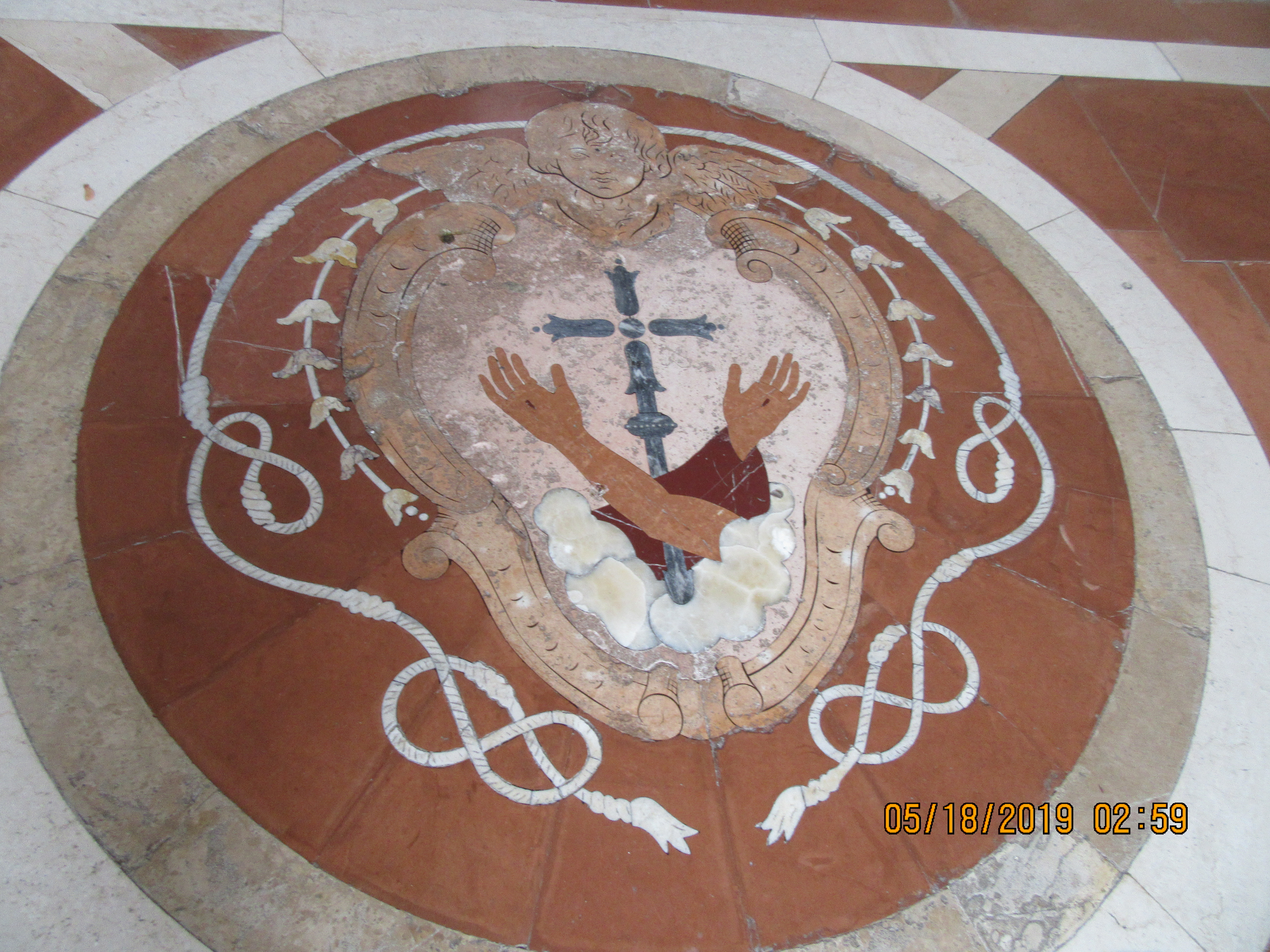
The “peace, I leave you” comes by way of keeping his word, living his commandments.  In the first reading there are “some without mandate” meaning taking it upon themselves to give orders who are causing conflict among the gentiles.  They want to impose the old law of circumcision upon the gentiles as a condition of being “saved”.  Jesus knew that this would happen unless he left an authority in the world to resolve disagreements and power struggles.  This is why he gave Peter the keys to the kingdom and today those keys have been handed over to Pope Leo XIV.  The ring he received in his inauguration has the image of Peter and the net on its face.  It is the continuity of authority to guide the church that Jesus entrusted to his disciples. 

As much as the word of God comes to us through scripture it is impossible to anticipate every possibility the apostles would face.  Authority to “bind and loose” was needed going forward after the ascension of the Lord.  This authority however would not be guided by human reason alone but by the coming of the Holy Spirit to dwell within the soul of a person to bring the peace of Christ in leading their actions.  They would not be left alone but God is with them and he is with us to bring us peace as we confront our everyday decisions when we trust in God and listen for his voice to reveal to us right judgment. 

Sadly, today we see how the church has become divided as scripture is taken as the only authority to be interpreted by each person as their personal revelation.  There are some who say the Lord spoke to them and now they have authority in guiding others.  We now have endless “Christian” denominations guided by either a council of elders or a sole individual inspired by scripture.  This is not the structure Jesus gave his disciples for the Spirit to create divided pockets of followers or for the truth to become relative.  Jesus prayer to the Father was for unity, that they may all be one as the Father is one with the Son and the Holy Spirit. 

Pope Leo XIV motto is “In Illo uno unam” translated “In the One, one” meaning that in the one Godhead we be one with him.  In order for there to be true and lasting peace there can only be one God in the Trinity, one Church with God’s authority, and one true interpretation to scripture.  The world seeks peace by the illusion that the greater the diversity and freedom to do as we will the more a soul will find peace.  This experiment is failing humanity as the greater the freedom to determine truth as a personal choice the more distress, anxiety, and fear enters a soul as it faces the reality that truth must be a shared reality, a universal truth or it is a false truth. 

We see in the first reading how easily division can happen in a society or in a church unless there is a unified authority to address various opinions, ideology, or rules.  The early church understood the importance of being unified and turned to the apostles and elders to settle the matter of circumcision.  This is what we refer to as the magisterium of the church headed now by Pope Leo XIV.  It is both the man and something greater at work within the man and that is the Holy Spirit. 

Pope Leo XIV’s call to his brother Cardinals is to walk with him on this journey in humility and obedience seeking the will of God in all matters.  In the same way each cell within the body of Christ, that is each local church is called to walk together seeking the will of God, open to the Holy Spirit, and obedient to a greater authority remembering that it is the authority who must also answer for how they guided their flock.  This begins with the authority within the home, the domestic church as the first teachers of faith by word and example.  Proper authority is entrusted to act in the person of Jesus whether as parents, pastor, bishop, cardinal or Pope. 

What is “truth” asked Pontius Pilate as he stood face to face with truth in the person of Jesus.  Many are asking these days “what is truth?”  Truth comes with authority but we don’t want to surrender to authority, not even a supreme authority who is a God of all creation so many remain wandering in the desert of life seeking to become their own truth and going nowhere.  Truth is Jesus.  He is the way, the good shepherd who brings us his peace and the truth of salvation.  The truth is love, Godly love and obedience to this love is by way of relationship that our hearts be one in love and all peace will follow.   May the love of God be with you and let us live his peace.   

Tags
Shared this
Views

274 views


bg-image

5th Sunday of Easter – Love one another!

Acts 14:21-27; Ps. 145:8-13; Rev. 21:1-5a; Jn. 13:33a, 34-35

Love one another!  How?  “Love one another, as I have loved you”.  The love of Jesus is sacrificial.  In sacrifice God is glorified in Jesus and in sacrifice Jesus is glorified by his apostles and by us.  What sacrifice do we offer up to the Lord because the opportunity for sacrifice is always an option to our daily life.  The virtues of love include among others patience, perseverance, kindness, humility, generosity and all can be done offered as a sacrifice that is in imitation of Christ himself.  It is putting the other before us as Christ puts our salvation before himself. 

Love one another requires that the “door of faith be open” to receive God and his love.  This “door” is made visible through the word made flesh.  Jesus is the word made flesh who also reveals to us the word in his person, his action, his love.  To be Cristo-centric is to discover the door of faith as he reveals himself to us, loves us, and invites us into his heart.    

Love however is not blind separated from truth.  Truth brings about a greater love as we grow in wisdom and understanding of our purpose in life and the sacrifice of our gift of self to God and to others.  Love is not the passion of emotion but the passion of commitment as it unites us to God and to others.  Love also has order and purpose to reach a goal in life.  What is our goal and our purpose?  The answer will cause us to fall into true love. 

Love is ordered by God’s law.  It is both the natural law and the spiritual law but natural law is at the service of spiritual law.  God created nature but God is the spiritual law himself.  The commandments provide a natural law of order that serve the spiritual law of love.  Do’s and don’ts are not an end to themselves but a means to the end which is Jesus himself and his love of us.  This was the error of the Jewish tradition that made the laws and rules the fulfillment of God’s law. 

Jesus comes to perfect their understanding that perfect law is a relationship reflected in the behavior and not simply compliance with the behavior.  This temptation is still a danger for all.  We can live as if we love our faith going through the motions following and enforcing the rules but when it comes to love our hearts are isolated, withdrawn unable to connect to the heart of others.  We share a house but don’t create a home, we have legal connections to each other but we bond more to our pets than to our relatives, and we care for how our neighborhood looks but not how our neighbors are doing.  We have a religion but do we have Jesus Christ in our lives? 

In the first reading Paul and Barnabas are being Cristo-centric in revealing the word and person of Jesus to the Gentiles.  They are filled with love of Christ and they understand their goal and purpose is to preach and make disciples of all who will listen.  They have received the gift of the Holy Spirit to accomplish the works that Christ himself was performing as signs of the power of God that is with them.  They also know that this power is not restricted to them only but open to all believers as they also leave behind appointed elders in the places they preached.  The church continues to grow while remaining united and faithful to the teaching of the apostles. 

John has a vision of a “new heaven and a new earth” so it raises the question, “is this new heaven and new earth yet to come or is it here?”.  Perhaps it is not an either/or answer but a both and answer for God is outside of time and space.  Then who is living in this new Jerusalem, the “city of God”?  God’s invitation is always to come “taste and see” what God has prepared for those who love him.  John was given a vision of the city of God but he also received entrance by his love of God as a witness of being in the world but not of the world.  The City of God is his kingdom and his kingdom resides within us being revealed by the sacramental life we live. 

“God’s dwelling is with the human race” and it began with the coming of Jesus into the world.  He dwells within humanity when we enter through the door of faith to discover he is already present at work from within us to raise us up into the divine existence within the city of God.  The reign of God is with, through and outside of humanity as we are limited and he is infinite.  Infinite is God’s love and it comes to us in his mercy to renew our brokenness and forgive us of our sins.  This cannot be however without our will to unite us to his will.

 God is inviting us to receive his love and mercy and he provides the means through his church.  It is the instrument of faith that stands as the visible sign of his love and mercy.  We are called to be church, to belong to God by belonging to his church.  If faith is the door into the kingdom, then the church is the gate into the city of God.  Baptism brings us through the gate now faith leads us into the door of his heart.  It is the heart of love.  Love one another!

Tags
Shared this
Views

247 views


bg-image

4th Sunday of Easter – I know my sheep!

Acts 13:14, 43-52; Ps. 100:1-2,3,5; Rev. 7:9, 14b-17; Jn. 10:27-30

“I know my sheep and mine know me.”  No doubt the Lord knows us but how well do we know the Lord?  The God of creation is our good shepherd who knows are strengths, weaknesses, temptations, potential and limitations.  The Lord knows the mind of his sheep, the degree of love with which we follow him, and the rebellious spirit of our will to be obedient to his will.  Praise be to God for he is merciful and slow to anger against our resistance to follow him.  The Lord knows his sheep and is patient and loving in guiding us to open our hearts to his heart and to enter into his grace.  God is love. 

The question remains, “how well do we know the Lord?”  In the first reading we hear that “all who were destined for eternal life came to believe”.  Destiny was not predetermined by birth but by the free will of the soul who the Lord knew who respond to his voice.  The Lord knows the souls of those that did not care to know him and turned against him.  There are many in this world who remain indifferent to knowing the Lord.  Their purpose is to live this life as the only time of their existence.  Knowing God is not a priority.  The consequence of this ignorance is not only the potential of losing heaven but the loss of God’s “shelter” through this life.  They wander in the desert of life in search of themselves instead of knowing God. 

Knowing God is an active participation in the kingdom of God.  The kingdom of God extends from heaven to earth, from the communion of saints to the poorest of the poor, and from the sacramental life of the church to the solitary prayer to God.  It weaves itself throughout life revealing God himself to us in the works we are called to fulfill for his kingdom.  It is both a mystery of faith and a revelation in the miracles of life.  For this reason, two people can be side by side and one will be lifted up into the kingdom and another left behind.  The beauty of the kingdom is always present and within access but not all choose to access it. 

“I know my sheep” says the Lord and they don’t incite violence and hate upon others as the Jews did against Paul and Barnabas.  Violence and hate are a sign of weakness not power, fear not confidence, lies not truth.  The world is quick incite violence as an act of justice and retribution but the message is lost in the injustice that results.  Jesus appearance to the disciples after the resurrection is with the message “peace be with you”.  The message of salvation is one of peace, truth, and love, everything else is from the evil one.  If we are his people then we are messengers of peace. 

This week we also celebrate the election of our new pontiff, Pope Leo XIV, the first American born Pope.  He is the Vicar of Christ meaning Jesus is the head of the Church and Pope Leo his appointed successor of Peter to lead the flock.  The voice of the Holy Spirit has guided the Cardinals to lay the cross of Jesus on the shoulders of this man.  He is called to be the shepherd for our times. 

Pope Leo XIV is not only multilingual but multicultural with French, Italian, and Spanish heritage.  He has a degree in mathematics which can be an asset to a church heavily in debt.  He comes from the Augustinian religious order with years of leadership experience.  In his first words as Pope Leo, he expressed his peace upon the people and his desire to build bridges of unity.  His motto “In illo Uno unum” (In the one, One) is the Jesus prayer for unity that we may all be one.  In one God, in one Trinity, in one Spirit is the one universal church for all the people. 

Tags
Shared this
Views

259 views


bg-image

3rd Sunday of Easter – It is the Lord!

Acts 5:27-32, 40b-41; Ps. 30:2, 4-6, 11-13; Rev. 5:11-14; Jn. 21:1-19

It is the Lord that sets us free!  It is the Lord who reveals to us “what is truth?”  It comes in his person, the word incarnate.  Truth will set us free not from a world that seeks to silence, condemn, and even kill a voice of truth that goes against the mainstream secular views.  Truth sets us free from within to live in the surety that God loves us and promises eternity.  It is the freedom to be at peace, to love and be open to love, and to fear not even in the darkest moments. 

Pope John Paul II, now Saint JPII, spoke of a culture of death but before death comes the sins of hate, jealousy, power, and greed.  The more the world changes the more the sins of the world remain the same. It is the same sins that crucified Jesus and that are at work in our own times to take us down, away from the grace of God.  It is the Lord who sets us free from within, to live the truth coming from above.  The truth does not need to overpower anyone, it stands strong on its own.  The Lord rescues us from false teachings, he guides the church to remain faithful to the truth of the gospel. 

The Sanhedrin wanted to silence the Apostles for announcing a truth that was clear to everyone.  Jesus was not killed in secret, but publicly was called to be crucified and made an example.  The message from the Apostles was of hope through repentance and forgiveness.  But that would require the courage to admit ones sins and here lies the problem for the Sanhedrin and for us.  We don’t like to admit our sins, to recognize our errors, to face our failings. 

The power to deny sin is strong in our humanity.  It is denied when we believe that our rights are greater than God’s law, “my right to do with my body as I want”.  It is denied when we carry a sense of entitlement to justify our actions, “my entitlement to goods and services I have not worked for and cannot afford”.  It is denied when we listen to the mainstream voice that claims truth is individual and denies any universal truth.  This is not freedom but the path to human slavery to the passions and voices that take control of our lives and in our times, it is constantly be fed through social media and the internet. 

Soon AI (artificial intelligence) will create the “perfect” partner that meets all of our psychological pleasures, it will be your new BFF (best friend forever). Just this week a major AI leader in an interview stated that most people at best only have 3 close friends and “need” at least 10-15. AI is going to give you you’re alter-ego best friend in who you can escape with. Who needs real people who are difficult, challenging and just don’t understand you.   AI 24/7 is you’re get away from life at least until a real-life challenge comes and like a house built on sand it all comes tumbling down.

Already the ground is being laid where being connected to the world has little to do with having human interaction, knowing how to communicate, resolve problems in relationships or express emotions with each other.  It is all channeled by indirect “chat”.  All of us can argue a point but can we resolve an argument and come to some agreement?  Let’s see what my artificial partner has to say because we can no longer think for ourselves. 

It is the Lord that rescues us from the “netherworld” of falling into sin and from the pit of our own passions.  It is the Lord who said from the cross “forgive then for they know not what they do”.  We never consider that our sin is a hammer on a nail in Jesus.  The reason as Catholics we keep Jesus on the cross even though he has resurrected is because he continues to suffer the pain of our sin.  Jesus however desires to rescue us, heal us, make us new a new creation in his image.  His image is one of love, mercy, truth and justice.  Christ is risen!  Risen indeed to make all things new that is to renew us in himself.  This is the history of the Church. 

In the gospel, Jesus appears a third time to the disciples.  No one dared to ask Jesus “who are you?”  There is something about Jesus in the glorified state that makes him appear different and a mystery to the disciples.  This is a reminder to us that we too have the hope of a glorified body to come at the resurrection.  It will no longer be a body that ages and decays but one that is forever whole and holy.  The vision of John includes angels, “living creatures”, elders and the “Lamb”.  The “Lamb” is Jesus, the elders the prophets and Apostles, and all the living creatures who give glory to God, the people of God.  This is the communion of saints that awaits us. 

Jesus has his little charcoal fire going ready to feed the disciples and he performs another miracle with an abundance of fish caught in the nets.  This is Peter’s “come to Jesus” moment when after having denied him three times he now must confess his love of Jesus by accepting a mission, “feed my sheep”.  This call directed specifically to Peter is that he may be the one who will Shepherd of his church, our first Pope.  Since then, the church has a history of every one who has succeeded Peter in this role as Vicar of the Church.  Today we are in the middle of another transition to the next Holy Father and the gates of hell will not prevail over sit.  Let us pray for the power of the Holy Spirit to lead the Cardinals to select the “rock” for our times.  It is the Lord who will save us from ourselves.

Tags
Shared this
Views

368 views