bg-image

4th Sunday in Ordinary Time – The poor in spirit!

Zeph. 2:3; 3:12-13; Ps. 146:6-10; 1 Cor. 1:26-31; Mt.5:1-12a

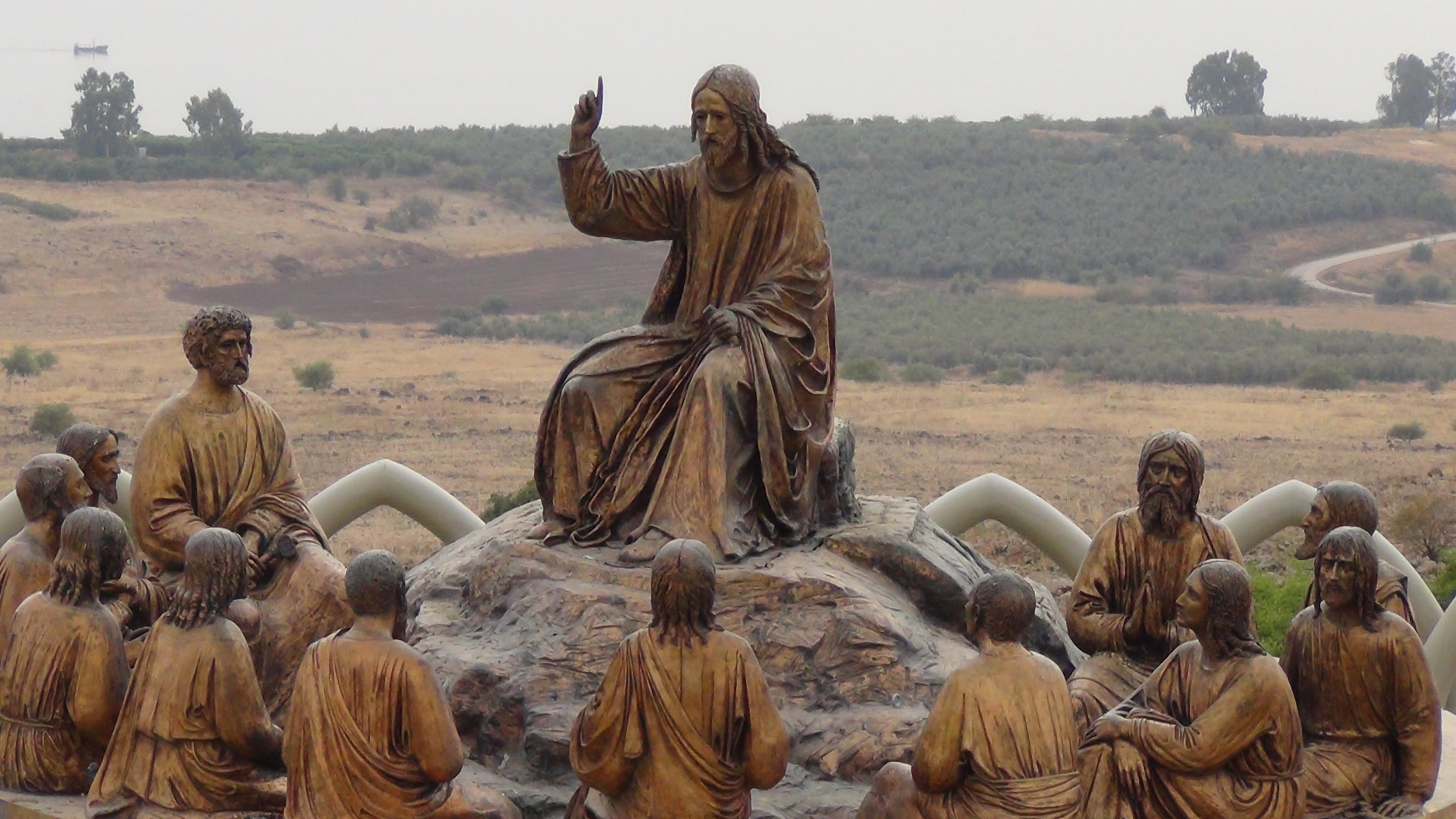
“Blessed are the poor in spirit!”  Who are the poor in spirit?  It begins with a clear vision of God and that we are not a god.  We are created in the image of God by his love.  God is the creator and the breath of life from which we get our identity by the graces we receive from him.  God provides the riches of heaven while we suffer the poverty of soul as we recognize our need and dependence on God.  It is in this state in which the soul clings to the Lord and surrenders to his will that we gain our riches as we come to him as poor sinners. 

The poor in spirit are the humble of the earth.  The humble take refuge in God in who they trust.  Humility is seen as a weakness by human standards but humility is the courage to stand for the truth not with the armor of the sword but with the armor of love.  God so loved the word he humbled himself in order to reveal himself in his Son that the truth may set us free.  Jesus humbled himself accepting death on the cross with great pain to set the captive of sin free.  Humility is the courage to sacrifice oneself for the other. 

The proud look to themselves as the source of power, control, and achievement.  The attitude of the proud who believe in God is that God placed them on earth to subdue to world and is looking down upon them detached from their actions and it all depends on them.  Keeping God at a distance provides a license to justify one’s own actions based a self-defined “truth”, self-guided conscience and a false sense of freedom.  That is until the walls come crumbing down and we are humbled and recognize our poverty of spirit without God. 

We have heard it said to act as if it all depends on us but trust as if it all depends on God.  The problem is that there is a tendency to fall into one or the other side of this statement.  We either believe it is all us and we keep God at a distance or we feel helpless waiting for God fearful to take the next step.  God works with us, through us, and in us, that is in relationship by our union to him.  The unity with God is not static but dynamic as we are reminded in the song, “just a closer walk with thee”.  The is our spiritual communion to be of one with the Lord as we go forth in the world. 

Thus, to be humble requires great love.  The signs of love are patience, kindness, forgiveness, gentleness and all the gifts of the Holy Spirit.  The humble of the earth recognize that there is a greater truth that comes from God and it is this truth that has resulted in a history of great martyrdom.  The courage to live and die for the truth is the surrender of our own life in the same image of Christ crucified. 

We are reminded by the words of St. Paul “Consider your own calling brothers and sisters” to ask ourselves what is my calling from God?   The call is a call to sacrifice for the love of another.  It is a reminder that the last shall be first because they placed the concern for the other before their own self.  It is in giving and offering ourselves to the Lord that we receive the promise of eternal glory.  The Beatitudes remind us of this sacrifice we are to live in which we empty ourselves for the greater good not by our own power but by the grace from God who is leading us by his righteousness. Blessed are you who respond to this calling for your reward will be great in heaven.  The blessings we receive today cannot compare to what is waiting in eternity. 
Tags
Shared this
Views

198 views


bg-image

3rd Sunday in Ordinary Time – Come after me!

Is. 8:23 – 9:3; Ps. 27:1, 4, 13-14; 1 Cor. 1:10-13, 17; Mt.4:12-17

Come after me!  This is the call to Peter and to the disciples and it is our call by our anointing.  The Epiphany of Jesus is the revelation of who Jesus is, Son of God, Son of Man, human and divine.  The arrest of John is the sign and beginning of Jesus ministry as he must increase taking up the call to repentance and the revelation of his kingdom.  It has begun as prophesied by Isaiah “the people who walked in darkness have seen a great light”.  Jesus is the light and we should celebrate with “abundant joy and great rejoicing”. 

Come after me.  Was it a command or an invitation?  The call to discipleship is God’s purpose for our lives but how we fulfill that purpose require not only our will but our desire.  The disciples are being called to a total surrender of themselves in what was to become the future priesthood of the church.  Why were they so readily predisposed to give up everything and follow Jesus?  These were fishermen, some married with a family to care for, living their own lives.  They also were faithful Jews, they followed their religious beliefs, they were awaiting a messiah and believed what they were seeing in Jesus. 

If Jesus came calling today, would we be prepared to recognize his voice, ready to follow or so absorbed in ourselves we would quickly dismiss the thought.  Today we see a decrease in servants of the Lord responding to the priesthood or religious life.  Why?   In short, family life is not centered on God.  God is treated as an adjunct to our personal priorities.  There is a disconnect between what we do in our life and who God is in our life. 

We baptize children so that from birth they can receive the gift of the Holy Spirit and grow in the gifts of the Spirit so that when God comes calling “come after me” we recognize that call and are already predisposed by the foundation of our faith to say “yes, Lord”.  The choice was clear to the disciples because the foundation was already at work in their lives.   

In the gospel reading is the beginning of Jesus ministry as he opens the gates of heaven to Jews and Gentiles bringing unity to a divided people making all things new under one church.  In the second reading Jesus has already ascended to heaven and we are left under the care and guidance of the apostles.  How quickly we see the church becoming divided even in these early stages with Paul reminding the people to stay united.  In those days saying “I belong to Paul or I belong to Cephas” is like today a Christian saying “I belong to the Church of Christ, I belong to the Evangelical movement, or I belong to the New Wine church”. 

Many years ago, while working in a hospital, I visited a patient who the record listed him as a Baptist.  During conversation, I mentioned his religious affiliation as “Baptist” to which he quickly retorted “I am not Baptist, I am a Primitive Baptist”.  To my ignorance, I did not know there were various branches of the Baptist church.  I apologized but I could see he was offended by my ignorance.  The gospel is one and it calls us to one otherwise we are warned that the cross of Christ can become emptied of it meaning. 

The meaning of the crucifix is to repent, pick up the cross and live the sacrifice of the cross.  Non-Catholics ask why we keep Jesus crucified on the cross when he has risen.  Jesus continues to suffer for our sins and the sins of the world.  Jesus thirsts for righteousness in his people, he thirsts for a right relationship, he thirsts that we be one in the Father, through the Son and with the Holy Spirit.  If today you hear his voice harden not your hearts. 

Finally, welcome back Monsignor from your priestly retreat.  Soon Monsignor will be celebrating his 50th anniversary as a priest.  He will also be retiring from duty to the Diocese but a priest is a priest forever.  This means a major transition in his life but as we have gotten to know him as “Mr. Yesterday” he is filling up his schedule quickly.  So, our prayers and best wishes are with him.  This also means that there will be a new sheriff in town, I mean a new Pastor to welcome.  As we are reminded by Paul today, we are followers of Christ and every Pastor is a servant of Christ and yes there will be change in the air but Christ is at the center of who we follow and trust. 

Amen. 

Tags
Shared this
Views

219 views


bg-image

2nd Sunday in Ordinary Time – Called to be Holy

Is. 49:3, 5-6; Ps. 40:2, 4, 7-10; 1 Cor. 1:1-3; Jn.1:29-34

St. Paul reminds us today that we are all called to be holy.  It is his will that we all be sanctified and lead holy lives but it requires our will to call upon the name of the Lord Jesus Christ and invite him into our lives.  Many have responded and seek his will as a way of life, others have responded but choose to seek their will first and leave God on the side, while still many remain outside of a sanctified life trusting themselves apart from God.  The Lord has come and so our time has come to encounter him through the sacramental life he left us.  This is how we are called children of God and receive power to reject evil, to heal and to save. 

On one occasion during a baptismal class I stated that baptism makes us children of God.  One of the participants stated she thought all people are children of God.  Prior to baptism we belong to God as his creation from where we get the word creature as a creature of God but baptism makes us his adopted children with sanctified grace and the difference cannot be understated. 

A creature of God has his humanity but wanders in the spiritual desert of their own ego seeking connection to something greater than themselves often turning to other created things of nature as in the past to a “sun god” or other human ideologies.   Such an ideology in our times is claiming that “identity” is a state of mind so the mind can declare itself to be of any sex, orientation, or pronoun leading to greater identity confusion not clarity.  In the end it leads to more dysphoria and the god of self and not the true God of happiness.  True identity remains in God as he created us to be.  Without Christ life spirals as lost sheep without the true Shepherd apart from God. 

There is a group that reflects perhaps the majority of God believers who choose their own way.  They may or may not associate with any religion but hold to the belief that after God created us, he left us to live by our will, do the best we can and that is enough to get to heaven.  For example, in the U.S. there is roughly 60 million people who identify as Catholic but only 30% attend church (Pew Research Center and Gallup New).  This leaves 70% who live by their own dogma and not what the church teaches.  Among this group you will hear the cry out to God “Why God?  Where are you when I need you?”  The real question should be “where have I been when God has been calling on me?”  God on the sidelines is not the way to heaven. 

Finally, those who seek the will of God recognize that God has left us his Word, his Church and this is his way for us to abide in him.  If we abide in him, we are filled with grace and that is power.  The gospel is a reminder that Jesus is the chosen one, the Son of God and baptism is the path to beginning a life of holiness with the gift of the Holy Spirit as it descended on Jesus it also comes to us through the same water of baptism.  As St. Paul says “Grace to you and peace from God our Father and the Lord Jesus Christ”.  This grace is lived out daily, fed by the Eucharist and the Spirit so that our experience is of the real presence of Christ in us.  Death is eminent and often carries with it much suffering but even suffering can be redemptive united to the cross of Jesus.  Jesus has conquered death in his resurrection that we may believe and pass through the final door to freedom. 

Where are we in our journey of faith?  It is a question that does not get answered by saying “I am attached or unattached to the Lord” It is not enough to say “I believe” but to reflect on how do we live our commitment to our faith.  It also is not a straight path but one where we rise and fall sometimes daily, God sees our struggles and our true desire to serve and be his child.  God is ready to provide what is lacking in us when we seek and search his will.  It is also comforting for all than even when we believe we may often act as unattached believers but God remains faithful, that is ready to respond to our desire to return to his grace.  We should always pray, “I believe and I trust in you Lord, help my unbelief and lack of trust to do your will and give me your blessing”. 

“Here I am Lord, I come to do your will.”  Readiness to do the Lord’s will takes preparation of mind, heart and will.  If we desire it then let us dedicate our time accordingly, begin each day in prayer making it an offering to the Lord.  Go forth with love in search of goodness, beauty, truth, and unity and you will find God.  End each day in thanksgiving and gratitude for the seen and unseen where his hand led you with an examination of conscience and a humble act of contrition.  Then we will wake in readiness to love and to serve the will of God. 

Tags
Shared this
Views

233 views


bg-image

The Epiphany of the Lord

The Epiphany of the Lord is the manifestation of Christ to the Gentiles as represented by the Magi.  This is the mystery that St. Paul says was made known to him by revelation that the Gentiles are “coheirs, members of the same body” in the promise of Christ Jesus revealed in the gospel.  The Magi are not Israelites but Gentiles, the Greek work “magos” represent a priestly caste of possibly astrologers from the “East” perhaps Persia or Babylonia.  This fulfills a prophesy about a star and a scepter that is to rise from Israel spoken in the book of Numbers 24:17 by Balaam.  

The scepter is the sign of the Messiah for all nations, not just for Israel and “every nation on earth will adore you”.  The scepter is ornamented staff carried by rulers as a symbol of sovereignty.  The Lord is sovereign over the world.  This is the revelation that Jesus came to bring salvation for all that we may all be one and his reign will last forever. 

Still today we are a divided people.  There is racism, antisemitism, division among nations as to who is the greatest.  The greatest shall be the least, the poor, the hungry, the suffering.  There is a tradition to treat the Magi as “kings” but the bible does not call them kings.  The Magi more appropriately are learned or wise men.  In the same way we are called to be wise not simply in the ways of the world but in the ways of God that we may all be saved. 

Who then will be saved?  Salvation is through baptism and yet many have not received the gospel or been baptized.  Where does that leave perhaps the majority of people.  Baptism is through water but there are also a baptism of martyrdom and a baptism of desire.  Consider all the babies who have been aborted having never had the opportunity to be born and are martyrs for heaven.  There is also the baptism of desire meaning there are many to who the gospel was not revealed but they would have openly embraced it had someone evangelized them. 

We often think of people in third world countries who have never heard the gospel but even here among us there are so many who have grown with no religious teaching, agnostic at heart and yet with a heart of gold.  We are bound by God’s law but God is not bound and his judgements are righteous.   God is the one judge of the mind, heart and will of each of us. 

We make New Year’s resolutions as to how to improve ourselves but what are we doing to improve our relationship with God.  The Magi studied the stars but we are given the one guiding star of heaven, our Lord Jesus Christ and he gave us his Word to reflect on, his Church to sanctify us in the sacraments, and his spirit of truth that we may know the truth and set us free. 

The Magi brought the of gold symbolizing the kingship of Jesus our one true king.  Frankincense symbolized our high priest and his divinity as the incense is a sign of our prayers rising to heaven.   Myrrh was used in healing as a sign of purification and at death symbolizing the passion and sacrifice of Jesus.  Together they prophesy Jesus’s identity as king in the gold, God in the frankincense, and as Savior in the myrrh. 

By the time the Magi had arrived in Bethlehem Jesus, Mary and Joseph were now in a house no longer at the place of his birth.  Some time had passed but the guiding star led them to this place.  Some question if the “star” is more of a myth than a reality.  There is a documentary that tells how it is possible for a star to move in such as way that it creates a circular reflection appearing even brighter than it is as if it had come to a standstill position.  This miracle of the star for the Gentile magi was not faith in action but the work of the spirit and science coming together as an epiphany, a revelation to them and us of a greater truth, a savior is born and not only a savior, but God himself is with us. 

Tags
Shared this
Views

218 views