
bg-image

3rd Sunday in Ordinary Time – Come after me!

Is. 8:23 – 9:3; Ps. 27:1, 4, 13-14; 1 Cor. 1:10-13, 17; Mt.4:12-17

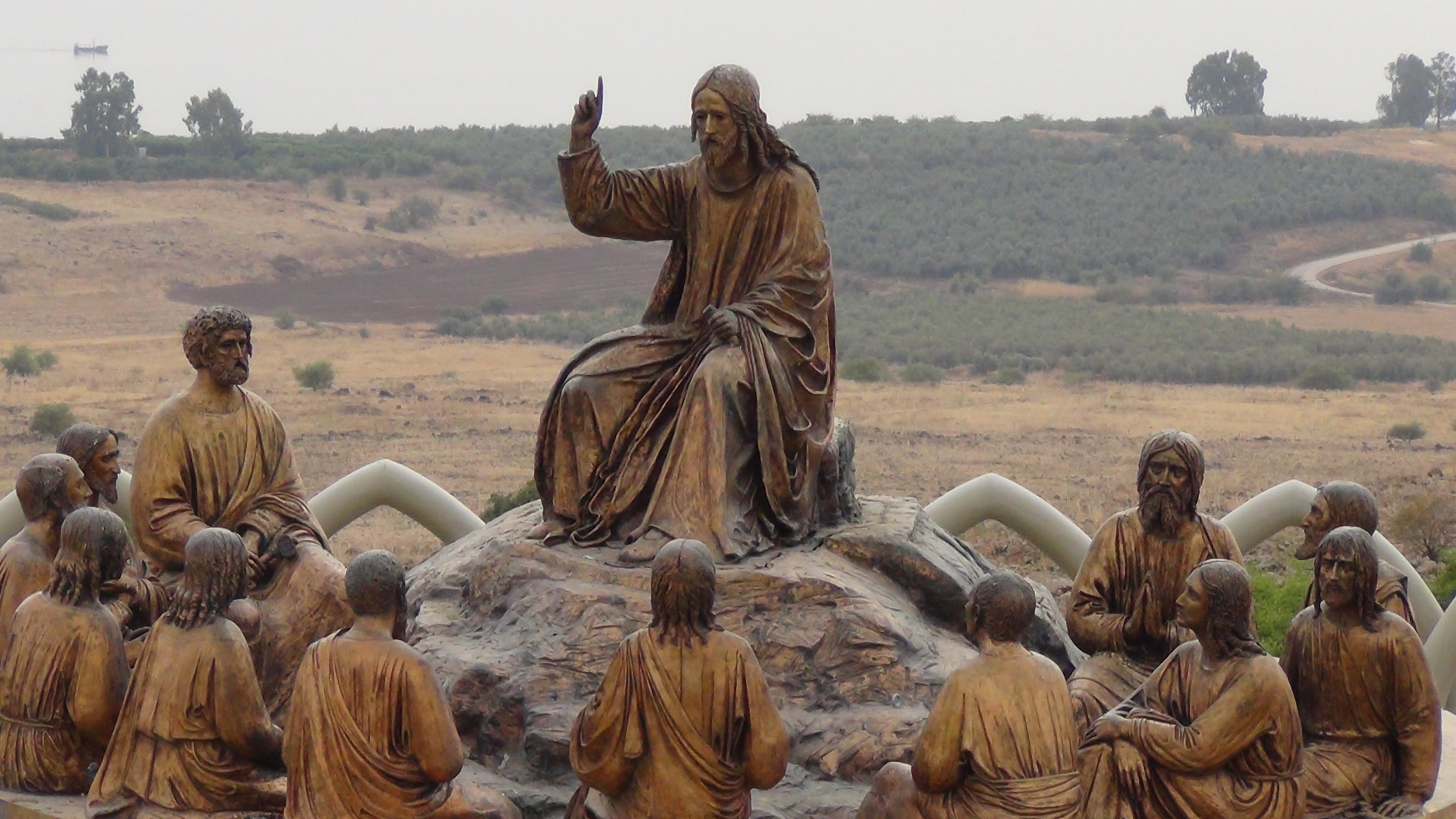
Come after me!  This is the call to Peter and to the disciples and it is our call by our anointing.  The Epiphany of Jesus is the revelation of who Jesus is, Son of God, Son of Man, human and divine.  The arrest of John is the sign and beginning of Jesus ministry as he must increase taking up the call to repentance and the revelation of his kingdom.  It has begun as prophesied by Isaiah “the people who walked in darkness have seen a great light”.  Jesus is the light and we should celebrate with “abundant joy and great rejoicing”. 

Come after me.  Was it a command or an invitation?  The call to discipleship is God’s purpose for our lives but how we fulfill that purpose require not only our will but our desire.  The disciples are being called to a total surrender of themselves in what was to become the future priesthood of the church.  Why were they so readily predisposed to give up everything and follow Jesus?  These were fishermen, some married with a family to care for, living their own lives.  They also were faithful Jews, they followed their religious beliefs, they were awaiting a messiah and believed what they were seeing in Jesus. 

If Jesus came calling today, would we be prepared to recognize his voice, ready to follow or so absorbed in ourselves we would quickly dismiss the thought.  Today we see a decrease in servants of the Lord responding to the priesthood or religious life.  Why?   In short, family life is not centered on God.  God is treated as an adjunct to our personal priorities.  There is a disconnect between what we do in our life and who God is in our life. 

We baptize children so that from birth they can receive the gift of the Holy Spirit and grow in the gifts of the Spirit so that when God comes calling “come after me” we recognize that call and are already predisposed by the foundation of our faith to say “yes, Lord”.  The choice was clear to the disciples because the foundation was already at work in their lives.   

In the gospel reading is the beginning of Jesus ministry as he opens the gates of heaven to Jews and Gentiles bringing unity to a divided people making all things new under one church.  In the second reading Jesus has already ascended to heaven and we are left under the care and guidance of the apostles.  How quickly we see the church becoming divided even in these early stages with Paul reminding the people to stay united.  In those days saying “I belong to Paul or I belong to Cephas” is like today a Christian saying “I belong to the Church of Christ, I belong to the Evangelical movement, or I belong to the New Wine church”. 

Many years ago, while working in a hospital, I visited a patient who the record listed him as a Baptist.  During conversation, I mentioned his religious affiliation as “Baptist” to which he quickly retorted “I am not Baptist, I am a Primitive Baptist”.  To my ignorance, I did not know there were various branches of the Baptist church.  I apologized but I could see he was offended by my ignorance.  The gospel is one and it calls us to one otherwise we are warned that the cross of Christ can become emptied of it meaning. 

The meaning of the crucifix is to repent, pick up the cross and live the sacrifice of the cross.  Non-Catholics ask why we keep Jesus crucified on the cross when he has risen.  Jesus continues to suffer for our sins and the sins of the world.  Jesus thirsts for righteousness in his people, he thirsts for a right relationship, he thirsts that we be one in the Father, through the Son and with the Holy Spirit.  If today you hear his voice harden not your hearts. 

Finally, welcome back Monsignor from your priestly retreat.  Soon Monsignor will be celebrating his 50th anniversary as a priest.  He will also be retiring from duty to the Diocese but a priest is a priest forever.  This means a major transition in his life but as we have gotten to know him as “Mr. Yesterday” he is filling up his schedule quickly.  So, our prayers and best wishes are with him.  This also means that there will be a new sheriff in town, I mean a new Pastor to welcome.  As we are reminded by Paul today, we are followers of Christ and every Pastor is a servant of Christ and yes there will be change in the air but Christ is at the center of who we follow and trust. 

Amen. 

Tags
Shared this
Views

220 views


bg-image

33rd Sunday in Ordinary Time – Son of Justice

The “sun of justice” has come in the person of the Son of justice to rule the earth.  This Son with blazing heat brings us the healing fire of purification for justice and mercy are both the same act of love.  It is his redemptive love of sacrifice on the cross that calls out for justice against the sins of the world.  As Jesus says to the people, “All that you see here—the days will come when there will not be left a stone upon another stone that will not be thrown down” and so it came to pass as history gives testimony. 

The same is true for our times and all time that we live in a world where kingdoms rise and kingdoms fall.  Nations fight against nations while natural disasters destroy what once stood as a work of human hands leaving only a memory of the past.  Jesus is preparing his people for the suffering that is to come from a world that lives for itself and not for him.  He is preparing us to fear not but to persevere and we will secure our eternal life.  Our call in this life is to give testimony of our faith regardless and despite what hardships and suffering come our way. 

Many will question God asking, where is the Son of justice when suffering surrounds, us and the innocent who are persecuted by so much evil.  God is always present in the suffering.  He brings us his redemption through our suffering but he also offers the sinner his mercy.  In the sin of humanity, the Son of justice is suffering the pain of the cross to offer us sinners his mercy and forgiveness that we may be redeemed by a conversion of heart. 

St. Paul in his letter to the Thessalonians speaks to those living in a “disorderly way”.  These were the ones who expected the end to come in their lifetime and so were living off the hard work of others no longer contributing to the goods and services needed for the community.  St. Paul puts it plainly “if anyone is unwilling to work, neither should that one eat.”  This is a warning against an attitude of entitlement from the work of others recalling the parable of the one who buried his “talent” and had nothing to show the Master when he returned.  We are all called to work for the kingdom of God and it begins by offering our daily work that brings food to the table as our sacrifice to serve others. 

Since the time of Jesus there have been voices that call out “the end is near” but Jesus reminds us “See that you not be deceived”.  For God time is in the present so that for us we are to live with the end in mind not in fear but in joyful anticipation of the glorified state of the one true kingdom of God.  To be set free from the bonds of sin, of disease, of corruption, of suffering and of death is our joyful hope for the end to come. 

For now, we live in the near end, almost there but not yet.  We are there when we come to receive the mercy and love of God in the sacraments, we are there when we open our hearts to love as God loves, we are there when there is nothing to fear for God is with us.   The end is always near, closer than we may realize.  The nearer we come to Jesus the more prepared and secure our life is for heaven’s gate.

In the recent past we have seen fires destroy a hardware store, a restaurant, a lumber store and all three had been in our communities for generations.  Only the memory of the service they gave to our community remains for us reflect on.  With the end have come new structures and new hope but like Lazarus who was raised from the dead but still had to die again what belongs to the earth returns to the earth.  We live with the end in mind and it is the end of our suffering for the glory of God and the promise of the Son of justice in his resurrection. 

Tags
Shared this
Views

222 views


bg-image

5th Sunday Ordinary Time – All things to all

Jb. 7:1-4, 6-7; Ps. 147:1-6; 1 Cor. 9:16-19, 22-23; Mk. 1:29-39

St. Paul claims to be “all things to all” to save at least some.  St. Paul is acting “in persona Christi” for it is Christ who came into this world to be all things to heal the broken hearted.  We all share in the brokenness of humanity and are in need of healing.  Job is broken hearted in a state of restlessness and despair as he contemplates an end to his happiness.  St. Paul makes of himself “a slave to all to win over as many as possible” sharing in the weak, the poor, the suffering, the sick his own weakness.  As Jesus poured himself out on humanity, Paul takes up the cross and carries it for Jesus.  How then are we carrying our share of the cross by being all things to those who God has placed in our path?  We do this by living the gospel.   

Job is a reminder that no one gets through this life without a share of suffering.  Suffering removes all the distractions of this world.  We spend our time on creating wealth, spending our wealth, entertainment, travel, and all the external focus of our interests.  Suffering is a recentering on what really matters, our connectedness to God, family, and others.  Suffering is our wake-up call that our days are numbered and how are we fulfilling our purpose.  Suffering serves its own purpose to brings about an examination of conscience, a reconciliation with God and others and even a purging of our sinfulness.  We no longer desire to sin but to be saved.  Save us O’ Lord for we have sinned.  In suffering we become all things to all who share through their own suffering the cross of Jesus. 

St. Paul is a reminder that we are to live and be in imitation of Christ who came to serve and not be served.  St. Paul desires to walk in the footsteps of Jesus by walking in the footsteps of the suffering.  It is here that he encounters the presence and love of God.   In St. Paul we see our purpose as baptized Christians is to “win over as many as possible”, to be disciples as witnesses to the gospel, and to be holy.  If we look to the saints and why they were able to lead others to Christ we recognize it was not from their humanity as in their leadership skills, or intelligence, or persuasive speaking but from the divine call to be all things to all.  People were attracted to saints by their holiness seeking to share in becoming one in holiness. 

In the gospel we see Jesus entering the house of Simon and Andrew and curing Simon’s mother-in-law.  This act of healing is a reminder of Jesus addressing the most pressing need first before being concerned with preaching the gospel.  He gives us an example of subsidiarity addressing the most immediate needs of the people first before moving on to other villages that he may preach there also.  He cared for the pressing needs of the people before pursuing his purpose for coming into the world.  To be all things to all begins by caring for others and meeting them where they are at and not where we want them to be. 

We become all things to all by loving the present moment in giving of ourselves to the present needs.  A King knows he must first strengthen his warriors before going into battle or he will surely lose the fight.  Maslow’s hierarchy of needs recognizes in humanity the value of meeting the physiological needs before progressing up to a transcendent stage of development.  Jesus cured many of various diseases and drove out many demons in order to return a person their integrity as a child of God before the call to “follow” his teaching.  Charity to the human condition comes through the corporal works of mercy and the spiritual works of mercy.  This is our higher purpose that together we may transcend to higher ground and win as many as possible. 

Tags
Shared this
Views

285 views


bg-image

24th Sunday in Ordinary Time

Ex.32:7-11, 13-14; Ps. 51:3-4, 12-13, 17, 19; 1 Tim. 1:12-17; Lk. 15:1-32

Come to Jesus!  The Lord “will make of you a great nation” of saints for Christ apart from those who “have become depraved…”.  Has God prodigally given his love on his people…see how stiff-necked this people is”.  Depravity is the moral corruption of the soul that does not reflect the light of truth but the darkness of sin.  Apart from Jesus and the Blessed Mother immaculate without sin the rest of humanity has passed through the darkness and fall of Adam.  “Sinners who were not under the law will also perish outside of the law; sinners subject to the law will be judged in accordance with it…All have sinned and are deprived of God’s glory” (Rom. 2:12, 3:23).  This we refer to in social sciences as the baseline of the human condition.  There is a chant that says, “we fall down…we get up…we fall down…we get up”.  The history of salvation is the fall and rise of nations of God.  It begins with the fall of Adam and Eve meaning we pass through our own personal falls into sin and rise in mercy.

I recall the story of a confessor telling the penitent, “as soon as you walk out of the confessional you will sin”.  Thank God, the Church and the Holy Spirit are given to us to recognize all sin is not equal between mortal sin and venial sin.  God is a just judge who sees the mind, will, and heart that govern the intent of the soul and offers us mercy.  “I will rise and go to my father…Have mercy on me O God; my sacrifice O God is a contrite spirit”.  A contrite spirit often comes after the fall from pride and a return to humility.  A contrite spirit recognizes our sinfulness, weakness, and in humility calls out to God the Father for mercy.  The God of mercy “relents in the punishment” our sin merits and a contrite heart responds with “I am grateful to him who has strengthened me” as Paul says in the letter to Timothy. 

The Lord not only forgives he strengthens us and transforms the sinner into a saint.   Paul gives testimony of his transformation from a “blasphemer…persecutor and arrogant…acted out of ignorance” in his unbelief.  Paul uses himself as an example of the love of Christ Jesus and his “patience as an example for those who would come to believe in him for everlasting life”.  Christ is patient, kind, slow to anger and he is ready to moment we turn to him to receive us.  It is a tragedy when someone says they cannot come to Christ for forgiveness because they have not forgiven themselves.  It is a trap of the evil one to keep a soul in bondage for the depravity of their sin.  Come to Jesus! 

The Gospel is a reflection of three parables, the lost sheep, the lost coin, and the lost son.  The focus is not the sense of loss but on “Rejoice”.  “Rejoice with me because I have found my lost sheep…Rejoice with me because I have found the coin that I lost…rejoice because your brother was dead and has come to life again; he was lost and has been found”.  Who found the brother, did he not come “to his senses” and return on his own?  Jesus never stops seeking us in his patience, kindness and mercy.  It is up to us to repent, receive sanctifying grace and return to the nation of saints.  It is not a nation of race, territory, or geopolitical ideology.  Those barriers foster moral depravity when they become “a molten calf and worshiping it”.  This we see in our world when violence is justified as a means to an end, when dialogue is silenced with threats, and the Word of truth becomes relative.  What do we do then?  Come to Jesus!

The word “prodigal” has two concepts.  One is a person who spends money recklessly as in the son who squanders his inheritance.  He suffers the fall from pride to humility and is left with a “reality check” to return to the father.  The second concept of prodigal is a person overly generous and giving an abundance.  The father in the story is overly generous in giving what was his to one son and telling the other “everything I have is yours”.  This is God the Father’s love for us in abundance ready to forgive and receive us back.  In birth God gives us ourselves, the gift of life with a desire we give ourselves back to him.  In baptism God gives us himself generously ready to pour out an abundance of grace for our inheritance.  Our fall is squandering our grace in a world of depravity.  God’s generosity is mercy. 

In moments of solitude and prayer I get these inspirations, I believe we all receive and I considered it “God speaks”.  This one came to me in one of those moments and I will close with it. 

ORIGINALE VERBUM

Once was a “word”, a friend able to carry meaning sent forth to generate life and come to rest in understanding. 

A life of relationship and unity of purpose to reveal truth and true meaning was defined in the word.

The word’s flight ascended higher above and descended deeper within creating a bond between other words as soul mates on a journey of understanding. 

Then the enemy comes who undefined any meaning by redefining a flight of meanings through individuation, isolation, and rationalization in a complexity of contextual uses ever changing. 

The intent of the enemy is an essence of purposeless subject and purposeful objects for power to be gained in one instant and discarded the next for a new intent ever fleeting. 

The “new” word wills to cannibalize Sophia into prostitution; with image distorting mirrors of vanity for the kingdom of One…hell. 

The original Word filled with grace and beauty allowed Sophia to unite faith and reason to ascend to heaven. 

The “new” word is weaponized with self-defined technical innuendos to distort meaning in flight through reflective colored lenses for a disordered reality. The enemy hears himself alone while others are silenced. 

Our hope is in the hollowed Word made flesh and not the flesh filled words that seek to disarm truth. 

The original Word descends and breaks into consciousness the lost meaning.  The word revealed in its’ full splendor is the original Word incarnate.   

Come to Jesus in prayer, come to Jesus in song, come to Jesus in the Eucharist and receive the abundance of his love. 

Tags
Shared this
Views

300 views