
bg-image

25th Sunday in Ordinary Time – The Choice

Amos 8:4-7; Ps. 113: 1-2, 4-8; 1 Tim. 2:1-8; Lk.16:1-13

The choice that we make determines our destiny.  Our day is filled with choices that speak to who we serve and is our God.  The list of choices in inexhaustible from who do we pray for to who do we care for as well as who do we exclude as a sin of omission.  What we learn from the rich man and his “dishonest steward” is that an action may on its surface by prudent and charitable but the motive is selfish and self-serving.  The Lord knows the heart and intent behind the choice and judges who can be trusted with the riches of heaven.   As the prophet Amos declares from the Lord, “Never will I forget a thing they have done!” 

Amos describes the “cheating” in the market place tipping “the scales for cheating” as the normal course of business with no sense of moral corruption.  Recently someone shared that in their business (car sales) meeting the mode of operation was described with the words “we are here to get people to make bad decisions”.   The act of promoting open deceitfulness for profit is a choice from the lowest position to the head of a business that seeks to build a culture that normalizes injustice as fair play.  The Lord reminds us there is nothing fair and nothing forgotten. 

The “dishonest steward” whose choice to act in a charitable way is no more than self-serving bias.  He is being held accountable for “squandering” the property of his “master” and knowing his own limitations uses his “masters debtors” to cheat his master even further of the true debt for his benefit.  Rather than having a conversion of heart and repentance he digs himself into a deeper hole.  How difficult it is to admit when we are wrong and our bias looks to avoid accountability.   Adam blamed Eve for the bite of the apple and Eve blamed the snake and both suffered the consequence of their sin.  Their self-serving bias got them both out of heaven and if we follow in those footsteps, it will keep us out of heaven as well. 

Jesus Christ came to be the “one mediator between God and men…who wills everyone to be saved”.  The Lord is good and stands for good over evil.  Jesus further declared evil does not start when an evil act is committed but in the heart of the person that separates them as evil doers from the grace of God.   The culture of evil is nurtured by the creation of social norms that promote the separation of God from humanity.  Humanity is created in the image of God with the purpose of being a reflection of the goodness of God.  Anything that is “other” is from the evil one.  While God wills everyone to be saved, he cannot save us without us by our own free will. 

In our times as in past times we see a philosophy that attempts to keep God out of policy and business or stated in other terms God and politics don’t mix nor does God and money in the current culture.  Many a “good” person will show their dark side when the politics of another does not support their ideological views.  Behind the cover of public, political and social media is revealed the true hate and rejection of a person who dares to speak against their ideology.   This too is self-serving bias under the vail of a false “goodness”.  The freedom and right to dialogue our differences is no longer the gold standard of discord but the denial of the search for truth as a free society.  When evil acts are celebrated as “good” our self-serving bias is the great divide between humanity and God and a nation, a community and a family will soon come to an end.  The cost to bear is eternity.  The choice we make reveals the true self and nothing is hidden from God.    

Today, St. Paul calls for “supplications, prayers, petitions, and thanksgiving be offered for everyone” not just those who agree with us.  From those in authority whose actions will impact our lives to the poor where our actions will impact their lives.  This is the choice of true love, Godly love that rises to heaven.   
Tags
Shared this
Views

355 views


bg-image

25th Sunday in Ordinary Time

Am. 8:4-7; Ps. 111-2, 4-8; 1 Tim. 2:1-8; Lk. 16:1-13

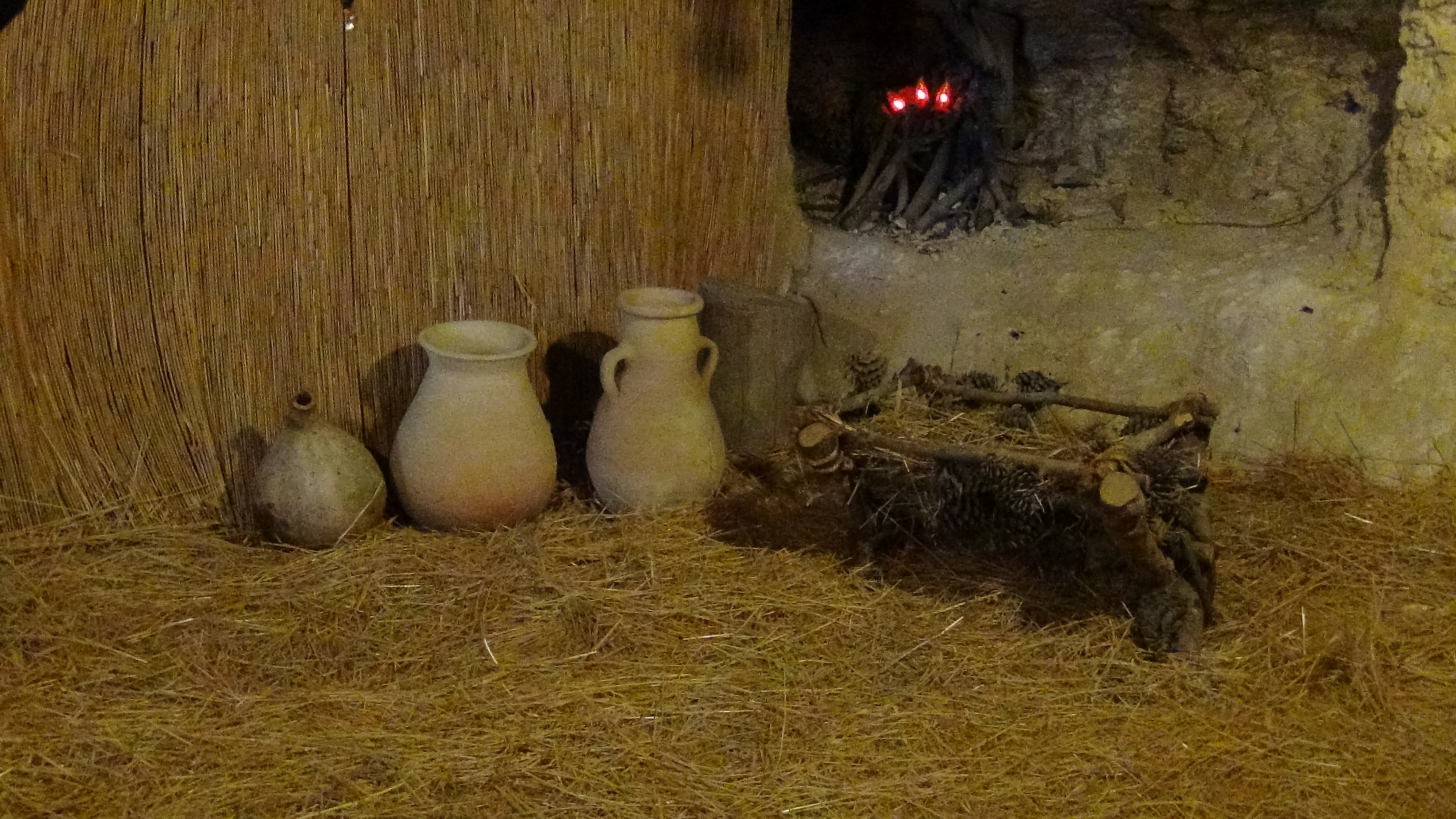
Jesus entered the world into the poverty of a stable, grew up in the poverty of a carpenter’s son, walked and slept among the poor in his ministry, and died on the poverty of the cross, “he became poor, so that by his poverty you might become rich.”  All the riches of the world are his yet the riches he offers are not material abundance but spiritual abundance in the graces of faith to believe, hope to trust, love to care, prudence to judge rightly, justice to be fair, fortitude to  demonstrate courage, temperance for balance, knowledge to understand, and wisdom to know God.

Jesus chose solidarity among the poor to witness his love of humanity for we all enter the world poor and return to the dust of the world yet “He raises up the lowly from the dust”.  In this we see the promise of being raised up from the dust to heaven with the riches we have received and not squandered.  The Lord calls the poor in spirit blessed knowing our fallen nature brings us the poverty of sin yet his mercy endures forever.

We will all be asked to “prepare a full account of your stewardship” the graces we squandered and those we multiplied.  Are we prudent as children of the light to recognize these gifts and invest them into the greater good of humanity?  It is tempting to “fix our scales for cheating” as the steward trusted with the master’s wealth acting “prudently” in our own interest.  The parable however was of a steward who was not prudent with the master’s property until he got caught for squandering his property.  Lesson then is a “person trustworthy in very small matters is also trustworthy in great ones”.

If we serve the god of mammon, the material god then we are anxious to preserve our riches and least eager to share them, the scales are always tipped our way.  Jesus is ready to share his riches with us, generous to those who “Ask and it shall be given you; seek and you shall find; knock and it shall be opened to you”.  There is no limit to the degree of riches we can receive in Jesus.  Unlike the megachurches who preach material wealth, look to Jesus and his witness on earth to see the fallacy of those false teachings.

Material goods are a blessing not as a reward for good behavior or a trophy of recognition as perceived in the Old Testament but a blessing for the purpose of doing a greater good in service to God.  One of the criticisms of the Catholic church is the amount of wealth invested into some of its cathedrals and basilicas while people are walking on the streets hungry and poor.  Those beautiful churches also feed the spiritual needs of the poor in comforting their lowliness as a visible sign of God’s presence closer to them than their suffering.  The church, that is the people of God inside the building are called to respond to the physical needs of the poor.

In union both spiritual and physical needs are cared for as one body in Christ.  With all the power of God and all the miracles Jesus manifested he never bestowed material wealth to the poor, to his parents, or his disciples.  Instead he asked them to trust him and sent them out in poverty to minister to the world.

Today we are reminded one of our ministries to the world is for the “supplications, prayers, petitions, and thanksgiving be offered for everyone, for kings and all in authority.”  As a society we choose sides and attack the authority in control when they don’t represent our views.  They need the most prayer because their authority impacts the “quiet and tranquil life’ we seek.  As we become more interdependent with the world in a global economy, a nuclear age, and the geopolitical tensions around the world no one is immune from the next global threat.  There are wars of weapons, trade wars, virus attacks, environmental wars, and cultural wars.  Our leadership needs our prayers and “This is good and pleasing to God our savior who wills everyone to be saved.”

The Lord pours out his riches into our souls to bring us the peace we seek in our homes, comfort in our suffering, forgiveness of sins, blessing for our work, joy in our hearts, the confidence to persevere in our challenges, help at the hour of death with the assurance that our names are written in the book of life for all eternity.

Tags
Shared this
Views

301 views