bg-image

Pentecost Sunday Receive the Holy Spirit

Acts 2:1-11; Ps. 104:1, 24, 29-31, 34; Rom 8:8-17; Jn. 20:19-23

Receive the Holy Spirit!  Pentecost Sunday is the gift of the Holy Spirit to each according to the gifts of the Holy Spirit.  What is our gift and how are we using this gift to serve God and the greater good?  For the apostles, the Holy Spirit is the “Advocate”.  In legal terms the advocate speaks for them but it does so through the inspiration it gives them.  It allows them to speak for Christ and not for themselves.   

The Apostles spoke as one voice through prayer, fasting, and discernment.  We too share in the gift of the Advocate by listening to the voice of God in prayer, fasting, discernment and by the voice of the Church.  Since the early days it was the one voice of the Church that addressed many of the questions of the people such as circumcision, ritual foods, or moral behavior.  This was a time when there was no “bible” to study only the word given to the apostles and the traditions carried forth and those left behind.  It was a time of major change in matters of “God” and Jesus sends us the Holy Spirit to guide this transition. 

Just today, I was walking through the grocery store and I heard two men discussing a religious matter when one spoke up with a louder voice saying “even the Pope said, ‘who am I to judge’” (a quote attributed to Pope Francis) making his final argument.  The moral clarity of the Church and for the Pope is not to pass personal judgment but to defend the judgment that has already been passed on from Christ to his people.  There are certain judgments that are not left for re-litigation but for enforcement through obedience.  The Lord has passed judgement on issues of life and death, right and wrong, truth and lies and these judgements are not hidden but defended so that ignorance of the truth is not an excuse. 

The Ten Commandments are a judgment that separates holiness from sinfulness.  Hell welcomes all sinners without conditions or exceptions “as is” but Christ welcomes all sinners to repentance “as called to be” for heaven.   The Holy Spirit comes not to affirm us as we choose to be but to purify us with the fire of holiness to be all that God is calling us to be.  The “call” is for transformation, renewal, and the fire to change the world by the change that starts from within the soul. 

In the first reading the Holy Spirit comes in the form of “tongues as of fire” but the “tongues” were different to each as evidence by those who heard them speak in different languages.  For some Christian groups the gift of tongues has become a litmus test as proof of being saved.  The gift of the Holy Spirit is not simply the gift to speak in tongues as a charismatic revival of the spirit.  For those who receive this gift they must still pick up their cross and follow in the footsteps of Jesus by the daily practice of the faith.  Even those who spoke in tongues spoke in different languages to be understood by various native people of different regions.  Speaking in tongues is just one of many gifts that the spirit produces according to God’s purpose. 

The Holy Spirit comes in many forms with various gifts to be a servant of the Lord and fulfill a calling.  The gift may be to step up as a martyr as did St. Maximillian Kolbe, or the gift of love for the poor as did St. Teresa of Calcutta, or the gift of defending life in all its forms from conception until natural death as a voice in public office, or the gift of raising a future priest, Nun, or Pope by faithfulness to the Church in the domestic church at home.  There are many gifts but the same spirit and the gift of tongues is just one gift.  Again, “What is our gift and how committed are we to this calling?”  The answer is in the fruit of the gift and taking time daily for a spiritual inventory is a good way in making progress for what we have done or failed to do. 

Receive the Holy Spirit and you shall live in the spirit as we bury the flesh.  We bury the flesh when we deny ourselves not what is good but what excess.  It is good and essential to feed the body but it works against the body and the spirit when excess is given to the body bringing sickness and disease.  We bury the flesh when we deny ourselves the pleasure of sexual temptation in all its form of lust but not the sexual union that comes in marriage.  We bury the flesh when we deny ourselves the pride of desire to be first but welcome the desire to be the best that God created us to be.  We bury the flesh when we deny the need to control others according to our will and allow God’s will to be done.  In this we set the spirit free to work its grace in our lives. 

The apostle also reminds us that “if only we suffer with him so that we may also be glorified with him”.  Suffering with the Lord begins with our self-denial of the flesh.  Self-denial is our invitation to the Holy Spirit to come and take possession of our hearts and strengthen us by his grace.  It is easy to question the Lord as to why our prayers are not answered without even giving a thought as to why we have not made a sacrifice of our own for the Lord.  It is good to ask but it is important to make an offering to the Lord.  The great sacrifice of the Lord was an act of love for humanity and thus our greatest act of love comes through sacrifice. 

We are one body in Christ but it is our many gifts from the Lord that allows us to love, grow and support each other called to serve one another, lift each other up and help each other get to heaven. 
Tags
Shared this
Views

345 views


  • 1
  • 2
bg-image

Solemnity of the Ascension of the Lord

Acts 1:1-11; Ps. 47:2-3, 6-9; Eph. 1:17-23; Lk. 24:46-53

The Solemnity of the Ascension of the Lord is also about the blessing of the “promise”.  The promise of the Father is the gift of the Holy Spirit.  The Holy Spirit comes with the power to bring forgiveness of sins, it is the promise of the kingdom of God, and it is the power to speak “in persona Cristi”, in the person of Christ.  Scripture is the word of God but the word is given to those called to serve in the image of Christ as his priests with Christ as our high priest.   This is the power of the church as the body of Christ to be a channel of grace upon his people.  This promise is for us through the waters of baptism as priest, prophet, and king. 

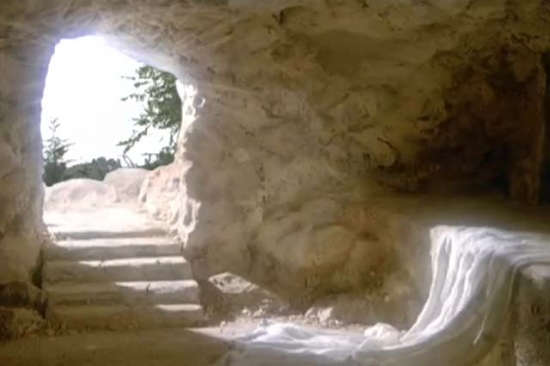
What are we to fear if we carry the promise with us.  We don’t fear living but not living up to the gift of the promise. The gift is a calling to be witnesses of Christ in forgiving, in teaching and by example.  When we look to the Ascension of the Lord, we bring together the cross, the cave and the ascension.  Each day we are to live the cross of suffering and surrender to the Lord. In the cave we also die with him putting to death our temptations of the flesh and mind that represent sin.  In carrying the cross and dying to self we can truly rise with him in spirit and in truth.  When we come to receive our Lord in the Eucharist we come to be purified in his body and blood that we may rise to new life and a greater presence before the Lord, as Jesus prays that we may be one in the Father, Son, and Holy Spirit. 

In the reading, the two men dressed in white is the appearance of angels as ordinary humans.  When was the last time an angel addressed us personally?  If it did happen the possibility that we even recognized we were being addressed by an angel is unlikely.  We see with the human intellect and fail to recognize with the heart God’s messengers.  Recall how Jesus appeared to the two disciples on the road to Emmaus and how they failed to recognize him until the breaking of the bread.  What we can learn from this is that their hearts were burning even when their eyes were blind.  We cannot be before angels and not have our hearts touched by their presence.  To be in the kingdom of God is to be with the angels and the saints.  It is why we pray not only to God in the Trinity but to the angels and saints who are with us in our journey of faith. 

Even greater is the gift of the Holy Spirit at work within our souls.  The Holy Spirit is the gift of “wisdom and revelation” that our hearts be “enlightened” to confirm God’s truth and say “I know that I know” God’s will for me.   There is no doubt what God is asking of us.  God does not ask without providing “the surpassing greatness of his power for those who believe”.  Faith leads to action but it occurs within the act of total surrender to the will of God trusting in his divine will to work all things for the greater good.  The Holy Spirit is more than a companion on the journey, it is the force within the soul to bear the cross, to give life to the soul, and to raise us up in victory uniting us to the Lord in his ascension.  The Holy Spirit is the promise of God’s indwelling presence in our souls.  “Come Holy Spirit, take possession of our hearts and strengthen us by your grace.” 

The purpose of the Ascencion of the Lord was not to leave us to our own doing but to send us the guiding power of the Holy Spirit.  The work of the Lord is to operate from within our soul, to manifest himself through us by remaining within us.  We are to be the temple of the Lord and seek to remain in the purity of the Holy Spirit.  Do we fail often?  Absolutely, we fail but in the mercy of God he lifts us up again and our souls are strengthened by his grace in the call to be perfect as he is perfect.  It took the Israelites forty years in the desert to reach the promise land and so in God’s time we will be formed into his image, the image of Godly love.  That image may not be what we anticipate it to be as a “perfect human being”.  The Lord’s perfection is his work being done through us.  It may be through our sickness, our incapacity to do for ourselves, our conditions of dementia, being bedridden, or in poverty, homeless, or abandoned in a nursing home waiting for death.  Our call to holiness may be as the caregiver of those in need.  The Lord’s perfection works in mysterious ways through our brokenness that others may be called to serve as instruments of God’s love and gain their perfection. 

The Lord has ascended into heaven but he also remains always present for those who call upon his name, the name above every other name and at the name of Jesus every knee will bend.  We kneel to the Lord that we may also be lifted up with the Lord this day. 

Tags
Shared this
Views

312 views


  • 1
  • 2
bg-image

Solemnity of the Ascension of the Lord – The Promise

Acts 1:1-11; Ps. 47:2-3, 6-9; Eph. 1:17-23; Mk. 16:15-20

The Solemnity of the Ascension of the Lord comes to us with the promise of the Holy Spirit.  The Holy Spirit is the promise of God’s power to believers.  It is the power to drive out demons, speak new languages, lay hands on the sick and they will recover.  It is God’s power but we are his instruments of this power.  We are his baptized believers so the fruit of this power is to come through us.    

As it is, research says that we only utilize about 10% of our brain’s capacity.  If we include the potential power of the Holy Spirit how well are we utilizing the gifts and power of the promise?  I suspect the answer is “not nearly enough”.  The reason goes back to the weakness of the flesh that holds on to the powerlessness of its own will rather than surrender to the power of the will of God.  The power of the promise is manifest in our desire to do the will of God.  The greater our surrender the greater the power and miracles that come from it.  This is the testimony of the great saints. 

Too often the sentiment is “I am not worthy”.  God places no standard of worthiness on his people.  He places a standard of obedience, surrender and sacrifice.  He calls us friends but as his friends our commitment is still trying to bargain with a “yes, but not yet” or “yes, but not completely”.  If not now when?  How long will we keep him waiting for our hearts to open up to his love?  The spirit is weak from lack of spiritual muscle.  Spiritual muscle comes from spiritual exercises that includes our prayer life, our charity, and our communion with God.   These are the corner stones that opens our hearts to obedience, surrender and sacrifice.  Practice leads to perfection in any of our life goals corporal as well as spiritual.  Do it! Do it right! Keep doing it! 

It all begins with taking the next right step.  It comes as an inspiration from the Spirit, it passes through right judgment, and leads to an act of holiness.  That is why we are called to be holy as God is holy.   It is the Spirit of truth that he promised and we will not be misled.  This is the promise coming from the Ascension of the Lord that we may follow him both now and at the hour of our death.  The Lord left us the promise of the Holy Spirit to strengthen us in our faith journey but it is a journey we must still undertake. 

Today also marks Mother’s Day in which we honor our mothers who through the pain of childbirth said “yes” to life.  It is a selfless self-giving sharing in the mystery of creation.  It is saying “yes” to God and trusting in the Lord to walk in faith raising up a child with God’s special graces he gives to mothers.  A mother knows her children because her love comes with a spirit of wisdom and revelation.   They have eyes behind their heads, “lol”. 

We also recognize the women who said “yes” to accepting a child raising them as their own because of whatever circumstances the child was born in or found themselves in.  Mothers are an example of how God works through humanity to bring about life, joy, peace, love and salvation.  The reward of motherhood is a great blessing but greater is the promise to come when God will call us to his glory. 

Tags
Shared this
Views

236 views


  • 1
  • 2
bg-image

Second Sunday of Easter – Spirit is truth

Acts 4:32-35; Ps. 118:2-4, 13-15, 22-24; 1 Jn. 5:1-6; Jn. 20:19-31

From fear to the Spirit of truth.   The disciples were locked in spiritual fear that they were next to be arrested and killed after seeing how they crucified Jesus.  They were also physically locked in the upper room when Jesus appears to them with the words of courage “Peace be with you”.  Jesus frees them from their spiritual fear as he breathes on them the gift of the Holy Spirit, the Spirit of truth.  Are we locked in our fears in need of the Spirit of truth to set us free.  The Lord is here, he is risen ready to set the captives free. 

As parents we fear for our children anxious about many things yet our children belong to God.  Our children are a gift to raise up in the Spirit of truth and to set them free to serve their God given purpose.  We fear illness and disease as we age recognizing our own mortality yet even Jesus had to suffer a mortal death to rise again giving us the evidence of victory over death and the hope of eternity. 

We fear the powers of this world that seek to take our freedom and burden our lives claiming authority to rule over us.  Jesus tells Pontius Pilate he has no power over him reminding us that our kingdom is not of this world but resides in the Spirit of truth within and that freedom cannot be taken away.  We fear the evil that prowls about the world seeking the ruin of souls.  We have the power over evil, we are covered by the Spirit of truth, we live the sacramental life that receives Jesus body, blood, soul and divinity in the Eucharist and in the Holy Spirit.  Fear not!

When Jesus breathed on the disciples giving them the Holy Spirit it came with a mandate.  It wasn’t a gift for their indulgence or self adulation.  It was a gift of power and authority to serve God in the person of Christ with the sacramental duty to forgive sins in the name of Jesus.  As we recall Jesus had already instituted the Eucharist and the priesthood on Holy Thursday to be done in remembrance of the Lord but the disciples did not fully understand what their “call” to duty included. 

This was and is the new beginning of the people of God to be of one body that is of one Church.  This did not deny the past history of the law of Moses and the call to obey the commandments, it fulfilled it in a more perfect way.  It did not deny the priesthood but renewed it with Jesus as our high priest.  Jesus also did not write down one word but was the Word made flesh and by the gift of the Holy Spirit gave the disciples the spirit of truth so that his Church would carry his authority to forgive and retain. 

Why do we go to a priest to confess our sins?  It is the Jesus way in which having already recognized we have sinned we must now present ourselves in an act of obedience and humility to receive confirmation of the Lord’s forgiveness and complete the sacrament with act of penance to wipe away our sins.  The Spirit of truth if we are fully sorry for our sins is confirmed in not only in our words but also in our actions.  As Jesus said to the Leper in Mathew 8:4 who had been healed of the Leprosy to go and present himself to the priest to be examined of his healing and make an offering.  In forgiveness of our sins through the sacrament of confession we too must go and present ourselves to the priest to be examined and in our penance make a spiritual offering.

Thomas came to believe because he saw with his own eyes and so today our world is filled with many who walk in the shoes of Thomas unable to believe but more sadly unwilling to seek in order to believe.  The world is filled with people whose life is based on their mortal senses and have no desire to discover the God of their creation.  Instead, many turn to their own inner spirituality believing in their own creative thoughts, the human potential, and dismissing the Godly potential and promises of the divine. 

This is the day to receive the mercy of God and in his divine mercy to separate ourselves from the sin of the past and rise with Christ in the spirit of truth.  His is risen indeed so let us also rise with him to new life. 

Tags
Shared this
Views

188 views


  • 1
  • 2
bg-image

Pentecost Sunday “Jesus is Lord”

Acts 2:1-11; Ps 104:1, 24, 29-31, 34; 1 Cor. 12:3b-7, 12-13; Jn. 20:19-23

“Jesus is Lord!”  The confirmation of Jesus is Lord came to the disciples through the Holy Spirit in a visible image of “tongues as of fire”.  The disciples were proclaiming in different languages “the mighty acts of God” in the person of Jesus.  They were being given their priesthood to speak and fulfill all that Jesus had commanded them to do.  Thus, by doing what Jesus commanded with power and authority there could be no doubt of the proclamation that Jesus is Lord. 

This Spirit given to the disciples though one Spirit came with different gifts that each may fulfill one part of the body of Christ yet each gift reveals the same truth “Jesus is Lord”.  By receiving different gifts, it would have been possible that each would have created a different vision of Jesus or a different theology of who Jesus is.  It is like the game where you whisper one statement in the ear of one person and each pass on the message to another but at the end the message is completely different.  To the contrary even though each disciple was different in their personality, their education, their experience of being with Jesus and in the gift from the Holy Spirit, their proclamation of “Jesus is Lord” was consistent in the one truth.

Today we continue to receive our inheritance of the Holy Spirit’s gifts through the sacramental life of the Church though many gifts, one Church, one faith, one Lord.  “The manifestation of the Spirit is given for some benefit”.  The benefit is a reciprocal blessing whereby placing the gift at the service of the Lord we become the blessing of the Lord and are blessed with even more graces to grow in holiness.  This is the law of reciprocity, we cannot outgive the giver of all that we are and offer of ourselves to our Lord and to our neighbor. 

For the world Jesus revelation of who he is was soon to be a major source of division.  Either accept his Lordship as God and the guilt of his crucifixion or deny him and everyone who proclaimed “Jesus is Lord” by persecution of his witnesses.  What was true then remains true today, the more we proclaim Jesus is Lord the more the world seeks to silence, cancel, and persecute those who stand for their belief even when Jesus comes offering peace, mercy, and redemption.

Jesus breathes on the disciples the power of his love and desire for mercy to the sinner but the sinner refuses to accept their sin.  How significant that upon his appearance to the disciples as a group we may even consider calling it the first “council” of the Church with Christ as Vicar, that the preeminent command given with the Holy Spirit was to forgive sins in the name of Jesus our Lord carrying forth the priesthood of Jesus. 

This is a tremendous gift of authority and responsibility to the priesthood to “forgive and to retain sins”.  It can only come through the guidance of the Holy Spirit.  Sadly, even among believers who accept Jesus is Lord they reject this gift of mercy by confession on the lips remaining silent at the risk of retaining their sins by their will refusing the gift of mercy through confession.  It is not difficult to say the words “Lord be merciful to me a sinner” but greater is the mercy of the sacrament when we humble ourselves to God in the confessional. 

Jesus says, “As the Father has sent me, so I sent you” and he breathed on them the Holy Spirit.  Jesus came to bring us the Father’s mercy, now he waits for us to respond with an act of humility and obedience to receive this gift of mercy.  Mercy opens us up to all the other gifts of the Holy Spirit to be cleansed for the pure cannot enter the impure until it is washed clean. 

Tags
Shared this
Views

191 views


  • 1
  • 2
bg-image

The Ascension of the Lord – “The promise!”

Acts 1:1-11; Ps 47:2-3, 6-9; Eph 1:17-23; Mt 28:16-20

“The promise of the Father” is the Holy Spirit.  Last week we celebrated the promise with the sacrament of confirmation for seventeen of our young community as bishop Mario Aviles placed the Chrism oil on their heads.  The disciples were to “wait for the promise” after the ascension of the Lord.  How long must they wait?  Here is a hint, “how long is a Novena?”  They waited in in prayer for nine days and on the tenth day came the promise to be baptized in the Holy Spirit.

 We will celebrate his coming in the Holy Spirit next Sunday as Pentecost Sunday.  Forty days after the resurrection day happened on Thursday but the Church allows for the celebration to be recognized on day forty or on the weekend.  Novena prayers commemorate a period of waiting for the Lord in prayer for his promise.  The promise is his coming to be with us until the end of time. 

As Jesus ascends to the Father in today’s reading “two men dressed in white garments” appear to the disciples with a question for all of us “why are you standing there looking at the sky?”.  When we seek God, we look to the heavens and sometimes think and feel God is far off from us” and we may even question “does God hear our prayer?  The promise of God is that he with us!  He is with us in the Holy Spirit, he is with us in the Eucharist, and he is with us as he comes to us in others in who he is also present.   

For the disciples they were still thinking and wondering if Jesus was “going to restore the kingdom to Israel”.  Their vision of a kingdom was an earthly kingdom to the Jewish people.  They did not hear Jesus tell Pontius Pilate, “My kingdom is not of this world” (Jn. 18:36).  Where then is this kingdom or what is it?  Thy kingdom come is what we pray for in the “Our Father”.  Thy kingdom comes as a “Spirit of wisdom and revelation resulting in knowledge of him” who we trust and believe in.  In the knowledge of him truth is revealed to us and we are given a vision of life, liberty and love in him.  We love living, we love freedom, we love to be loved then Jesus is the fullness of this desire.  In him we put on the mind of God and find meaning not only in our joys but also in our suffering.  In him we grow in virtue and sanctity as we respond to his call and do his will.

Jesus comes to restore his kingdom of saints for heaven.  Are we there yet?  What is holding us back from receiving the fullness of his grace through the Holy Spirit to be saints?  For some it is ignorance of him for not seeking him who is waiting on us. They include the unbaptized, un-catechized, the agnostics raised without faith in a God.  They fall into the category of “you don’t know what you don’t know” but in ignorance do the best they can.  In today’s world of communication however ignorance of truth is not a justified excuse for many.   “Go and teach all nations” has surrounded the globe in a missionary spirit. 

For some it is resistance knowing the God of our ancestors but still saying “not yet”.  I am not yet fully committed to God because I am still living for me.  They include the “lukewarm” baptized both in the Catholic church and in other separated Christian denominations that lack the fullness of truth.  The lukewarm still seek to build a kingdom in this world yet the world has never produced a kingdom that lasts forever.  When we focus on simply building our own kingdom it will come to an end and then what?  God provides hope to fulfill his promise of heaven and the road to it goes through purgatory for nothing impure can enter the kingdom of heaven.  Purgatory is our time to be purified by loving him as we have failed to love in this world. 

Tragically for others it is a rebellion against surrender to God to be their own god.  These take on the persona of their own sins not just falling into sin but become the sin they are attached to possessed by the demon of their sin.  It is a reminder of when Jesus says “not all” are going to enter the kingdom of heaven.  It is a tragedy by choice of the will and we pray for the conversion of sinners before it is too late.  The promise is for all to convert from sinner to saint while there is still time. 

The saint knows “his call” given from God.  We each have a calling to exercise our saintly purpose in this world.  The greater the knowledge of God the more our calling is revealed to us in which to serve him for our good and the good of others.  The saint receives the “riches of glory in his inheritance among the holy ones”.  An inheritance comes after the death of someone and Jesus died on the cross that we may receive the riches of our inheritance.  They come as gifts of the Holy Spirit and they come with “the surpassing greatness of his power”.  The gifts are like powerful tools but unless we allow them to serve their purpose, they are waisted opportunities sitting in storage and we become like seeds planted on poor soil failing to grow and give fruit. 

The eleven disciples did as Jesus asked going to Galilee.  They saw Jesus and worshiped him BUT “they doubted”.  What is wrong with this picture?  After all that Jesus did, miracles, exorcism of demons, healing, even raising the dead back to life and now seeing him resurrected and they doubted.  This is us in the fullness of our humanity.  Even when we know there is a God, when life happens and not all goes well, we find ourselves questioning and even doubting.  Has not God revealed himself to us during our life that we may see the hand of God in all and though all or have we not come to him and received him in all our daily walk of life? 

The gift of the Holy Spirit comes to us as it did to the first disciples with a commissioning to go out to all the world and tell the good news.  The good news is Jesus is alive and he comes to deliver the promise of the Father in our own journey of faith.  Live the journey as a daily walk with Jesus and when the evil one desires to create doubt in us we will respond with “there is no doubt” in the promise of God the Father, in the Son, and through the Holy Spirit.  So let us go out, let us live the promise with courage not fear, with faith not doubt, and with purpose to be all God is calling us to be.

Tags
Shared this
Views

268 views


  • 1
  • 2
bg-image

2nd Sunday of Easter – His Divine Mercy

Acts 2:42-47; Ps. 118:2-4, 13-15, 22-24; 1 Pt 1:3-9; Jn.20:19-31

Rejoice for his Divine Mercy endures forever!  We rejoice and give thanks to the Lord for he is faithful to his promises.  Easter is a celebration of Jesus’ resurrection raising us from our own death from sin through his Divine Mercy.  Jesus loves you so much he came to die on the cross to rescue us from the sins of our fallen nature.

Even when we are prodigal children wasteful of the inheritance of heaven with our time, talent and treasure God is faithful to his divine mercy as a loving father.  His divine mercy brings “the salvation of your souls”.  For some of us we wander in the desert for years “doing our own thing” until we “hit bottom” and realize we need God in our lives but it does not have to be this way.  The good news is that we have only to turn back to him, repent, and believe in his divine mercy.  Will Jesus appear to us as he did to the apostles for us to believe?  If we seek him with the eyes of faith, we will recognize his presence in our life.  We don’t have to wait to hit bottom, we have only to pray to open our minds to his truth and see with the eyes of faith. 

The apostle Thomas was not present when the Lord first appeared to the apostles and perhaps Jesus desired to use Thomas to show us how we can be much like Thomas that is until we have our own personal encounter with Jesus.  Once Thomas joined them however, he was there not only to see and touch but to receive “the breath” of God and the gift of the Holy Spirit.  These apostles are now commissioned by Jesus Christ to go out and preach the good news.  Thomas not only became a believer but an evangelizer who ended up in India where he died. 

In one of the ancient texts called “The Passing of Mary”, St. Thomas is mentioned as “the only apostle who witnessed the Assumption of Mary” though physically in India “he was transported to her tomb and he saw her bodily assumption into heaven, while her girdle was left behind”.  A traditional version of the story includes that the “other apostles doubted Thomas until Mary’s tomb was discovered to be empty with the exception of her girdle” (catholic.org/stthomas).  Perhaps someone wanted to show us that the other apostles were no different than Thomas.  They needed to see with the eyes of humanity to believe with the eyes of faith.  In this way it reminds us that we are more alike than different. 

These first apostles established the order in which we would celebrate the good news guided by the Holy Spirit.  The communal life became the Mass incorporating all that Jesus had taught them recognizing in the breaking of bread to be Jesus himself “transubstantial” in the bread and wine.  This is how Jesus would remain with them most fully present giving them the graces to persevere “though tested by fire” this time willing to die for him.  This time because before the resurrection Peter denied him and the others hid in fear but after he appeared to them, breathed on them the power of the Holy Spirit transformed them into warriors for Christ.  This is the fullness of his divine mercy coming not only to wash us clean of our sins but to transform us into warriors for Christ. 

The breath of Jesus upon the apostles and the fire of the Holy Spirit came with authority to act in the person of Christ “Whose sins you forgive are forgiven them and whose sins you retain are retained.”  Do we believe?  In the world of Christianity many do not believe.  Many question why should we have to go to a priest to confess our sins when we can go directly to Jesus?”  First it is always good to go directly to Jesus with all our heart, mind and soul.  Second the priest is in the person of Christ doing the work of Christ as he was commissioned.  The answer to the “why” question is because this is how Jesus commanded it to be so if we ask Jesus “why” we may discover a lesson on humility as the Blessed Mother said at the wedding of Cana, “do whatever he says”.  If we have a problem with it take it to Jesus but remain obedient to Jesus. 

The Catholic church follows all the commands Jesus gave the apostles and because they are commands. It recognizes in them the work of Jesus himself still present as sacraments.  A sacrament is something sacred coming from God.  It more than the work of the Church or of priests who act in the person of Christ.  It is the work of Jesus himself through his church.  The sacraments are God’s work of his divine mercy, the visible signs of his invisible grace coming to heal, forgive, set us free, and make us holy. 

Many of other faith denominations are left with baptism as the only sacrament they follow.  Meaning everything else is negotiable but not with Christ.  The last supper becomes simply a “remembrance” of the past that anyone can do with crackers and juice not sacred.  Marriage is still under the law of Moses and a divorce decree is acceptable.  The priesthood handed down by Jesus and with him as our high priest during the Last Supper as Holy Orders out the window.  Now anyone can pick up a bible and decide they will preach with authority.  The altar of sacrifice gone replaced by the stage with focus on the preacher.  This is not following the teaching of Christ which he commanded. 

No wonders the “church” as an institution is in decline.  What are people to believe?  More importantly, what do we believe?  Do we hold onto all the teaching given to the apostles by Jesus or have we too fallen into being selective and relative to our personal preferences?  We live in a culture that holds the freedom to choose as sacred and God himself created mankind with free will.  This does not mean that our choices are right before God.  God gave us Thomas to see ourselves in him and recognize our need for his divine mercy.  When Thomas answers Jesus “My Lord and my God!” he is now professing publicly his faith in the divinity of Jesus and in the resurrection.  Thomas becomes obedient to his calling. 

To say, “I am a Christian” is to devote ourselves “to the teaching of the apostles…to the breaking of bread and to the prayers”.  This is the Mass where we gather to celebrate our “communal life” as believers.  Here we receive his Divine Mercy. 

Tags
Shared this
Views

261 views


  • 1
  • 2
bg-image

6th Sunday of Easter – The Advocate

Acts 15:1-2, 22-29; Ps. 67:2-3, 5,6,8; Rev. 21:10-14, 22-23; Jn. 14:23-29

“The Advocate, the Holy Spirit…will teach you everything”.  The Advocate is here to remind us that the Word made flesh in Jesus is to incarnate in us as the temple of the Holy Spirit.  Just as in Revelation, John sees no temple in the holy city of Jerusalem “for its temple is the Lord God almighty and the Lamb” is Jesus.  The word incarnate in us gives us the peace of Jesus “not as the world gives” peace but through the Holy Spirit as he comes to dwell in us.  Do we invoke the Holy Spirit regularly to be our Advocate in prayer?  The Holy Spirit is the gift received at baptism through who we receive the graces and virtues to know and understand the will of God in our lives.

Until the Holy Spirit came at Pentecost the disciples were sheep still failing to understand all that Jesus was instructing them.  Then came the Advocate and they became as one in the Spirit guided to make the right decision as apostles and shepherds to the Gentiles and to all the followers to come after the death, resurrection and ascension of Jesus.  Pontius Pilate asked Jesus “what is truth?”  Jesus says to his disciples at the Last Supper discourse “I am the way and the truth and the life.”  Jesus is the truth being revealed to us through the Advocate in our daily encounter with life.  If we were to consider Jesus is the truth of theology then the Holy Spirit is the applied theology as the Advocate that makes all thing work for the greater good. 

In the first reading there is a dilemma as the early church is still struggling with the applied theology and some leaders were calling upon the Gentiles to be circumcised following the Jewish tradition and law going as far as to say, “Unless you are circumcised according to the Mosaic practice, you cannot be saved.”  By what authority were these leaders relying on?  It was the historical authority and practices of the people of God.  Everything that Jesus instructed had not been written down and in what is written down Jesus says nothing about circumcision.  To have unity authority matters.  The final human authority rested on the apostles whom Jesus appointed and called Peter to be the “rock” to build his church.  The divine authority as spoken by the apostles and elders “It is the decision of the Holy Spirit and of us not to place on you any burden beyond these necessities”. 

What a great gift given to the apostles and to us to receive the Holy Spirit as the Advocate in discerning “doing what is right”.  We cannot lose sight in recognizing that as we all share in the gift of the Holy Spirit there remains the wisdom of God in providing the church an authority for the applied theology that we may all be one in faith and practice.  We cannot be a church unto ourselves and each simply believe they are doing what is their “right” when it goes against the church authority, something to reflect on.  Through the centuries many have tried and failed from Arianism, the belief that Jesus was not fully divine one with the Father to Luther’s Reformation and the revolt into Protestantism, the church has prevailed by remaining faithful to the authority and working of the Holy Spirit. 

In our times, Protestantism is failing because it continues to divide itself into more and more denominations and they break from each other because there is not one authority in the applied theology of what is “right”.  Still, we cannot cast stones within the Catholic church for we share a history of schisms when some choose to break from authority.  In the past it was Luther and today the church in Germany is at risk of doing the same with what it is calling the “synodal way” to reintroduce ideas that church authority has already addressed like female priesthood and acceptance of homosexuality.    

Have a dilemma pray to God the Father to receive his glory, pray to Jesus to be our lamp and light the way and pray to the Holy Spirit to reveal the word of truth and understanding for the answer we need to receive.  Try to remember a moment when faced with a dilemma where a difficult decision needed to be made and finding ourselves unsure how to discern the right or best decision.  Who do we turn to our parents, a spouse, our friends, or even a priest?  Do we take it to prayer and do we call upon the Advocate? 

One day as a young adolescent, I had a dilemma and needed to make what was to me a major decision at the time.  The dilemma was whether to play football or take band in school since at the time you could not take both.  I wanted both but it was not allowed and could not make the choice.  I asked my mother for guidance expecting her to help me decide.  I was quite surprised when she quickly and simply said, “You will have to decide.”  Did not see that coming.  It was not the response I expected and only later came to understand that I had to take ownership of the decision that would impact my life for the next several years and longer.  So, I prayed and asked God that I was making the right choice and was at peace with my decision.  This is the working of the Holy Spirit.  God was going to use whatever decision to help me grow as a person and in my faith.  God works through our free will when we call upon the Advocate to remain with us and lead us to the will of the Father. 

Are we ready to trust God with our life choices?  When we offer our decisions up to the Father for his glory, trust in Jesus to open the way for us, and call upon the Advocate to give us the wisdom to be at peace we are truly entering into the providential life of the Spirit.  In the Trinity God works for those who love him.  The Advocate is coming and is already here from the day of our baptism if we only turn to call upon the Holy Spirit and pray then we will hear his voice and know God is with us. 

Tags
Shared this
Views

232 views


  • 1
  • 2
bg-image

2nd Sunday of Easter – Divine Mercy Sunday

Acts 5:12-16; Ps. 118:2-4, 13-15, 22-24; Rev. 1:911a, 12-13, 17-19; Jn. 20:19-31

Divine Mercy Sunday proclaims the Lord’s “mercy endures forever” open to all but received by those who share in the “distress, the kingdom, and the endurance we have in Jesus”.  We all like to receive gifts but if the gift comes with an expectation, then we become hesitant to receive the gift and fail to recognize the value of the gift.  We can understand why even something as important as the gift of mercy is not sought after because the expectation is that something in us is expected to change and we resist change of self more than perhaps anything else. 

The expectation of the Lord is that we share in the “distress, the kingdom, the endurance we have in Jesus”.   This “distress…kingdom, and endurance” is the call to come and follow the path of perfection through the love of God and neighbor, and the sacrifice of mercy to forgive and be forgiven and to persevere in our faith, hope and love.  Simply stated the gift of mercy is by sharing in the sacrifice of the Lord to live and die for each other.  It is a covenant of mercy to be merciful for the mercy we have received by passing it on in a world known more for its “dog eat dog” mentality than for the lion to lay next to the lamb.   

Do we share in this struggle for the sake of the kingdom or have we become habitual in religion showing up on Sundays and special celebrations and lost throughout the week in ourselves?  Before the Lord we proclaim we believe but outside of the Mass our lives are lived as St. Tomas doubting his presence is with us.  St. Tomas hesitancy to believe lives on in us when we fail to recognize the hand of God in our lives, when faith does not overcome the test of distress, and when we trust ourselves more than trust in God. 

The reflection of how we live our lives outside of Mass speaks louder of how we keep our baptismal promises.  It is not a heavy yoke but a joyful sacrifice of love for God.  The struggle for the kingdom is because evil remains in this world seeking to ruin our souls, tempting us to deny what we believe in practice and persecuting the faithful for rejecting the teaching norms of the world.   The gift of divine mercy is also the power of endurance that we will not be overcome by the world but overcome the world with mercy. 

We hear, see, and experience a world filled with evil, distress, and fear of persecution and the Lord is calling us to his mercy through repentance of our sins and acts of mercy.  Just this week there is an intent to remove “conscience objection on religious grounds” from medical/health practice intended to force health professionals to perform legal medical procedures such as abortion, euthanasia, body mutilation for gender change or risk losing their right to their practice of medicine and/or health care.  Mercy is not about “going along to get along” or “not rock the boat” as is commonly described.  Mercy is about giving testimony to the truth of the gospel by giving the warning of Jonah to Nineveh to repent while there is still time and proclaiming the mercy of God when we turn to him. 

Mercy is not for the weak in faith but for the courage to stand for what we believe for the good of the other even when we know we will be rejected as Jesus was rejected.  This is sharing in the distress for the kingdom with endurance. The power to endure comes from the word of Jesus “Peace be with you.”  It is his peace that lives in us that can look at the world not in fear but with the love of Christ is us.  

The resurrection of Jesus brings us God’s reconciliation of love.  Forgiveness takes on the dimension of mercy.  In forgiveness there is the cancelation of debt that “you owe me” but in mercy there is a reconciliation of love.  When a child does wrong and is corrected there is a need for justice often equal to the wrong done such as “because you hit your little sister you have to say you’re sorry (seek forgiveness) and be nice to her (justice) and give her a hug and tell her you love her (mercy)”.  Mercy is beyond forgiveness and restorative justice it is reconciliation of love.  Are we ready to love our enemies?  We pray “Forgive us our trespasses as we forgive”.  Divine mercy is recalling the Lord’s call to forgive is to reconcile with love. 

The resurrection of Jesus brings about the great commissioning of now his apostles “Peace be with you.  As the Father has sent me, so I send you.”  The Father sent Jesus to bring his gift of mercy through forgiveness of sins and Jesus now commissions the apostles to “Receive the Holy Spirit.  Whose sins you forgive are forgiven them, and whose sins you retain are retained.”  This gift of mercy comes to us through the sacramental act of Reconciliation in our confession of sin to a priest to be absolved by the mercy of God.  Think of the penance a priest gives in the confessional and consider the alternative of restorative justice in purgatory, which would you desire most? Fear not the confessional but believe and be healed.  The mercy of God comes to us through the authority given to the priesthood to forgive sins that we may hear the words of absolution and believe. 

John was told by Jesus “Do not be afraid” and Jesus told Tomas “…do not be unbelieving, but believe”.  Are we a believing people unafraid to come to Jesus for mercy or simply following a religious cultural practice out of habit?  This Jesus who was once crucified and died is now “alive forever and ever…and hold(s) the keys to death and the netherworld.”  Let us believe in his divine mercy and be healed of our sins in confession.

Let us not be afraid of what we have seen and is happening in this world but be ready for “what will happen afterwards”.  Jesus is coming for us and he makes all things new. 

Tags
Shared this
Views

256 views


  • 1
  • 2
bg-image

Pentecost – Solemnity “Jesus is Lord”

Acts 2:1-11; Ps. 104:1, 24, 29-30, 31, 34; 1 Cor. 12:3b-7,12-13; Jn. 20:19-23

“Jesus is Lord” is spoken by the believer as a confirmation of faith through the Holy Spirit with the grace to be proclaimed to the world.  Those possessed by evil cannot make this claim for it is an anathema to Satan.  “Jesus is Lord” is a proclamation of the Trinity as three persons in one God from the Father, through the Son, in the Holy Spirit.  Just as we are to pray “In the name of Jesus” we are to proclaim “Jesus is Lord” as children of the highest God creator of all, there is no other.

Before Easter we enter into the time of Lent for forty days to fulfill the sacrifice that brings us Jesus our Lord through his passion, death, and resurrection.  Now is the time to fulfill the coming of Pentecost through the nine days after Jesus ascension and fifty days after Easter.  It is the coming of the Holy Spirit to give birth to the Church who is to forgive and retain sins.  The Church through the Holy Spirit works to discern the moral, ethical, and spiritual practices of the people of God as both an institution and through the body of Jesus our Lord.  Jesus is Lord of his bride the church and all who come to receive him in the Eucharist as one body in one Spirit though many parts. It is the same Spirit.

We see in the first reading the gift of the Holy Spirit as “tongues as of fire” coming to rest on now the apostles giving them the power to speak in different languages to all gathered in Jerusalem from the ends of the “world”.  This Spirit comes to us with “different kinds of spiritual gifts but the same Spirit…for some benefit.”  What is our gift and are we in service of our gift “for some benefit” of God’s greater good?  It is a treasure to do the labor of love. 

We are to reflect on the “benefit” coming from our gifts.  Who benefits?  Is our life lived for simply our benefit, our treasure, our glory or are we serving someone greater than ourselves?  That is the question where the answer will bring us to salvation where the only true answer is “Jesus is Lord” of my life.  If Jesus is Lord of my life then we offer up ourselves as a sacrifice for the benefit God wants to deliver through us in all our encounters this day.  It is in the encounter where the Lord makes his presence known beginning with the encounter in Mass and as we go forth to encounter the world. 

In a world of sin, we need the fire of the Holy Spirit to raise us up with the gifts of fortitude, justice, prudence, and temperance known as the Cardinal Virtues to go into battle as the militant church on earth.  After Jesus “breathes” on the disciples and ascends into heaven, they pray their “novena” that is their nine days in wait for the coming of the Holy Spirit to bring them the confirmation of their call to go forth as Apostles and proclaim the good news. 

In the Charismatic movement the gift of tongues is a spiritual gift of loving God with all our hearts, minds, and souls in worship often described as “slain in the spirit”.  It is the joy and fire coming to the poor in spirit who die to self to be raised in Jesus our Lord.  The poor in spirit are predisposed to receive the gift by virtue of their humility.  Humility is the gateway to all the spiritual gifts.  Just as Jesus is the cornerstone of salvation through the church the Holy Spirit is the cornerstone of the spiritual gifts through humility in dying to self that Jesus may rise in us. 

In the gospel Jesus appears to the disciples after the resurrection and breathes on them giving them the authority to forgive or retain sins through the gift of the Holy Spirit.  It is a ministerial gift set aside for the church priesthood.  It is not the gift of tongues but the same Spirit belonging to the one body of Christ.   In our confirmation within the Church the spirit comes to us giving us the gift that will serve God for some benefit.  Do we recognize our gift given to us for the benefit of a greater good?  Let the fruit of our gifts be multiplied by each act of service coming from the gifts. 

We are to discern the gifts of the Holy Spirit that lights our fire our joy and brings us peace.  It is our calling and we are not to set it aside or we will wander in the desert in search of the promise land already waiting for us.  Let us stay in the Spirit with Jesus our Lord and neither wonder nor wander but move in the Spirit for the benefit of our salvation and of the whole world.  “Peace be with you…and with your Spirit” who comes to us this day announcing “Jesus is Lord”. The time has come, now is the time to enter into the Spirit and take up our gift to Jesus our Lord. 

Tags
Shared this
Views

299 views


  • 1
  • 2