bg-image

Second Week of Ordinary Time Tuesday 2018

1 Sm. 16:1-13; Mk. 2:23-28

When one hears “Amoris Laetitia” what comes to mind?  Perhaps to the world it has no meaning.  Others know it is an encyclical from Pope Francis but not much else.  Some understand the encyclical is about “love” especially the love of neighbor.  In church circles there is much focus and discussion on one particular chapter which appears to imply that it is possible for persons divorced and remarried without an annulment of the first marriage to receive communion.  This is an interpretation that some within the church seek to have a clarification from the Pope.  Cardinal Parolin, Vatican Secretary of State has called this section of the encyclical a “paradigm shift” and a “new spirit”.  Others fear this teaching is outside of the church doctrine on adultery and the law of God.

In today’s gospel Jesus comes and his acts are considered outside the law of God.  The Pharisees see that by picking the heads of the grain they violate the laws of the temple and church tradition.  Jesus announces two important points in his response to the Pharisees.  First “The Sabbath was made for man and not man for the Sabbath.”  Second, the “Son of Man is lord even of the Sabbath.”   Looking at the first point he reminds the Pharisees that the law of God is for the good of humanity.  How the law is applied has to have a universal good if we all belong to the same body of God.  When the body is attached by cancer the cancer cells are living off of the body causing the body to suffer and die.  The cancerous cells live for themselves and not for the whole body.  If the law of love gives life to the universal body of God then it is a good but if it lives for itself and the universal body suffers then the interpretation is not from God.  The second point is of same importance.  The Son of Man, Emmanuel, God with us in Jesus governs the law.  He then gives the example where David violates the law of the temple to do a good to meet the need of hunger.  Here we see a conflict between the personal need and the body of faith and how Jesus judges what is good.

The Church universal speaks to the fact that the act of sin is always judged the same.  While the act remains a sin it also much judges the intention, the understanding, and the free will to commit the act.  This does not indicate the act was not a sin but the circumstances also are a factor.  This reminds me of a Spanish saying translated as “all cannot be covered with the same blanket”, thus all are not judged the same.  You must judge the universal good and the personal good together so that love may be fruitful.

This encyclical reminds me when the Vatican II documents were published.  The interpretations led some to understand the documents to mean a change of paradigm and a new spirit.  There were changes such as the priest turning to face the people during mass instead of giving his back.  Mass began to be held in the local language instead of Latin.  Statues of saints were less displayed in the church to catechism began changing to themes more applicable to social life and not memorization of doctrine.  The outcome was mixed.  The people understood more the rites and participated more in the mass.  There was greater awareness of the church body obligation to participate in the gospel message and in evangelizing others to the faith.  There is the recognition that there are large number of Catholics who do not know their faith, don’t study their faith, and don’t come regularly to mass with a desire to worship in thanksgiving but in silence seeking to receive more than to give.

We see the law of God is universal and personal because it exists both in the church and in the human heart.  It must live and give fruit in both.  Thus in the first reading of Samuel we see how God works is not with human eyes.  Samuel sees with human eyes and believes God picks Eliab for king to rule the people.  Eliab was of “lofty stature” and his appearance must have been of a strong leader.  From all the seven sons God selects David, the youngest and sheep herder and says, “There – anoint him, for this is he! …and from that day on, the Spirit of the Lord rushed upon David”.

We all receive through our baptism the oil of catechumens and the oil of charism that God will increase our understanding and the Spirit descend and remain with us.   May we lead our people, our homes according to his will and our lives be free from sin y filled with the grace of his love.

The hope of God in David and in us is for a response in faith to God as our Father, our strength, our salvation united as one body and not divided by the law.  He judges our actions and knows our hearts and fulfills the law in our hearts.  Some wish to take Amoris Laetitia to say the new spirit accepts and blesses relationships committed to homosexuality.  Others interpret it to include the need to accept some level of artificial birth control.  Careful with taking liberty that some seek to have that brings confusion where the devil manifests itself.  It is not of God who is the God of truth, goodness, beauty, and love.  May the God of love triumph!

Tags
Shared this
Views

392 views


bg-image

First Week in Ordinary Time Friday

1Sm 8:4-7, 10-22a; Mk 2:1-12

“Who do you say that I am?  This being the first week in Ordinary Time, First Friday, the beginning of a New Year in the Church quite appropriately begins with the beginning of Jesus ministry claim to be the Son of Man.  We just celebrated Christmas time, our waiting for his coming.  Now that he is here beginning his ministry, “Who do you say that I am?” 

If you recall Moses in the burning bush asks god, “who do I say sent me?”  He responded say that “I Am” sent you. The Israelites knew their scriptures and understood from a prophesy of Daniel that one like “the Son of Man” from all eternity would come to save them.  They expected a king a mortal king to rule over them on earth.  What are all elders of Israel asking of Samuel?  They want a king who will win their battles, who will make them and keep them a free people.  There is an underlying theology to understand.  If you believe that this mortal life is all there is then you live and die to preserve this life, not for you but for your earthly kingdom and your descendants.  You want to safeguard your earthly kingdom and your descendants.  You want to safeguard your earthly treasures whatever they may be.  With this theology we can understand the importance to the elders to have a king rule over them. 

The Elders criticize Samuel because his sons do not follow his example.  Let me pause here from scripture and ask.  What do we wish for our sons and daughters, to be the best God created them to be or to follow our example?  It is not a trick question.  Not that we have been a bad example though we all sin and have our regrets.  We do want them to follow good virtues but that is not the point the Elders are making.  Samuel was a leader and it appears his sons have no interest in becoming the next leader of the people.  We want our children to be good leaders of their home, their profession, their community.  The key work is “their” not “our”.  Historically if a family was not farming it was expected the children would grow up to be farmers and help in the business. We teach our children what we know best and love.  If a man played sports and has that drive to be a warrior, he buys his son a ball and dresses him as the outfits that promote being the “#1 Fan!”  The child may want to grow up and be in the band instead and as parents we might accept it and support them but do our kids feel the same pride from us or do they grow up believing “my dad wanted me to be a farmer, or a football player”.  Have we asked ourselves “have we become the best or ourselves or are we still trying to live up to someone else’s dream for us?  Our desire is for our children to be the best God created them to be.  If they are truly to be a gift to us and to the world we set them free.  Our prayer for them is to discover how they are God’s child.  Now for the rest of the story, as the famous Paul Harvey would say. 

Jesus returns to Capernaum and he was at home.  Can you imagine being away from home for some time maybe to a retreat, or off to college and when you return home to a family reunion you declare, “I am the son of God and plan to live the rest of my life as a saint.”   What would be the response, “You?”  We have ACTS retreats in our community and some return home having experienced a real conversion.  Their family isn’t ready for such a drastic change.  They question, “What happened to you?”  Jesus is prepared to do the will of the Father, to bring forgiveness, mercy, reconciliation to the world.  That is not the type of king they seek.  The reaction of the people is “blasphemer”.  He does the miracle so they may believe that he is “the Son of Man”.  The people recognize that by claiming to be the Son of Man he is making reference to Daniel’s prophesy that says the Son of Man from all eternity will come to rule.  He is the one from heaven destined to come and is now with them.  The miracle is a confirmation of his claim to be from heaven, God with us, Emmanuel.  Take that to the bank as the saying goes.  Some philosophers confuse his claim to be the “Son of Man” as being the son of humanity, more human that divine.  We want to make God more like us what is the “new age” philosophy of ‘I’m ok, you’re ok” not to change us to be more like God.  Church teaching is Jesus is fully human and fully God, the second person of the Trinity, coming to restore our humanity to his divinity.  Thus we should claim to live our lives as saints.  I am called we are called to be with the great I Am. 

Tags
Shared this
Views

444 views


bg-image

Memorial of Saint John Neumann, Bishop

1 Jn. 3:11-21; Jn. 1:43-51
Have we made any New Year’s Resolutions? Like most people over the years, I have tried making New Year’s resolutions. Initially they had more to do with health like losing weight, exercising more or reading more. In a way they were practical things. Then I began focusing on more personal development like being more patient. I learned be careful what you ask for because to learn patience expect trials to test your patience. I am not the most patient person standing in line and it always seems that I pick the grocery line with the price check, or manager’s overwrite, so I start looking at my phone to exercise patience. With time I began focusing on more spiritual goals like prayer, study, and service. Lately I find myself seeking greater virtues like generosity and this year I sense God’s call to greater joy. If you see pictures of me, I don’t smile much more often I have the “serious” look. I was once asked to make a metaphor of me. I said I was an inverted hurricane, outside calm and collected but inside the winds of the hurricane are strong and sometimes destructive. God calls us to be the best he created us to be and that may be the best resolution of all.
Today, Jesus’ invitation is two-fold, “come and see” and “follow me”. In Jesus, God is greater than our hearts and knows everything”. He knows who is a true child of faith, who belongs to the kingdom if we but follow him. Nathaniel asks, “How do you know me?” God knows our hearts and our hearts condemn us or give us confidence in God. How is it that Nathaniel went from being a doubter to a believer and follower so easily? Jesus provides the answer, “There is no duplicity in him.” Duplicity by definition means “deceitfulness” and other synonyms include “double-dealing, underhandedness, trickery, and dishonesty”. At first we might say, “There is no duplicity in me”. An examination of conscience however may question “how honest am I to myself?” Nathaniel was honest in his comments. Often we try to be politically correct. As soon as someone asks, “How are you?” Our immediate reaction is to say “Fine”. Do we really want to open up and be honest about our aches and pain, physical or emotional? No! We wear a happy mask, we give politically correct answers, we try to see things as we want them to be then when reality hits we are not ready to deal with it and we miss being true to ourselves. Nathaniel saw reality, ready to deal with it, “Rabbi, you are the Son of God; you are the King of Israel.” That is a bold statement. Jesus is reality. Nathaniel also knew his scriptures, he knew the prophesy of the Messiah, his heart was ready to believe because he had prepared himself by being true to himself and others as God created him to be.
To be labeled a “murderer” is a strong accusation yet may we not be slowly killing ourselves in duplicity, without love of self and neighbor. There are saints like Saint Theresa “The Little Flower” who are gentle souls and there are saints who are rascals, not easy to get along with like Padre Pio but in both there is no duplicity, “What you see is what you get”. Sainthood is not for the weak of heart. It is a response to the call, “come and see” with love and you will recognize the Son of god with us and follow to remain in Him. St. John Neumann, bishop of Philadelphia came to the U.S. seeking to be a priest becoming the first bishop to organize a diocesan school system going from one school to two hundred and opened up a new parish each month. Being true to himself in his frugality he had only one pair of boots his life in the U.S. and when given new vestments he preferred to pass them onto newly ordained priests. At the age of 48 he collapsed and died in the streets while out on errands. There was no duplicity in this simple man though he rose to be bishop of Philadelphia.
What is our resolve this year that we can follow with courage and sometimes sacrifice to be the best God created us to be? He created us to be the image of himself which is truth, goodness, beauty, and love. The real self, come and see and follow.

Tags
Shared this
Views

475 views


bg-image

First Sunday of Advent

Happy New Year!  The Church celebrates Advent, the beginning of a new year by recognizing at the end of the year Christ the King has come to bring us his kingdom.  The King is with us, he is Emmanuel, God with us.

Advent is the recognition of a second coming at the end of “time”.  Christ is the change agent of our lives who is outside of time so his coming is ever present in the “now” of life.  Jesus comes to make all things new.  When we turn to Christ and claim him as our Lord and savior we receive victory even over death into everlasting life.  Advent is our time, our gift from God to receive him daily and remain in him in the moment and to pray “thy kingdom come on earth as it is in heaven”.

In today’s times we are conditioned to an automated living, creating routines and going through the motions of life more than being in the moment the best God created us to be.  Automation allows for vehicles to operate in cruise control and it is expected by 2020 to roll out self-driving vehicles with taxis being the first on the road.  The more automated the more time we have to ourselves.  What do we do with our time?  We find ways to be distracted.  Distracted is without attraction.  Without more attraction to God we fill our time without awareness of God in creation, in others, and in our lives.  The God of the present comes and we ask “when did we see you?’  We are distracted by all the noise around us and all the noise in our heads.

Generally people do not like silence, being alone, or being still.  It is one reason we don’t know how to pray well.  Prayer allows for time alone with God in silence and in the quiet and stillness of life to be moved in the spirit of Truth, God’s will for us.  We are to be engaged in the kingdom of God, not in autopilot.  Each day God gives us signs of his presence but we are distracted from him without a navigation system of life in the kingdom.  It is not a kingdom of “good luck” or “lucky stars” for our eyes to gaze on.  The angel at the ascension of Jesus asks “why are you looking up?”  He comes in prayer, in the Word, in the Eucharist, in spirit and in our neighbor.  In the mystery of the Trinity he comes in the Holy Spirit and remains with us through our baptism to grow in holiness.  Where can we go that he is not there?  We are to see with the eyes of faith, with the heart of love, and with a will to serve in his kingdom.  Jesus does not seek followers who are on autopilot along for the ride.  He seeks follower who will carry the cross and believe in its fruits for a greater good.

The kingdom has come in mystery to be fully revealed in faith, hope, and love.  These we call our theological virtues.  To love is to praise and give glory to God in service.  A doxology by definition means “doxa”-glory and “logia”-oral or written expression thus a doxology is an oral or written expression of glory and praise to God.  At the end of my personal prayers I offer a doxology I created for God in the stillness of my heart.  I say:

God IS good and deserving of all my love thus I am good.

I give praise for all he has given me, much has he given me.

Glory to the Holy One who calls me to perfect holiness

I will persevere to the end and bear my cross.

I believe, I trust, I pray, and I go forth.

God IS good, the I AM, thus I am created in his image in goodness.  As we remind our youth God did not create trash, we created the trash of sin in our lives.  We praise Him for all his blessings and gifts of life our very breath to be creative for a greater good.  We give Him glory and seek holiness, a purity of body, soul, and spirit.  To persevere is to carry our cross and offer it to fulfill God’s purpose in our lives.  How many times has suffering not been the cause to bring about new solutions, new medications, inventions, creativity, and/or unity in times of war and death?  We believe and live by our creed, we trust in Him who is love and mercy, we pray for his coming into our lives to know him, love him and serve him and we are called to go forth into the world with courage till the day of his coming.

As we prepare for this holiday season let us remember we want Christmas, “Christ-mas” more of him in our lives.  Happy Advent and a new year of blessings.

Tags
Shared this
Views

388 views


bg-image

31st Sunday Ordinary Time

Mal.1: 14b-2: 2b, 8-10; 1 Thes. 2:7b-0, 13; Mt. 23: 1-12

This week we had the celebration of the saints, the church triumphant in heaven and a Holy Day of Obligation.  We also celebrated “All Souls Day” reminding us of the church suffering in purgatory as souls in need of purification.  This Sunday we address the church militant, ourselves in battle with sin and the powers of evil.  We are all called to be saints by our baptism but we must recognize the enemy and be willing to battle for our sanctity.  The gift of freedom is won in battle whether we speak of spiritual battle, battling to protect our relationships, or battling to defend our society, our beliefs and values.  It is a battle not to be our own god but to serve the God of creation and this requires the power of love. 

“I Am” says the Lord.  Am I then also and am I at peace with the Lord?  My peace rests on the Lord “like a weaned child on its mother’s lap”.  Do you recall your earliest memory of life?  It probably is not as a nursing infant but at an age when you become aware of being a “self” apart from your mother.  Until then your oneness with a mother is at peace.  My first memory of life was riding in a Volkswagen Beatle standing on the floor board looking at the road. My stepsister was taking me to her apartment.  I recall barely able to climb the stairs holding on to her hand.  As soon as we got inside I was ready to go home.  She had to call my mother on the phone so I could hear her voice.  I suddenly became aware of myself as a being separate and apart and my peace was shaken.  “In you Lord I have found my peace.”  To be one with the Lord is to be at peace otherwise our hearts are restless until we rest in Him says St. Augustine. 

The Gospel is an admonition, a warning of the dangers of not seeing beyond the human to the divine where we find our peace.  The question I have been asked by non-Catholics is “why do Catholics call a priest father?” if the bible says to not call anyone on earth your father and they use this gospel “line” to challenge us.  The immediate response I have is to question, “Is it not right to call your earthly father as ‘father’?”  Usually the response to my question is “Yes it is ok but that is different.”  Then the scripture meaning is not a literal meaning since “no one” would include your natural parent also.  Scripture is interpreted in the context of the whole or we can lose its full meaning.  That is the beauty of the Catholic Church that over centuries has gathered the books of the bible, provided original meaning from the Early Church Fathers, and continued the traditions that represent that meaning to our current day. 

Jesus reminds us to look beyond the human to the divine.  The Rabbi wanted the place of honor, elevated above the people.  By “widening their phylacteries” the box worn on the head that hold the Hebrew law they made themselves lawgivers that burdened the people.  They made themselves “Masters” to govern over the people not for the people.  Jesus is reminding us whether priest, prophet, mother, father, teacher, or world leader we are all servants of the people, their brothers and sisters in his one body.  Priests are Fathers because they serve the Father in heaven in “persona Christi” in the person of Christ when they administer the sacraments.  Priests don’t forgive sins, Christ forgives through his servants.  Priests consecrate the host but it is Christ who offers himself as the sacrifice in the Eucharist.  We are to look beyond the human to the divine behind the veil.  The visible is a sign of the unseen work of God in our lives.  We recognize God because he is already with us but we come to receive Him in peace that we may be strengthened in his love and peace. 

There are start-up churches that preach the word of God from the bible with only the pastor as head or in our times also by a couple each as pastors.  Many respond to their message and find the message or the music or the fellowship to be more meaningful.  They leave the church governed by the magisterium that provided the bible that others preach from because of the leader.  The leader is still a sinner and when their sin is revealed they lose faith and move on seeking another church, another leader.  The Catholic Church moves its priests often to meet the needs of a greater community in the diocese.  Priests are servants of the universal church.  While we may call a priest “Father” we recognize his calling, his humanity, and we see beyond the person to the divine life which he serves and in which we serve together.  One of the goals of Vatican II was to send a clear message we are in it together.  In the one body we all share in being priest, prophet and king to each other. 

History has demonstrated the importance of the gospel warning.  When people make their leaders their gods, evil enters into the fold.  Then they declare war on others and bring chaos.  The secular society likes to point out all the religious wars in the name of God.  The secular world has its history of wars led by leaders and the people who obeyed them.  It is part of our fallen nature to seek a “king” who will govern us and to fight for that king.  If we fail to see the true king of heaven then our earthly “kings” who govern us have and will lay a heavy burden and lead us on a sinful path.  Consider how virile government elections have become and when one side’s candidate loses we see the anger and uprising in protest and this is not just in this country but all around the world.  Democracy is under attack with the desire to crown a person “king” not servant of the people.  This is also part of the warning in revelations that in the end times one will rise who will be the cause for many to falter and because we have not established a strong relationship with the one true king we will lose our way, God’s way. 

God is at work in us that we may receive “not a human word but as it truly is, the word of God, which is now at work in you who believe”.  This we celebrate in receiving the word of God we receive Christ the King.  This is the purpose of the second reading to remind us of our roles as servants of God regardless of the titles we hold as mother, father, grandparents, teachers, principals, governors, presidents, or priests, we all are called to proclaim the gospel by our example as servants of the people who toil at our calling and state in life for the greater good. 

“Have we not all the one father?  Has not the one God created us?”  The church through the work of the Holy Spirit seams to bring together scripture from the Old Testament, the responsorial, our second reading and the Gospel message as a whole to give light to the truth of our humanity and how we are to live our lives as servants to our heavenly Father and King.  This we manifest in our relationships with each other.  When Malachi says, “O priests, this commandment is for you: if you do not listen, if you do not lay it to heart to give glory to my name” Jesus is reminding the people how this prophesy has come true “the scribes and the Pharisees have taken their seat on the chair of Moses bringing about the “curse” from the “blessing” and become “contemptible”.  They do not keep God’s ways. 

The early church was first known by the title “The Way”.  It was the way back to the Father for those who “have turned aside from the way and have caused many to falter…and break faith with one another”.  We have all one father and God who created us, Christ the King. 

We have heard the expression, “through the mouth of babes”.  A child from the womb recognizes its mother’s voice.  A child by nature listens to that voice and learns to speak by being attentive to the voice of its parents.  It also recognizes in their voice an authority and to the child that voice of authority as parents is the image of God to them.  We could say it is also the first struggle with God himself when they reach the “terrible two” stage and as teens well let’s just say we are all born with a will of our own and we test it all through life.  A child however placed in the temporary care of another authority is known to challenge that authority by saying, “you’re not the boss of me”.  Their faith and understanding does not recognize an outside authority.  We dare to ask then, “Who’s the boss of us?” 

Where are our attention, time, energy, and love going?   We shall love our God with all our hearts and all our lives and our neighbors as ourselves.  To love God is to recognize our one true king and to love our neighbor is to share ourselves in the one true way.  He is the way, the one waiting behind the veil for us to recognize and we will rest in peace all the days of our life.  I am for the Lord. 

Tags
Shared this
Views

422 views


bg-image

28th Sunday in Ordinary Time

28th Sunday in Ordinary Time: 1 Is 25:6-10a; 2Phil:4:12-14, 19-20; Mt. 22:1-14
You may wonder why I have been MIA the past few weeks. I would not call it missing in action but more like growing spiritual wings. For the past few weeks we have been on a pilgrimage to Spain, France, and Portugal in a bus load of pilgrims going from one spiritual mountain to another. When the Lord says today that he “will provide a feast of rich food and choice wines and destroy the veil that veils all people” we were blessed to be in the King’s banquet celebrating the wedding feast of heaven and earth. Your senses become filled with the awareness of divine life you can taste, see, touch, smell, listen and feel God’s presence. From the simple “humble circumstances” of the Fatima children’s home to the “abundance” of magnificent cathedrals but so much more to be fed and to hunger for.
The pilgrimage was sponsored by EWTN and we found out that they had considered canceling the trip because not many had signed up. Then suddenly they had more requests than they planned on taking and did a novena to consider adding to the number. You would think it being EWTN “no problem” and yet we see in today’s gospel how our natural tendency is to “miss out” on the invitation we receive every day to come to the banquet of the Lord in Mass, in taking time to open the Bible, to pray, to gather together in fellowship, to join in on the spiritual “fast lane” that lives each moment in the presence of the King, on the mountain where he “wipes away the tears from every face” bringing us his comforter, the Holy Spirit, his own body and blood in the Eucharist, “the feast is ready”.
Do you recall the story of the butterfly that learns to fly by breaking out of its cocoon? If you release it before it won’t fly because it has not gained the strength in its wings to fly. It is in the struggle of life where our spiritual muscle prepares itself for the banquet. Life is a pilgrimage. Sometimes we simply adapt to life in the cocoon and forget there is a greater feast waiting if we will work our spiritual muscle to break out. A pilgrimage is an invitation to place aside all the concerns of life’s demands and build our spiritual muscle. The first step of a pilgrimage is to believe and accept in faith the word spoken today, “My God will fully supply whatever you need in accord with his glorious riches in Christ Jesus”. About a month before departure my health started to decline having severe headaches, UGI problems, and a choking incident to add to the history of health concerns already on my medication list. Spiritually I felt attacked and tested as in the story of Job where God allows his servant to undergo a series of trials and the devil took advantage of the opportunity. You question the unknown but you also surrender in trust to God’s providence and make an offering of all of it to God for his purpose.
On the human level you must humble yourself to journey with a group of often strangers in more tight quarters like a bus hoping everyone remembered their deodorant. You use muscles that had been sheltered for years and now have to walk for miles a day with water and backpacks. You prepare prayerfully but also sacrificially because the hour has come for the banquet and you want to live it fully. The following is just to share a taste of it with you.
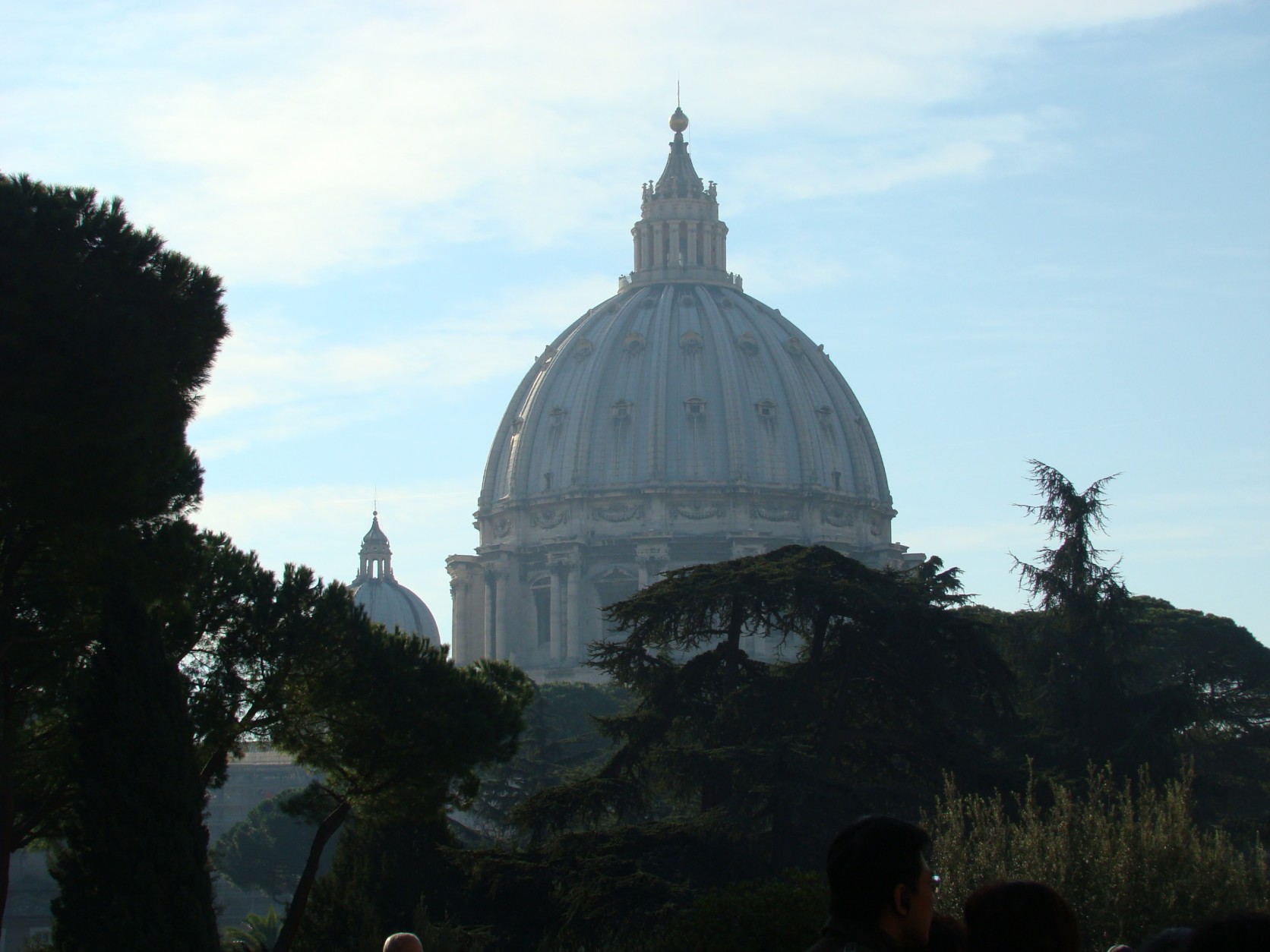
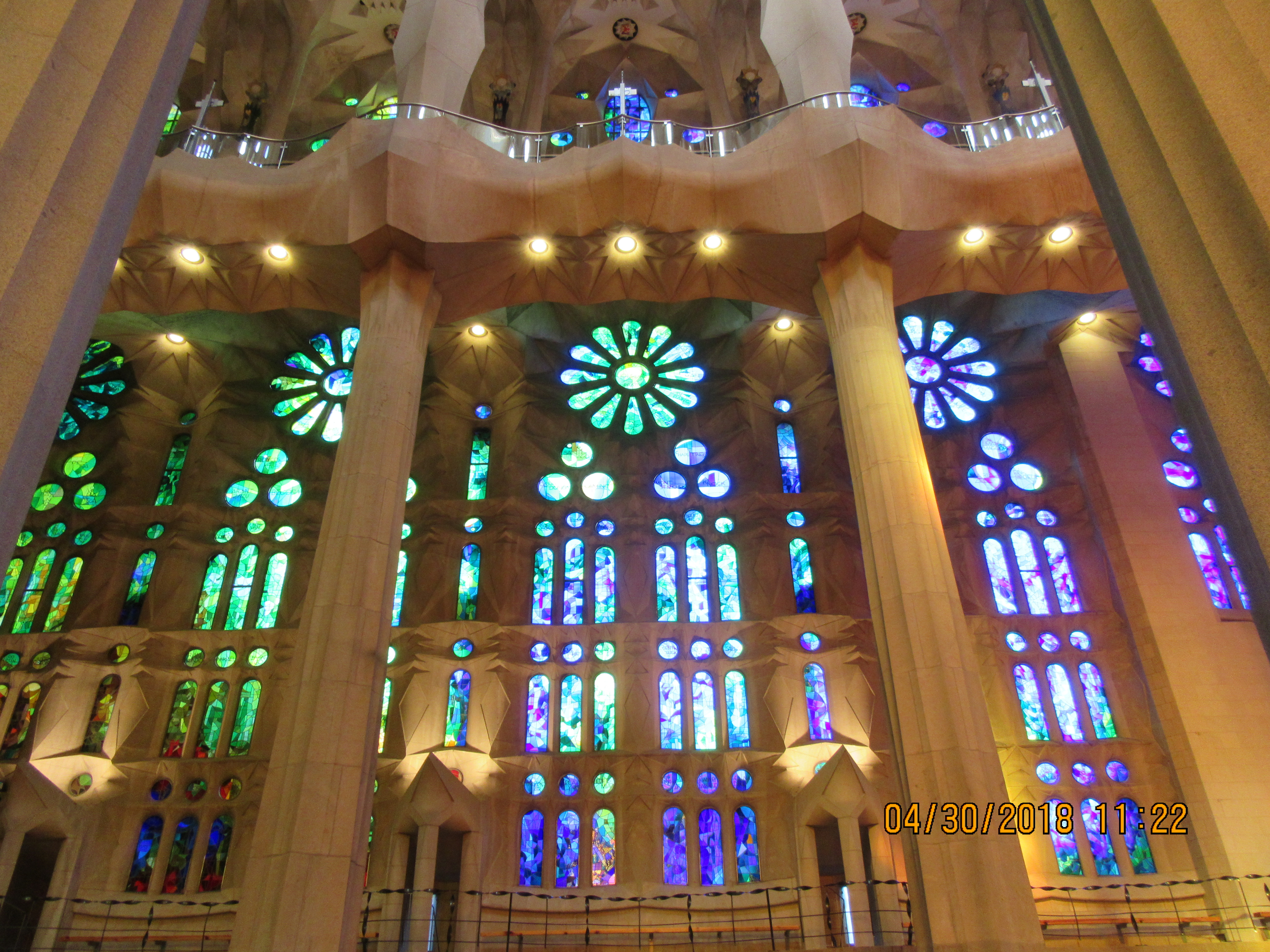
We arrived in Barcelona to see and experience the Sagrada Familia Basilica, a work of faith started by one man, Antonio Gaudi, an architect 135 years ago not expected to be completed until 2026. He knew he would not live to finish it but built his architectural genius of models for others to follow and to celebrate mass within this G-enormous beauty was a blessing.
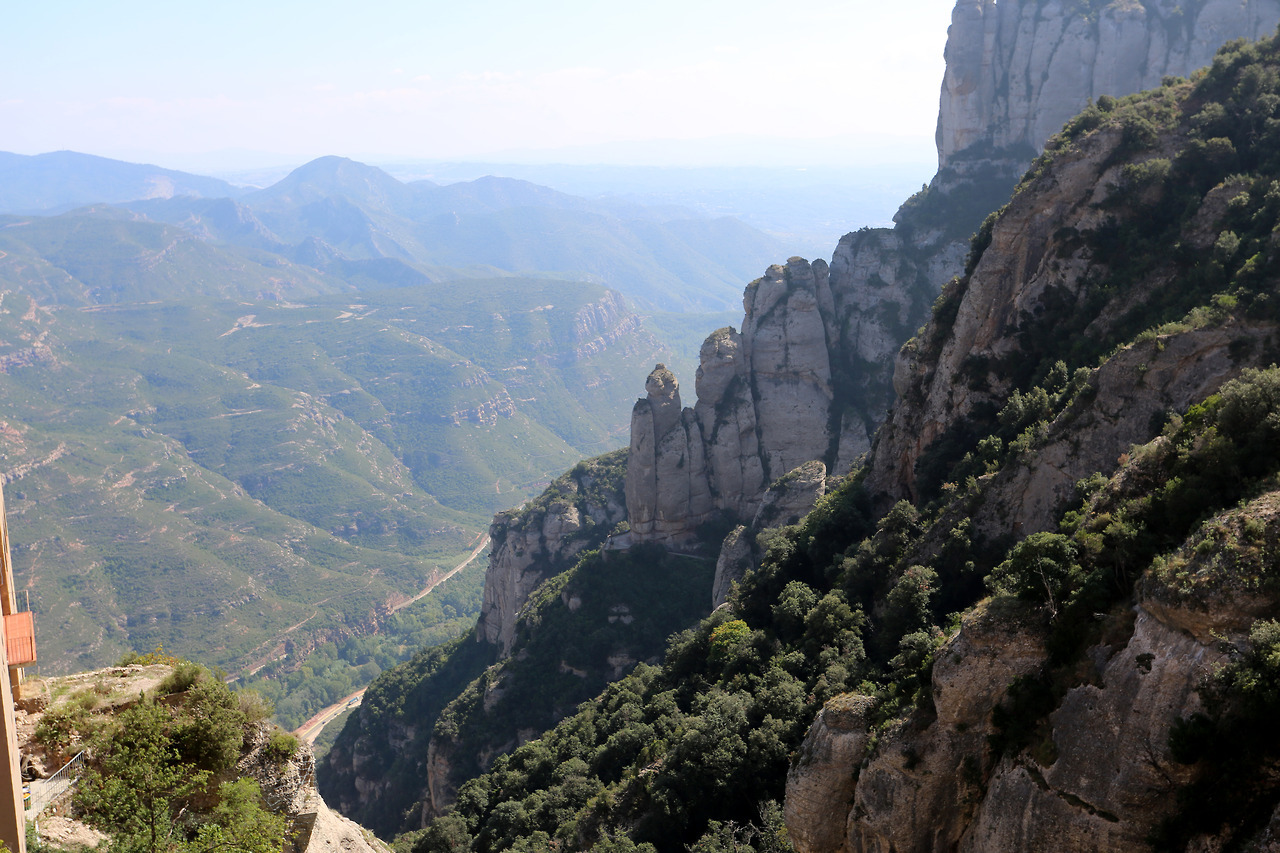
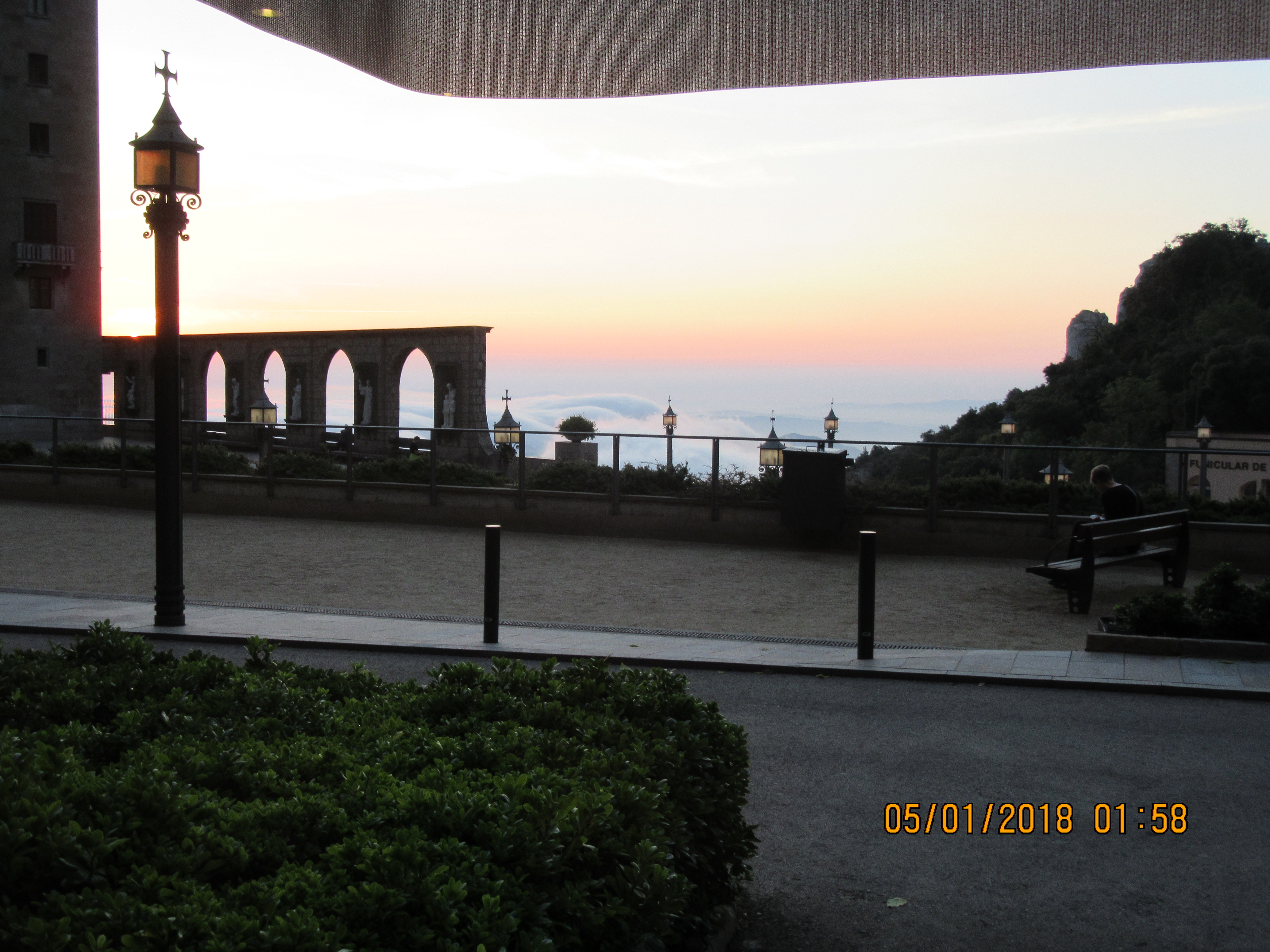
We found ourselves also at a Benedictine Monastery in Monserrat among mountains so high it takes a cable car to get to the top surrounded by rock formations and in awe of how faith leads souls to worship so high you are looking down at the clouds below you. There in prayer before our Lady of Montserrat which tradition says St. Luke carved the statue of the virgin around 50 A.D. Next to descend and follow the footsteps of St. Bernadette and to enter the waters of Lourdes. On a cold rainy day you strip down and are wrapped by a thick plastic colder than ice and you have not even stepped into the water yet. There immersed in the healing waters in our nakedness before the G-enormous power from above. While I was in my humanity all wrapped up in my clothes and jacket I wondered about the shivering or getting sick only to experience the healing warmth, freedom, and peace of grace that came from the spiritual immersion. In this moment I lived the words we hear today, “I can do all things in him who strengthens me”. In the past I have walked barefoot on hot coals, and have walked on shattered glass barefoot but those were only human experiences of the gift of the mind over matter. The gift of faith, hope, and love is far beyond any power of our own. It is the gift of holiness even as a sinner we are invited into the banquet of saints. To be among the thousands who come in candlelight procession in Exposition of Eucharistic worship is another feast juicy, rich and pure.
The pilgrimage was to mark the 100th Anniversary of Fatima and it greeted us with the G-enormous Rosary lighted up at night. In the concelebration of the mass I was the only deacon so I was honored to assist at the altar. These shepherd children lived in humble circumstances yet our Lady called them to be visible signs of God’ desire for prayer and a chapel to be built. Today that prayer of the rosary surrounds the world and the little chapel is a major site of worship. Jacinta and Francisco are already among the youngest children declared saints and in God’s divine providence before the 100th anniversary he called Lucia to heaven at the age of 97. It was said she was not ill but picked up a cold that was going around the convent and at the moment of death she declared “it is time for us to go”. She looked around the room to all who were spiritually there the take her, not “time for me to go” but for “us to go”. I can only imagine the joy of Jacinta, Francisco, her guardian angel, and even our Lady opening the doors of heaven.
This was a long banquet and more servings to come. We visited the Cathedral of St. James and his crypt and relics. This time we had a concelebration of the Mass at the Cathedral of Santiago de Compostela with the local Bishop. I was again given the honor to assist at the Mass both in proclaiming the Word and assisting at the altar. Here they have this G-enormous thurible known as the famous Botafumeiro a censor that weighs 53 kg and is 1.5 meters wide hanging from 20 meters and taking eight men to swing it from pulleys.
We visited the Carmelite Monastery where St. Teresa of Avila died in 1582 and is buried. This first woman Doctor of the Church and witnessed her incorruptible heart and arm that are made visible through glass containers. While the banquet had more servings I have left off the one main serving. Each day we celebrated Mass and had an opportunity for adoration hour.
We were also given the opportunity to visit the Shrine of the Most Holy Miracle of Santarem. In 1247, a poor woman living in Santarem consulted a sorceress who asked her to bring her a consecrated host. The woman received the host in her mouth and carefully took it out and wrapped it in her veil. As she left the church drops of blood began to drip from her veil. In fear she ran home, hid the Holy Sacrament and spent the night in prayer with her husband. The next day she informed the parish priest and it was taken in procession to the Church of St. Stephen, placed in the tabernacle in a small case of wax. Later when the Tabernacle was opened another miracle happened, the wax case was found broken and the Holy Sacrament encased in a beautiful crystal pyx. This pyx is now visible is a gold-plated silver monstrance to be seen daily. In 1997, the Church of St. Stephen was consecrated as the Most Holy Miracle of Church of Santarem. The miracle of the body and blood of Jesus is inviting us daily to receive him and we don’t have to go to Santarem to witness it. Today we receive him. The God-enormous reality lives with us and in us but we must be open to the faith and live this day as our pilgrim day, our miracle day.
Now for desert, well I must admit I gained six pounds but I also lost an inch on my belt from all the walking. There was food we have never tasted before and cannot truly give it justice to describe. Each day was a feast, a true banquet only a King can serve and we were blessed to be invited to the table.
Some may say you don’t need to go on a pilgrimage. God is here present always for us. The second part of the statement I agree with. God is present and most present in the Eucharist. Life also is a daily pilgrimage on our journey and call to heaven. The G-enormous life in Christ is open to us for healing, love, and peace. I am also reminded of scripture where the man with leprosy was tested to go in search of healing and accept the challenge of washing in the waters seven times and his skin became like that of a child. God is pleased by our acts of faith, our sacrifices, and our desire to trust him to follow the path he is opening for us to go forth where he leads us. The miracle of the sun lives today but it is the miracle of the second person of the Trinity, the Son of God. Our Lady invites us to pray daily the rosary in reparation for sins. The hearts of three children and many others called to follow lives of sanctity includes everyone here present. We are all invited to the banquet to witness our faith in action and follow in the footsteps which we were born to live.
Let us all share in the table before us. G-enormous is God with us and how awesome is that.

Tags
Shared this
Views

424 views


bg-image

29th Week Ordinary Time Wednesday 25th

Rom 6: 12-18; Lk 12:39-48
The first reading reminds me of the mind and heart of a small child. They know so well that their parents are an authority to be obedient and listen to. They also know so well that if some other adult tries to give commands they are quick to point out, “you are not the boss of me”. The idea that ultimately we will choose to be “obedient slaves” to either sin or righteousness, slaves none the less but there is a difference. The person who is a slave to sin becomes powerless in their free will and without free will become puppets to the passions of sin. There is a personality change and they will often say, “It wasn’t I anymore.” Thoughts, emotions, interests and behaviors become slaves to the sin and the person becomes dead to themselves. In contrast the person who is a slave to righteousness discovers their true identity through obedience but they must be the drivers of their free will. In sin you figuratively speaking “turn over the wheel” to be driven to death. In righteousness you discover greater responsibility and need to be vigilant. It also build’s our spiritual muscle because we invest all of ourselves, our senses both corporal and spiritual as we overcome life’s challenges and dangers. We gain the power of virtues through grace and experience the freedom of our true nature, our calling, our life in Christ.
The gospel lets us know that as slaves of righteousness our concern is not the hour or day when the Master will come. We are already doing the work of heaven. We welcome his coming because greater will be our freedom. Padre Pio and many other saints recognized their limitations as servants of God on earth and looked forward to the day of departure from this world because they would be able to do more from heaven. Death was a homecoming celebration. In contrast the person who is slave to sin is being warned that even a greater punishment is ahead after death of the flesh. Here the gospel draws a distinction between the sinner who know his Master’s will and the sinner who was “ignorant of his Master’s will, but acted in a way deserving of a severe beating”. Who are those in each of these groups? I am reminded of St. Paul. As Saul, he earned in ignorance a “severe beating” in persecuting the early Christians. In his conversion Paul still suffered a “beating” as the one persecuted and more was expected of him. In obedience to righteousness more was also given to him. Paul is recognized for the spread of the early church more than any of the other Apostles and he shares his hardships in his writings. The question to ask ourselves is “where am I in the Saul to Paul conversion?” What are my blind spots to the will of God in my life? Am I living under assumptions that as a good person I am obedience enough or is God asking more of me and I am resisting him. It can be said that in the life of the saints many resisted God’s call. They had to overcome their doubts, put aside their own thinking, listen to the will of God and even then tried God’s patience when there were clear signs and visions of God’s will. Truly if they found it difficult to say “yes” we too have much to overcome to know, love, and serve God. Our comfort is in the Comforter, the Holy Spirit to enlighten our spirit, to open the path to God’s mercy and to strengthen us in our resolve to make this day, God’s day in our life. For yesterday we pray for mercy, for today we pray for the strength to say “yes Lord”, and for tomorrow we seek the knowledge, and confirmation of being a servant of God. This we recognize in the fruits of God’s love and blessings we receive. In this we recognize our inheritance, a kingdom made for heaven ready to receive him at the moment of his coming. “Who is the boss of you?”

Tags
Shared this
Views

370 views


bg-image

24th Sunday in Ordinary Time

1 Sir. 27:30-28:7; 2 Rom. 14:7-9; Mt. 18:21-35

Think twice!  I love dogs.  All our dogs have a special place in my heart but I am not one to kiss a dog.  Some people do but I pass on that.  Now if you said kissing a dog brought me freedom well I might think twice.  I also love jalapenos but I would not want to eat 100 of them.  If I was told eating 100 would bring me the grand prize then I might think twice.  This Sunday’s message continues the Lord’s call for forgiveness.  If you recall I started last week with the basic principle that God is a God of order.  In the order of salvation history Jesus presents an analogy of God’s love and mercy in forgiveness of our sin in the form of a debt.  We love to hear that.  The order of forgiveness also has a mandate to forgive others and that his mercy also requires justice.  We are not as eager to hear that justice requires something of us.  It requires equal justice of our neighbor.  His mercy depends on our acts of forgiveness for equal justice in the order of salvation to be perfected in salvation history.  In short sin has consequences and forgiveness expectations.

The gospel reminds us of the consequence of sin but with hope.  How many of us have hoped for purgatory?  I suspect not many but think twice.  We want to be forgiven with a straight ticket to heaven and no conditions.   The hope of today’s gospel is that when we fail to be forgiving there is still the hope of settling the debt without eternal damnation.  Purgatory is our hope.  We don’t speak of purgatory or preach of purgatory very much, it makes people uncomfortable.  It is like asking someone to kiss their dog.  Why go there?  For many our sins call for justice and purgatory is an assurance of heaven but not yet.  What is purgatory?

The Catechism titles it “The Final Purification”.  All our baptismal life we have been called to holiness, to be the light of Christ and to be sanctified by our faithfulness to God, Church, and God’s people.  Sometimes the weakness of our human condition makes it difficult.  Sometimes our readiness to respond is uncommitted.  We desire to be holy but not yet.  Heaven however requires holiness.

1st Corinthians 3: 10-15 speaks of a building upon a foundation that is given to us, “namely Jesus Christ” but to be careful how we build upon this with our lives “because the work of each will come to light for the Day will disclose it.  What day, Judgment Day.  “It will be revealed with fire and the fire itself will test the quality of each one’s work.  If the work stands…it will receive a wage.  But if someone’s work is burned up, that one will suffer loss; the person will be saved, but only as through fire.”  Purgatory is the cleansing fire.  Many of our separated brothers like to ask the question, “Have you been saved?”  The theology is that once your saved heaven is the next destination on some “jet” wings.  We don’t hear the question, “Are you a saint, holy and purified?  The assumption is that baptism took care of that for all eternity.  The problem with the argument is that scripture speaks to the “elect” about correcting their sins and the consequence of the cleansing fire for our sins “for the Day will disclose it”.

Dante describes purgatory as a “place where we go to wash our baptismal robles” of those sins.  It is a cleansing by fire.  The white garment received at baptism is a sign of purity but life brings about the stain of sin.  The stain is cleansed in confession.  It is also cleansed in suffering, to carry the cross, to fight the good fight of faith, hope, and love.  Cleansing does not need to wait for purgatory.  The invitation is here and now every day of our lives. In contrast wrath is one of the capital sins found in Dante’s circles of hell.

I was listening to Catholic radio and they were speaking of death.  The host mentioned the days when churches had their own cemetery on the same grounds as the church.  It was a reminder of those who have died in Christ, to pray for them, and to celebrate life in the body and blood of Christ who conquered death and brings us new life.  It was also a reminder of our mortality and to prepared by our receiving each day as a gift from above and making an offering up to God our good works and sacrifices.

We pray for the dead and offer up Masses to assist the “dead” in their purification through the sacrifice offering at the altar in atonement for their sins.  The Catechism (1032) quotes St. John Chrysostom saying, “If Job’s sons were purified by their father’s sacrifice, why would we doubt that our offerings for the dead bring them some consolation?  Let us not hesitate to help those who have died to offer our prayers for them.”

There are many stories in the lives of the saints where they have experience apparitions of a person who has died asking for prayer or an offering of a Mass.  These include priests or religious who claim to suffer in purgatory waiting for freedom from the fire of purification.  The soul is alive waiting the day it too will be reunited to a glorified body but not yet.  The final beatific vision has not arrived.

Jesus raises the bars of justice when he says “You have heard that it was said to your ancestors, “you shall not kill; and whoever kills will be liable to judgment.  But I say to you whoever is angry with his brother will be liable to judgment…liable to fiery Gehenna (Mt. 5:21-22).  Gehenna is the “unquenchable fire…reserved for those who to the end of their lives refuse to believe and be converted, where both soul and body are lost” (CCC:1033).  Thus we have in the first reading the admonition speaking that “Wrath and anger are hateful things, yet the sinner hugs them tight.”  So let us just clarify.  The emotion of anger of itself is not a sin.  It is how we respond to this emotion.  The thoughts that feed it to wrath and vengefulness leads to sin.  It is the holding on to these emotions that becomes an act of the will for sin is an act of the free will.  “Remember your last days, set enmity aside; remember death and decay and cease from sin!” says scripture today.

Mercy requires a merciful heart for healing of sin.  “Pay back what you owe” is not from a vengeful God who was patient with us all our lives waiting for the good works of mercy from us and then strikes us dead.  It is a consequence of the choices we made by our free will.  It is like the old commercial from Midas, “pay me now or pay me later”. Purgatory is later.  Mercy demands justice and justice demands acts of mercy.  What we are to give is small compared to what we are being offered without comparison.  The good news of today is that God is waiting for us to take that first step of mercy and he will take the ninety-nine steps to bring us he love and mercy.  Dare we be so proud as to hold onto the anger and wrath or do we fulfill this day the commandment of “love one another as I have loved you.”  Choose wisely but remember that heaven requires holiness and holiness is a process of purification and purification is something we can start this day in the celebration of the Mass.  Purification begins with a confession of our sinfulness and an act of atonement that is accomplished by our good works of mercy and love for one another.

We had someone come and speak to our community here at St. Francis Xavier of her vision of heaven and hell after a death experience.  Those are transformational events that bring life, death, and eternity into reality.  We are to live each day as if it is our first, our last, our only day to live as a gift from above to love to forgive and to be the best God created us to be.

The lifespan of a dog is perhaps 10 -13 years but in human years is 60-74.  Do we want to extend our time in purgatory in dog years or human years?  The kiss of death is sin but for a kiss of freedom think twice the grand prize is waiting.

Tags
Shared this
Views

551 views


bg-image

Memorial of Our Lady of Sorrows

Memorial to Our Lady of Sorrows

1 Tm 1:1-2, 12-14; Jn 19:25-27 or Lk 2:33-35

Our Memorial to Our Lady of Sorrow brings to mind the Stations of the Cross we pray here at St. Francis Xavier parish.  They focus on Christ crucified through the eyes of Mary, her acceptance in a sorrowful heart for she “knew it had to be.” 

There is a connection from last Sunday’s readings and this Sunday’s readings on forgiveness and Mary is at the center as a witness of a forgiving sorrowful heart At the moment of her greatest grief to see her son’s passion and death and before Jesus takes his last breath he calls to his mother to accept the disciple a sinner as a son.  He calls the disciple a sinner and with him all of us disciples in faith to be sons and daughters of Mary.  In the first reading we see the power of forgiveness in Paul.  Paul testifies to his great sin and God’s great mercy.  Paul a leader in the persecution of Jesus is transformed into a warrior for Christ and as an Apostle for the Church.  The power of forgiveness is transforming and brings perfection of holiness.  Want to be a saint, start with forgiving everyone and every evil in the name of Christ crucified and in Mary’s sorrow and we will not be far from the kingdom. 

The two optional gospel readings make us aware that the Memorial to Our Lady of Sorrows represents her whole journey of motherhood beginning with Simeon’s prophetic voice, “you yourself a sword will pierce so that the thought of many hearts may be revealed”.  That prophecy can be seen at the crucifixion when Jesus is pierced by the sword to confirm his death and Simeon’s prophecy of Mary’s sorrow.  Her sorrow begins to take on a mission and purpose and continues to the foot of the cross.  It does not stop there, it remains today as Mother of sinners whose sins pierce her heart and scourge her Son.  She too must bear her own cross.  What is revealed in the hearts of many?  It is our sinfulness.  It lays bare for the final purification.  It lays bare so that we may come to the cross and seek forgiveness and reconciliation.  It lays bare so we can achieve eternal glory. 

The sorrows of life can begin to weigh heavy on our minds and souls.  They can challenge our faith.  Without God they can become despair and depression.  We can also unite them to the cross and to Mary’s sorrowful heart.  They can be signs of a deeper call to prayer, to pray always and to be in the reals presence of our Lord in the silence of our hearts.  It is an invitation to surrender ourselves knowing we can’t bear our sorrows alone.  Here we find grace waiting to manifest in our lives.  Grace heals and strengthens us not simply to bear the cross but to receive sanctification, to enter into holiness.  Our sorrow purifies for it is in our weakness that we too can be transformed.  It does not end there.  It is a new beginning as disciples called to go forth, to share the mission of mercy to “love one another as I have loved you.”  

In suffering there is not only purification but the manifestation of virtues.  Faith, hope and love blossom.  Prudence, justice, temperance, and fortitude become our foundation.  Who we are and why we are here becomes our light and our salvation.  As a song says, “We live, we love, we forgive and we never give up cause the days we are given are gifts from above and today we remember to live and to love” (Chorus by Super Chicks) 

Tags
Shared this
Views

450 views


bg-image

Mary Queen of Heaven

Recently I had the opportunity to go to Lebh Shomea with my wife.  It is east of a small Texas town named Sarita towards the coast.  It is a silent retreat house donated by Sarita Kennedy to the Oblate Order.  It is a wonderful place to rest in the Lord.  One of its many treasures is the library filled with religious books and other resources.  You can spend days and years immersed in the wisdom captured within these walls.  I checked out three books but spent most of my reading time on one, a book titled, A Theology of Mary (Vollert, Cyril 1965).  In it is presented the many theological and philosophical arguments that have been made of the Blessed Mother over the centuries. 

It begins with the argument that the first principle of God is that God is a God of order.  Thus everything in the universe is ordered.  Mary’s place in the universal history of salvation is also ordered for God’s glory and unity.  Theologians work is to dig deep into the mystery of Mary and identify Mary’s first principle in the order of salvation.  Since it is a mystery they seem to not be able to settle the question with each argument having a counter argument. 

They argue Mary is the new Eve as mother of mankind associated with Christ the new Adam in the order of reparation as Eve was associated with Adam in the order of ruin but then is the first principle of Mary that of “bridal motherhood”?  The concern as a first principle is that she is not the bride of humanity, she is our Mother as the new Eve of humanity. 

They argue Mary as co-redemptoris as Mother of the Redeemer in her role in the order of salvation history.  She participated through her fiat in the birth of our Redeemer, but it is Jesus who saves.  They argue for Mary as a co-mediatrix for she intercedes for us as a Mother who interceded as the wedding of Cana whey they ran out of wine.  The concern is that “no one comes to the Father except through Jesus the one mediator.  Still it is argued we go to Jesus through Mary but as a first principle it also falls short in that we also go to God in the Holy Spirit through the Son to the Father.  A “conciliatory opinion” is that Mary is an “associate” of the mediator but nobody like the compromise view. 

Another argument is that Mary is the prototype of the church.  She is “the church in germ” meaning she is the incarnation of the church as seen in Revelations, the woman clothed with the sun, the universal church and the perfect realization of what it is to be church.  In God’s salvific plan she is the “arc-type” of the Church.  It is also argued that the Church is the mystical body of Christ but “the Church is not Christ and Christ is not the Church”; neither is Mary the Church or the Church Mary.  “The Church is a visible society founded by Christ”. 

There are other arguments like Mary is the “new Paradise” but what is not argued is that Mary is “full of grace, Mother of God”.  That is the declared dogma of the Church and thus infallible in its proclamation.  It is the fundamental principle of who she is in the order of salvation.  Mary’s birth is the perfect sanctification through grace without sin to bring Jesus Christ into the world.  It is the mystery of human salvation, the mystery of the union between God and humanity to unite our human nature to God in the Son.  God becomes fully human that we may be divinized by our participation in Christ.  Mary is a channel for grace in her smallness she is assumed and crowned our Queen of Heaven. 

It is good to be small and humble.  Pope Francis says on the Nativity of Mary that we have a tendency to believe “bigger is better”.  If you are from a small town we seek to go to the “big City” as a better place to be.  Children see a big gift wrapped present and believe it is better than a small gift.  In scripture we see God’s preference for the “small and insignificant”.  Jesus comes from Bethlehem, Mary from Nazareth.  What can these small insignificant towns offer compared to the big city of Jerusalem?  They offered us the savior of the world and Queen of Heaven.  What is insignificant in the eyes of the world is not insignificant to God.  God cares about the smallest things in our lives.  He is not in the thunder but in the whisper. 

Let us not fear God in hurricanes, earthquakes and disasters when they arrive in force to bring destruction.  Let us search for him from within, in who he created us to be in Him.  If he resides in the smallness of our being as he came into the womb of Mary then we are sanctified and give glory and praise for is God is with us, who can be against us. 

God called Mary through a particular family lineage to give birth to Jesus in a particular small town at a set time in history to take her place for the world’s salvation.  He calls us also in our smallness in our time to share in the divine mystery.  What is my response to Him today? 

Tags
Shared this
Views

647 views