bg-image

13th Sunday Ordinary Time – Law of Reciprocity

2 Kgs. 4:8-11, 14-16a; Ps 89:2-3, 16-19; Rom. 6:3-4, 8-11; Mt. 10:37-42

Today, Jesus reveals one of his eternal truths we recognize as the law of reciprocity.  Reciprocity is considered in general a “give and take”, an exchange of generosity with a sense of obligation.  The difference with God is that we cannot outgive the Lord for his love is eternal. 

Elisha was treated with generosity by Shunem providing him not only a meal but a place to stay.  Elisha felt obliged to return some favor “Can anything be done for her?”  The return was far greater than imagined when he promised her “a baby son”.  Elisha uses the power of his gift from God in reciprocity for her unselfish attention to the need of Elisha. 

Jesus presents to the apostles similar examples of the law of reciprocity, “whoever receives a prophet…will receive a prophet’s reward”, or a “righteous man will receive a righteous man’s reward.  Even something as small as a cup of water to someone who needs a drink will not be overlooked.  Generosity underlies God’s law of love.  If we seek love the place to begin is with an act of generosity. 

If we seek God let it begin with an act of sacrificial generosity.  It begins with taking up our cross and follow where God leads us even in welcoming death as most of the apostles experienced.  Who among us does not carry a “thorn” of suffering, physical, psychological, or spiritual in need of healing.  The suffering of the cross can also be a hardship in caring for others, setting aside our personal needs to care for someone. 

In suffering however, we must discern God’s will for us.  The well-known Serenity Prayer leads us to discern the difference by praying for the “serenity to accept the things I cannot change; courage to change the things I can; and wisdom to know the difference.”  The full prayer calls us to surrender to His will and we can do that by offering it up and as an act of trust even when in our understanding we cannot see the purpose it brings.  These are the moments to remember “let go and let God”. 

What is the “end goal”?  It is what waits for us in eternity.  It is not about “my way” but about his plan of salvation.  This life is our battle ground and some battles are won by the grace of God but some we must leave to God and his divine providence.  The victory is his to win, ours is not to question why, ours is to persevere in good times and in bad for eternity will fulfill the law of reciprocity in ways we cannot imagine. 

The book of Roman’s reminds us we were baptized into his death.  We live for God in Christ Jesus by denying ourselves the temptation to sin.  To empty ourselves of the temptation to sin requires an active intent to fill our lives in generosity doing the good that brings truth, justice, peace, and unity in our daily encounters with others.  The reciprocity that comes to us comes with the power to overcome not only the world but our very self and rise from death to life. 

Jesus is the light seeking a nation of saints “no others need to apply”.  The application is received in baptism.  It is the beginning not the final call to holiness.  Jesus provides the way to holiness in the sacramental life of the church.  The law of reciprocity reminds us if we deny him in the sacramental life of the church, he may deny us because by our will we have turned from him to choose another path.  For every act there is a reciprocal act in the universal plan from God.  Let us seek God’s mercy so that even in death the reciprocal response may be our final cleansing in purgatory for the will of God is that all may be saved and our hope lies in his love and mercy. 

Tags
Shared this
Views

182 views


bg-image

12th Sunday Ordinary Time “Fear no one”

Jer. 20:10-13; Ps 69:8-10, 14, 17, 33-35; Rom. 5:12-15; Mt. 10:26-33

In this world we are to fear no one as sheep under the care of our shepherd.  Without fear we are to be bold Christians unafraid to stand for our faith and acknowledge our God before others.  This is what the culture of death cannot accept, that we are not to fear proclaiming our faith in the public square.  In fact, the test of fortitude is to acknowledge our heavenly Father before others or we too will be denied before the Father. 

Consider the four cardinal virtues of prudence, justice, fortitude and temperance.  With prudence the Holy Spirit can guide us to right action and with justice we can discern what is just in the eyes of God but unless we have the fortitude to stand for what is just and take right action, we can fall into the sin of omission afraid of being judged by the world and compliant by our silence.  Do we have the courage to let others know “I am a Catholic”; to silently pray by making the sign of the cross before a meal at a restaurant or if you are a student at lunch on campus?  Do we dare repeat the words of the church when it says abortion is intrinsically evil?  If we deny our faith before others, have we denied God himself?  Let us pray for prudence to take right action before others. 

We also receive the gift of temperance that we may recognize the right balance in standing for justice without falling into sin by extremist reactions.  We are called to be warriors for Christ by following as imitators of Christ and not imitators of the evil one.  Recall how Jesus corrected Peter for his wrong intentions, “Get behind me, Satan.  You are thinking not as God does, but as human beings do.” (Mk. 8:33) We must always discern right action in times of wrong by seeking the mind of God or risk becoming zealots of our own ideology.   

Just as in the early church there was a time of persecution for proclaiming the one true God, today the cancel culture is back seeking to destroy anyone who does not accept the mantras of what is viewed as “progressive” ideology.  There was a time when the compromise seemed to be silence, just keep your views to yourself and leave politics, religion, and money out of the conversation.  That is no longer the approved standard. 

Unless you demonstrate support for progressive ideology with chosen pronouns, gender affirming language, even required colors in clothing that support certain views there will be an effort to punish and cancel a person.  Unless people demonstrate support for freedom without restraint in termination of life of the unborn, assisted suicide, and gender transitioning at any age you will be persecuted. 

What is true for Jeremiah is become true for society at large.  There is “terror at every side!” ready to denounce anyone who dares to oppose what is labeled as “progressive”.  Ironically to call the current culture “progressive” is an oxymoron.  Our times reflect the words of Isaiah 5:20 “How terrible it will be for people who call good things bad and bad things good, who think darkness is light and light is darkness”.  This is nothing more than the work of the evil one and many have fallen seduced by a “feel good” philosophy.  If it feels good then do it.

Did it feel good for Jesus to suffer and die on the cross?  Not at all.  By his goodness he opened the gate into heaven by way of the cross.  Does it feel good to face your fears in order to overcome them?  Not at all.  It would seem best to run from those fears but that only adds greater fear.  It is in facing our fears that we struggle and learn how to overcome them.   Does it feel good to get old and see our body struggle with illness, our mind lose cognition, and lose our independence?  Not at all.  Yet, it is in dying that we are born again into the kingdom of God, the resurrected life and the glorified state.  This the world cannot understand or accept but we have come to believe in the Son of God sent to redeem us and give us true freedom. 

The “feel good” philosophy is the gate to Gehenna where some fall into damnation and others come to be purified by fire.  Gehenna between the 7th and 10th century B.C. was a valley where child sacrifices were made to the gods, the modern-day abortion world to the god of self.  In the time of Jesus, it had become the city dump outside of Jerusalem where the trash was burned, the modern-day confessional where we go to dump our sins and be forgiven.  For Jews it also came to represent a sign as a “place of purification” which in Christian eschatology is taken to be purgatory (Britannica.com) the modern view of washing our baptismal robes of our sins.  Gehenna is the fire of transformation from great sinner to great saint but not for all. 

It does not have to be Gehenna for us when we choose God’s way.  God’s way is the imitation of Christ.  Christ is the image, person, and God we are to follow.  For this he came to show us the way to salvation.  “Fear no one except the one who can destroy both soul and body in Gehenna”.  Who has the power to do this?  Is it God after all he is the one creator of all who can destroy all; is it the evil one who comes to destroy body and soul through sin; or is it something we have done to ourselves by our own free will?  Let us pray that we will not be the one to find out the answer by having denied Jesus.  Remain in him and he will remain in us.    

Tags
Shared this
Views

184 views


bg-image

11th Sunday Ordinary Time “Keep my covenant”

Ex 19:2-6a; Ps 100:1-2, 3, 5; Rom. 5:6-11; Mt. 9:36-10:8

The Lord says to us to “hearken” to his voice and “keep my covenant”.  To “hearken” is not only to listen but to act in obedience.  The Hebrew word is “shama” meaning to receive and carryout.  We are to carry out the commandments of the Lord as a covenant, meaning a promise under the principle of cause and effect.  The cause of our obedience to the covenant is the promise of being a holy nation.  The promise made to the Israelites has now come to us through Jesus Christ who opened the gates of heaven to all the “ungodly” who will repent and believe. 

“Repent and believe in the gospel” is the beginning of our salvation.  In order to repent however we have to also believe we are guilty of some sin.  Sin is defined by the standards set by the law giver and not by our standards.  God reveals his way when we are in right relationship with him.  The first step to being in right relationship is repentance.  To repent we must recognize our sin in the eyes of God when we fail to keep his covenant.  A covenant is being in right relationship with our God to know how to live by his ways. The word of God cannot be simply a list of rules and commands to follow as lost sheep in ignorance of our God.  The word of God is his incarnation in Jesus to be in right relationship with him, a relationship bound by love. 

To keep his covenant, we must recognize the Mass as the central act of love and worship in which Jesus makes himself present to us in the Eucharist as a sacrifice for our sins.  It is not enough to say “I am a good person and I believe in God” and ignore the Mass.  Doing so is breaking the covenant and listening to our voice of justification not to his command.  The command of the covenant is the Lord’s way to provide for our “manna” in the desert of life with his body and blood to gives us eternal life.  It is the “source and summit” not only of our faith but of the one act of love we are called to “hearken”.  The Mass is the word made flesh in the Eucharist. 

To believe in the gospel is to believe in Jesus Christ the word made flesh.  The word of God is beyond a collection of books of people, places and historical events that speak to our faith in God.  The word of God is a revelation of God that requires study to understand the gospel in the history of salvation.  If the Mass is where we come to offer our worship of the Lord where is our instruction, our catechesis for right teaching and interpretation of the word?  Where do we begin then to learn the gospel that we may live the gospel and become better Christians of the faith we profess?  We begin by turning to the Church for proper instruction with endless resources.  For example, the bible and the Catechism of the Catholic Church work together to deepen our understanding of the gospel message.  The key is to begin and allow God to “hearken” our way in keeping his covenant. 

Repent and believe in the gospel.  God is the just judge of what we have done and failed to do and his standards are based on perfection, “So be perfect, just as your heavenly Father is perfect” we are remined in Mt. 5:48.  Who can say a day goes by in which we loved God perfectly, acted perfectly, forgave perfectly, and was perfectly charitable?  Clearly not I.  It is easy to say “I am a good person.  I have nothing to confess.” avoiding the reality that God knows our every thought and motive behind our actions.  God’s ways are not our way so we must come to know our God by way of God’s truth.  In a world that tries to deny there is a God, deny there is absolute truth, deny there is a day of judgment coming, “sin” is simply a personal sense of right and wrong at best and at worst nonexistent to the truth deniers. 

Every believer is called to seek God through prayer, word, fellowship and service.  Prayer is personal and intimate but it is also unitive. God says “For where two or three are gathered together in my name, there am I in the midst of them” (Mt. 18:20).  As Catholics we pray and we offer our prayers.  The disciples asked Jesus to teach them to pray and he gave them the Lord’s prayer.  The Bible is filled with psalms of prayer to become our prayer and live out his covenant.  In the Mass we unite our hearts as we respond to the prayers of the Church.  We also go into our inner chamber where only our soul and God can enter to reveal himself to us, awaken us to his loving presence, and give us his light to follow his way.  Without prayer we remain but lost sheep, a doubting Thomas, simply another truth denier.   

The word of God is a revelation of God himself.  It is a gift of knowledge to be studied with right interpretation.  To correctly understand the fullness of scripture it comes through a literal, moral, allegorical, and mystical synthesis within the context of salvation history.  It is too easy to be misguided and to misguide others if it is only viewed through the literal sense.  Even those who try to accept only a literal interpretation of the bible admit none dare to cut off their hand or pull out their eyes for committing sin.  Centuries have been devoted to giving us that perfect picture of God’s revelation through his word but God entrusted his word to the Church that we may not be deceived by false teachers.   

We are called to be a community of faith.  In fellowship we gather to offer our worship bringing together our prayers, the word of God, and to offer our service to do his will.  Anyone who claims they don’t need church and rely on their own prayer to God is like someone seeking water from a dripping faucet on a hot day.  The water quickly evaporates in a dry mouth unable to quench the thirst.  Graces come from the one body by the authority Jesus gave to his disciples to “cure the sick, raise the dead, cleanse lepers, drive out demons.”  Jesus instituted his church so that through the sacramental life of the church his graces may be poured out on the harvest.  This is God’s way in Jesus with the Holy Spirit and through his church that we may “boast of God through our Lord Jesus Christ, through whom we have now received reconciliation.

To believe in the gospel is to believe we have a calling to service.  For some it is to the priesthood but for most it is to be a witness of Jesus’ love and mercy by the way we lead our lives in service to others.  Is our work a blessing we offer up to God or a simply a duty to fulfill for pay?  To believe in the gospel is to believe that God can transform every act into a gift of service and a moment of grace in which he unites his people to be interdependent for a greater good.  We become one body in Christ not in silos between God and each person but as a communion of saintly people who believe, follow and live the gospel truth.  

In keeping God’s covenant, that is his promise to us by living his commandments we become his special possession.  In baptism we join his kingdom baptized priest, prophet and king as a member of his holy nation.  As members of his holy nation, we live the gospel message in service to each other and in worship of our one true God, Father, Son and Holy Spirit. 

Tags
Shared this
Views

245 views


bg-image

Solemnity the Most Holy Body and Blood of Christ

Deut. 8-2-3, 14b-16a; Ps. 147: 12-15, 19-20; 1 Cor. 10: 16-17; Jn. 6: 51-58

Never forget the test that the Lord gave the people of Israel for forty years in the desert while still providing for them with manna and water.  It was a test of obedience to the commandments and love of the Lord.  Never forget the power of God to set us free not simply from the slavery of the human condition but from the attachment to sin. 

Never forget to praise the Lord for the cup of blessings that comes from the hands of a priest to give us the most Holy Body and Blood of Christ.   It was Jesus who instituted his priesthood in the disciples he chose to make himself present even as he died and rose to heaven through his body and blood in the Eucharist.  No priest, no Eucharist, no real presence of Christ as body and blood.  This is the great tragedy of our times that the Christian world has abandoned the command of Jesus to make him present as body and blood in the bread and wine. 

Never forget the promise of Jesus as the “living bread” that comes down from heaven in the Eucharist.  This is what he calls us to eat to receive eternal life.  This is the sacrifice of Jesus which the Jews could not accept then and the world continues to deny.  We have only to recall the many Eucharistic miracles where the Eucharist turns into flesh and drips blood to confirm our faith in the words that Jesus spoke “whoever eats my flesh and drinks my blood has eternal life”. 

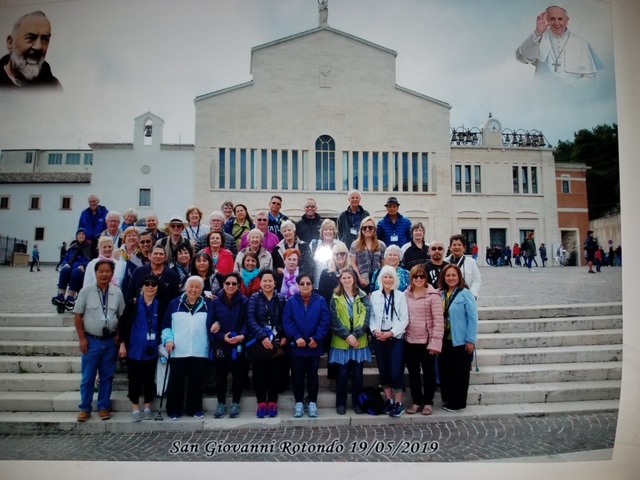
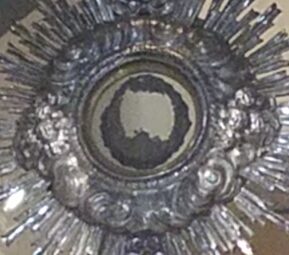
“Do this” is to make Jesus alive in the Eucharist, to receive him and proclaim his sacrifice and death until he comes.  Jesus coming is always a present event for he comes in the Most Holy Body and Blood in the Eucharist.  Having just visited many holy shrines in Italy, one place visited was Lanciano, Italy.  Here is the “Miracle of Lanciano” where the sacred host changed into flesh and blood.  Able to stand within feet of the reliquary which holds to this day the flesh and blood you see the fleshy host and below it five globules of blood intact.  Within the miracle itself scientist weighed each of the five separate parts and found that each part weighs the same as all five together.  They also determine that the fleshy host is human cardiac tissue of type AB blood and they can point exactly what spot of the heart muscle tissue it comes from.  This is consistent with all other Eucharistic miracles in the church.  What are we to believe?  More importantly do we believe Jesus is “the living bread” in the Eucharist “that came down from heaven” and the source of eternal life when we “eat this bread”?  This is our celebration today!

In the gospel, Jesus blesses the five loaves and two fish and it is multiplied to feed the five thousand plus.  God is the creator of natural law thus his power is outside of the natural law.  We are bound by natural law but he is not bound by the object of his creation. 

Years back we went on a pilgrimage to Israel.  Our guide was a very well educated older Jewish man with a sense of humor.  He was also in much better physical shape than a lot of us younger people.  During daily Mass he always sat in the back but remained in church.  He had a good understanding of Christian history and was a very good guide.  When discussing the church faith in transubstantiation, that is the changing of the bread and wine into the body and blood of Jesus in the Eucharist, it was a stumbling block for him.  His response was “it cannot be that easy”.  It is that easy if it is the will of God.  What happens the next day after the multiplication of the loaves?  The people want a sign from heaven to believe in him.  Jesus responds by saying, “Whoever eats my flesh and drinks my blood has eternal life, and I will raise him on the last day” and again repeats “Whoever eats my flesh and drinks my blood remains in me and I in him”.  (Jn. 6: 54, 56) How did many of his disciples respond?”  They said, “This saying is hard; who can accept it?”  Many left and “returned to their former way of life and no longer accompanied him.” (Jn. 6:66) How do we respond to the invitation today?  Do we follow the teaching of Jesus or do we go through the “cafeteria line” and pick and choose only what we can accept? 

Today this teaching is a stumbling block for many other Christian denominations.  Some take crackers and grape juice to reflect communion as a symbolism skipping over Jesus’ teaching.  The literal meaning is too hard to accept.  Some say the Word of the gospel is the body of Christ as we consume his word to transform us.  We receive both in the Liturgy of the Word and the Liturgy of the Eucharist for the fullness of truth.  Do we believe what we profess every day in all the tabernacles of the world?  The miracle is present for us today who believe and receive the Most precious Body and Blood of Jesus. 

Tags
Shared this
Views

206 views