bg-image

Queenship of Mary – 21st Sunday in Ordinary Time

Josh. 24:1-2a, 15-18b; Ps. 34:2-3, 16-21; Eph. 5:21-32; Jn. 6:60-69

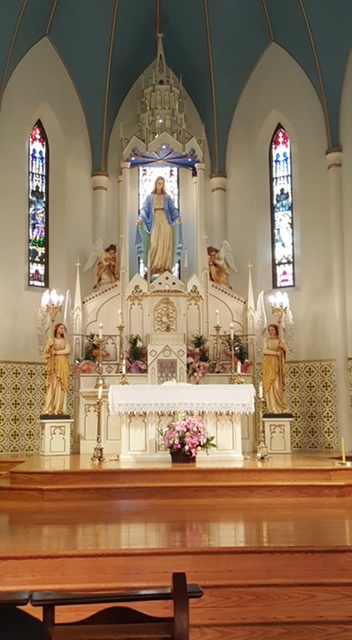
Queenship of Mary celebrates a memorial in honor of our Blessed Mother Mary eight days after celebrating Mary’s Assumption into heaven.  It is a continuation of her celebration into heaven as Queen of Heaven and our Queen.  It recognizes her distinct place in heaven as the Mother of God, first human into heaven as body and soul in the resurrected life.  Jesus’ resurrection was his humanity and divinity, second person of the Trinity but Mary represents our humanity into the gates of heaven. 

The Queenship of Mary is a “Marian feast day of the Church created by Pope Pius XII in 1954” commemorating all the privileges bestowed upon Mary by God and all the graces received through her intercession and Mediation.” (www.franciscanmedia.org )    The Queenship of Mary culminates her journey of faith from her moment of conception as the Immaculate Conception, her visitation to Elizabeth who calls Mary “mother of my Lord”, her mysteries by the side of Jesus, her Assumption into heaven and her recognition by the early Church fathers’ reference to her as Queen especially in her prayer “Hail Holy Queen”. 

We can look to the Queenship of Mary as the new Eve through Jesus redemptive work responding to the call to “be perfect as your heavenly Father is perfect”. This perfection is found in the image of Jesus love who first felt the embrace of a mother’s love as a child.  Perfect divine love is embraced by perfect human love and all things are made new.  What’s left is our call to perfection in the same image of love, a sacrificial love, a love of mercy and forgiveness, a love of charity and generosity, a love of a father and a mother and for a love as brother and sister.  That love is what this world still needs to see.  That love is what we are being offered today to “taste and see the goodness of the Lord.” 

In the royal court of ancient times next to the King the seat was reserved for the mother of the King.  When the disciples mother asks for her son’s to be at Jesus right and left side as any mother would want, Jesus lets her know that seat is predestined and who would it be that would receive this gift if not the Queen of Heaven and Earth who has the ear of Jesus and holds his heart reminding us to do as he says exercising her queenship.  The royal court of Jesus is not a democracy and we don’t get a vote on which commandments we accept and which we discard.  As Joshua spoke to “all the tribes of Israel” meaning all the people of God to make a choice.  “If it does not please you to serve the LORD, decide today who you will serve…” 

Joshua was speaking to the people of God, the chosen people and yet by their choice their actions were forsaking the LORD for other gods.  Those gods were attributed to the Amorites whose legend holds they were “uncivilized nomadic raw-meat eating barbaric giants in the time of their ancestors who plundered and abused the people of God.  They were feared and ancient writings describe them as “the former terrible giants, the Rephaim, gave way to the Amorites, an evil and sinful people whose wickedness surpasses that of any other, and whose life will be cut short on earth (the canonical Book of Jubilees (xxix. [9]11)” and to their reference to “their black art, their witchcraft and impure mysteries, by which they contaminated Israel in the time of the Judges (Syriac Apocalypse of Baruch (Haaretz.com).  They were part of a cult that sacrificed “their living children by burning them in a fire worshiping their god Moloch.  To keep this in context these were historical figures that Joshua was comparing his people to falling into the same corrupt immorality and to choose between serving the Lord or the “gods” of these Amorites seen as lowest level of humanity who his people were becoming like. 

Can we hear the voice of Joshua today speaking to our people in like manner?  Recently it was reported of a university who I will not mention by name but you can easily find the story on the web, who in this country is performing live abortions without “Digoxin” in order not to contaminate the aborted babies body parts, having them born alive, selling them in the market as prime specimens and as well as using those body parts for scientific experiments like implanting the babies’ hair onto rats.  The story continues with more graphic details of barbaric behavior that a civilized society condones.  Could there be any lower form of humanity?  The story came to light under the Freedom of Information Act by someone we could say is the voice of Joshua or John the Baptist calling us to repent in our times. 

The Lord is asking “decide today who will you serve”.  The gods of these “giants” of today who control the culture of death with sinful behavior or the house of the Lord?  If we respond in like manner to Joshua “As for me and my household, we will serve the LORD” then we can no longer ignore the sins of this world and it begins in the home.  The importance we give to God, his church, and the teachings of his Word matter as a household to be one household under God.  Husbands and wives are to be united as one in one faith under God passing on to their children the same faith, hope and love of God.  The new age view that parents allow their children be free to explore their own sexuality, their own identity, their own faith views, and find their own gods is “Amoriteish”.  To God all lives matter under his household and we carry a responsibility to each other. 

In the teaching from Ephesians to be “subordinate to one another out of reverence for Christ” as one flesh we recognize the importance of the church to Christ.  Many today try to separate their faith in God to their commitment to church.  This teaching reminds us of the importance of “church” to God as one flesh.  Why so important?  The gospel reveals the “why” because it is in church where we come to receive him body, blood, soul, and divinity in the Eucharist.  For this reason, priests are subordinate to their bishop and bishops to the Pope in order to remain as one in reverence to Christ.  As husbands and wives are married and subordinate to each other the priesthood is married to the church. Regardless of the sins of the few from within the church there remains many more holy priests and the walls of the church will continue to stand guarded by Christ and the heavenly hosts. 

To many “this saying is hard; who can accept it” is as much true today as it was when Jesus proclaimed it.  By coincidence or not in John 6:66 we hear “As a result of this many of his disciples returned to their former way of life and no longer accompanied him”.  The numerical sign of the antichrist is “666” and we can view the antichrist today in the “many” who turn away from Jesus’ teaching returning to their way of life to serve other gods.  It is not difficult to fall into the antichrist role, be an “Amoriteish” world that is self-serving and becoming the giant monsters of promoting sin when we demand it to be our way, not God’s way. 

“Do you also want to leave?”  This is the question Jesus possess to us today and we pray that we too will see the light to answer “Master, to who shall we go?  You have the words of eternal life”.  We cannot separate Christ from the church or we will find ourselves to be the separated ones from his words that are “Spirit and life”.  “Does this shock you?” says Jesus and bring us closer to him in the Eucharist and his church or do we turn away.  This is what the Queenship of Mary is ultimately about, bringing us closer to her son in whatever state of life we find ourselves. 

If we find ourselves in a state of mortal sin then Christ is there crucified in atonement for our sins and we come to him as Mary is at his feet.  If it is as disciples going deeper into his word, Christ is there in Spirit to reveal himself as the will of God.  If it is in receiving the Eucharist, Christ is there to offer us his body and blood for our transformation to be “granted him by my Father” says Jesus.  If it is in the sacramental life of the church, Christ is there building up his kingdom as a force for good against the culture of death.  And, if it is at the moment of death, Christ is there in his Ascension to receive us as sons and daughter of the most-high God that we may all be one as he is one with the Father and the Spirit and as he also joins to himself all called to be saints. 

We are all called to be holy, perfect, and saints.  Don’t miss the opportunity.  Let not our hearts be hardened but come to him in humility to receive him, give praise and serve the greater good he has destined for us, each according to the gifts he pours into us. 

Tags
Shared this
Views

430 views


bg-image

The Bread of Life – 19th Sunday of Ordinary Time

1 Kg. 19:4-8; Ps. 34:2-9; Eph. 4:30-5:2; Jn. 6:41-51

“I am the bread of life…taste and see the goodness of the Lord”.  Today Jesus reveals himself to be the fulfillment of the prophesy “They shall all be taught by God” not as the Jews anticipated but as God reveals through Jesus Christ.  While the Jews question the validity of Jesus proclamation “I have come down from heaven” by only recognizing his humanity as the “son of Joseph” while they claim to know “his father and mother”, Jesus is announcing his divinity as the Son of God.  In announcing “I am” Jesus declares the great “I AM” of God himself is the bread of life and he now stands before them as the “I am” who is one with God and whose name was given to Moses for God the Father.  

In following the readings from the past Sundays of Ordinary Time, Jesus first is the “Teacher” to the Jews, then in his miracles he feeds the thousands to be recognized as “The Prophet” they were waiting to arrive from God.  Now he takes them into new waters of revelation and faith by declaring himself from heaven coming as God for his people.  Can anything be more amazing and challenging to the faith?  Would we have reacted any different than the Jews if we had been standing there hearing this proclamation?  How many of us would have walked away incredulous and how many of us remain incredulous? 

Many are still incredulous as to the body and blood of Jesus in the Eucharist and the world is incredulous that God exists.  Today we can taste and see the goodness of the Lord in the land of the living from the “arm chair quarterback” looking back but back then we may have walked away in disbelief or tried to even stone Jesus as zealots of our own beliefs. 

Today there are many zealots from within religions and outside of any faith doctrine.  From within religions this is possible when a group takes up the original language and gives it an interpretation that fits its view of the world.  It transforms the religion into its human doctrine instead of being transformed by the faith.  Outside of religion is the coming together of an ideology for transforming the world into a structure that gives one group power over another.  Zealots rise and fall but not without causing harm along the way.  Jesus however perseveres in transforming lives in the land of the living through the light of truth.  This “land” is not a geographic area but a spiritual domain we enter into to receive the bread of life. 

The Jews were awaiting a king to restore their kingdom on earth.  What they are receiving now is a king from heaven to take them to heaven by providing them and us the bread of life for the journey.  “I am the bread of life” is understood that God is the bread of life from all eternity and Jesus is now present to provide us this bread in himself.  We taste and see by coming to Jesus not just in spirit to taste and see but by receiving his body and blood in the Eucharist.  It is the more perfect way of receiving Jesus as true food for the journey.

The journey as Elijah discovers after only a day’s journey is more than he can survive on his own.  He prays for “death” recognizing he is “no better than my fathers”.  In Elijah, we recognize ourselves as no better than the saints so how are we to be perfect as called to be?  How are we to succeed in our journey?  Only by receiving Jesus who is the bread of life can we survive our in our journey of life through all the “desert” encounters.  We are weak “but strengthened by that food” that only God provides can we endure through the “desert” of life “else the journey will be too long for you!”  “That food” is real food in receiving him in the Eucharist.  Elijah foreshadowed it and Jesus fulfills it. 

The journey that is too long to endure is the temptation of sin, suffering, and hunger.  We see this after Jesus’ baptism as he went out to be tempted by the devil for 40 days.  Here Elijah must endure the desert for 40 days and 40 nights as a prefiguring of Jesus.  Jesus confronts the devil with the Word of God and we also have the Word as a weapon of faith but we also have something greater.  We have the bread of life in Jesus to feed our hunger for righteousness through the Eucharist in the consecration of the bread and wine.  This inner strength for the journey is what nourishes us to be strong and endure all the hardships, disappointments, and sacrifices of life. 

The human condition is one of “hunger”.  Not only do our bodies hunger for nourishment but our minds hunger for truth, and our soul hungers for something greater than ourselves.  The hunger of the soul is our “hardwire” for God.  If we don’t satisfy our hunger for all three then we may be lost in the desert wandering until we can no longer endure this life and like Elijah call out for death.  But the angel of God came to Elijah and he can come to us as a messenger from God to rescue us and feed us in our time of needs.  Like Elijah we must put aside our pride and turn to the Lord in prayer “This is enough O Lord!”  If we ask the Lord to “take our life” he will answer our prayer with the nourishment to continue the journey to the mountain he has prepared for us. 

Elijah was given the bread and water and “strengthened by that food” from heaven he reached the “mountain of God”.  We too have a spiritual mountain where God is calling us to reach but the journey is through a desert of pain, struggle, and perseverance or we will die before we reach it.  The Lord saves us from all our distress but we must call upon him and take our refuge in him that he may save us.  The Lord saves but he cannot save us without us if we thus fail to turn to him with all our heart and believe.  Today is that day of faith to believe.  Receive the bread of life and be saved or “else the journey will be too long for you!” In Christ we can do all things through him who strengthens us for the journey he is calling us to take in this life.  “Taste and see the goodness of the Lord” and we will reach our final destination in heaven. 

Tags
Shared this
Views

435 views


bg-image

God’s work never rests! 18th Sunday in Ordinary Time

Ex. 16:2-4, 12-15; Ps. 78:3-4, 23-25, 54; Eph. 4:17, 20-24; Jn. 6:24-35

God’s work never rests!  “This is the work of God, that you believe in the one he sent.”  God is always in search of our hearts and for some of us he is working overtime.  While our hearts are restless, we turn to what is in this world for answers while he keeps giving us signs of his presence. To believe or not to believe that is the question.  If we believe then our “works” will reflect our faith in Jesus.  Faith and works are two sides of the same person and they cannot be denied.  In works is revealed the true faith of a person.  It raises the question to ask ourselves, “what are our works in building up the kingdom of God?”  The work starts with faith in Jesus Christ. 

If the first order of business is to believe in Jesus Christ how much time do I spend with Jesus in prayer, in Mass, and in serving him through serving others?  Do we see Jesus in others and/or do we seek him out through others by offering a work of faith?  God’s work never rests and it comes through others as he can also work through us for the good of others.  We often speak of our charity by giving to the poor, donating our time for a cause, being active in our church and all are good contributions to the capital of grace but God’s work is to see a transformation not in what we do but in who we are.  God’s work never rests in bringing us closer to himself and transforming us more into his image as a light to the world.  We are the work in progress. 

Signs of God’s work in us begin to be seen in our daily actions as a reflection of who we are as Christians.  It can be seen in such simple confirmations of our faith to others through our conversations as an act of faith to unite us to God.   Growing up do you recall hearing your mom or dad or grandma or grandpa often in conversation make an expression of faith by saying “thanks be to God”, “God is good”, “God have mercy”, “have a blessed day”, “pray all goes well” to recall just a few examples?  It was this little reminder that God’s work never rests and he is present in our lives the moment we call upon him.  I can hear my mother’s voice saying in Spanish “si Dios quiere” (if God wills) and most often “gracias a Dios” (thanks be to God).  Every conversation is an opportunity to invite God and unite ourselves and others to him “praise be to God”.  Let’s keep God in the conversation and let him guide us to the Son through the Holy Spirit to his revealed truth. 

Faith is not stagnant it is dynamic as God’s work in us never rests.  Every day is an opportunity to work on our faith as we go forth and encounter the world.  We grow in faith when we take time to live in faith, love with faith, learn more of our faith, and leave a legacy of faith.  According to Stephen Covey to live, love, learn and leave a legacy are the four essential human needs of life and so we take our four essential human needs to grow in holiness connecting our humanity to God’s divinity.  

To live in faith is not defined by obtaining all the pleasures of life.  “In the gospel, Jesus tells the people “Amen, amen” meaning without a doubt “I say to you, you are looking for me not because you saw signs but because you ate the loaves and were filled”.  This is not living in faith but seeking the “food that perishes.”  The same is true for the Israelite community who “grumbled” and said that as slaves “we sat by our fleshpots and ate our fill of bread” but only to be hungry again.  God lets it “rain down bread from heaven”.  This is not just a foretelling of the coming of Jesus in the Eucharist but a sign that he answers our prayers and meets all our needs so that we then may “accomplish the works of God”. 

To live in faith is to live in the joy and peace that only comes through Jesus.  This is the first work of God that we “believe in the one he sent” to be our food “the bread of life”.  He is the bread from heaven that satisfies all our needs.  He is the bread we eat when we receive the Eucharist.  This is the dynamic work of faith in action that “heals our infirmities”, nourishes our souls and “answer all our needs…in the bond of peace”.  It comes to us as a gift from heaven through the sacrifice of Jesus.  To live in faith is being in communion with Jesus that creates not only a bond of peace but the guidance through the Holy Spirit and a purpose in which to live in.  God’s work of faith in us never rests in calling us to himself to believe and be saved. 

To love with faith is to trust in the love of God and in his generosity.  Generosity as Spinoza the philosopher would say, “If love is the goal, generosity is the road to it.”  Our generosity of time, treasure, and talent defines the meaning of life.  It is the bond that unites us to God for God is love.  Generosity has a compounding effect for the greater good for generations to come just as evil has a compounding effect for what is bad.  No act of generosity goes without a just reward from God who blesses us with the opportunity to bless others in generosity.  To love with faith is the willingness to sacrifice for the love we receive and offer ourselves up to God.  The greater the sacrifice the greater that love grows and no greater sacrifice of love than Jesus on the cross.  God’s work of love never rests in loving us. 

To learn more of our faith is to never grow tired of seeking truth from the revelation of God.  Truth is not anti-science it is the science of discovery of the miracles of life that reveal to us something greater is here with us.  To learn more of our faith is to keep looking for Jesus to give us more of the “food that endures for eternal life” which the Son of Man promises to give us.  Lectio Divina is one way to integrate our prayer life with the word of God to learn more how Jesus is speaking to us in the moment.  A word of knowledge becomes the incarnation of the word in our being to transform us more into the image of God whose work never rests in us in calling us to himself. 

 To leave a legacy of faith is to give “life to the world” by receiving Jesus from whom life is received to be poured out as a light to the world.  It is an apostolic legacy carried on by those whose lives we touch and it begins in the home.  Three words need to be spoken in all Christian homes and they are “let us pray”.  Let us pray in thanksgiving, let us pray for the sick, let us pray for our needs, let us pray for the souls in purgatory, let us pray a rosary or a novena, let us pray for an answer to our prayers.  Prayer opens the channel of grace for our sanctification.  To leave a legacy of faith it begins with prayer and it spreads out into our world to make a difference. 

In prayer we feed on the spirit of Jesus.  In scripture we feed on the word of Jesus.  In the Eucharist we feed on his body and blood.  He is the bread of life that satisfies every hunger and thirst “that endures for eternal life”.  God’s work never rests yet he invites us to rest in him when he says in Mathew 11:29 “Take my yoke upon you and learn from me, for I am meek and humble of heart; and you will find rest for yourselves.”  We cannot learn from him unless we come to him with the same meekness and humility of heart to be fed by him. 

When we come to Jesus his grace provides us a peace and joy that that allows us to be content.  We are content not because everything came out the way we wanted it to be, or because every prayer was answered in a miraculous way but because by the grace of God, we found God since he had been there always calling us to himself. While we rest, God is working for that day, the day our faith rests in him for our greater good.  Glory to God in the highest may this be that day of true rest in God. 

Tags
Shared this
Views

376 views


bg-image

Something greater among us! 17th Sunday in Ordinary Time

2 Kg. 4:42-44; Ps. 145:10-11, 15-18; Eph. 4:1-6; Jn. 6:1-15

Something greater among us is here!  The people are waiting for “The Prophet” the one that is to come, what they are about to get is something greater, the Son of God.  Last few weeks Jesus has been preaching and teaching the people many things reflecting the liturgy of the Word in the Mass and now the readings shift to reflect the feeding of the people as a sign of the liturgy of the Eucharist to come.  The Lord feeds us with his own body and blood to answer all our needs and preserve us as “one body and Spirit in the bond of peace” through “one God and Father of all, who is over all and through all and in all”.  The Mass is a microcosmic reflection of the ministry of Jesus to his people and in the Mass he is present to us today. 

Jesus has been crisscrossing the Sea of Galilee with his disciples and crowds keep following him.  What they see in this man is a “Teacher”, a healer, and a sign of a prophet.  Jesus performs a greater miracle in feeding not only the five thousand men but the women and children who were with them so that the people recognize not only the “signs he was performing on the sick” but the greater sign that he was not just a prophet but “The Prophet” everyone was waiting for to be their King.  His hour had not yet come to be recognized as the Son of God or how he was to deliver his kingdom to the people so “he withdrew again to the mountain alone”. 

This is our time in Mass to withdraw from the world while in the world.  This is a time to let go of our cares, a time to focus on God’s love for us, a time to be fed by him and to nourish our soul, a time to hear his voice and transform our minds and hearts.  A time to offer him the greatest gift we can give that is ourselves to him, a time to be lifted up in spirit and truth.  Yes, this is that time to surrender and return his gift of sacrifice for us by our sacrifice of love for him.  This is that time.   

Has our time come to experience something greater in our lives?  With all the distractions of this world and everything we are being fed that is not from God by a world trying to steal our minds, hearts and will, we cannot satisfy our essential needs for joy and peace that only God can deliver.  The world itself is not bad as a creation of God there is goodness, beauty, truth, and unity in the world when we gather together to share our gifts, talents and treasures.  We honor God with our work and we contribute to the love of God in our charity.  The problem often lies in being short sighted when we seek what is in the world as a possession and not a means to a greater purpose. 

Home ownership is like a prize to have but there is something greater to have in building a home of love that is the greater reward.  Knowledge is a treasure chest but people don’t care how much you know until they know how much you care and something greater becomes of the relationship.  Education leads to a degree but the degree is not the reward, the reward is the application to our calling in something greater than ourselves in the service to others.  Work pays the bills and puts food on the table but something greater happens in the actualization of work that serves a purpose to produce something good.  Children are a lifetime investment “caritos” but they become our greatest legacy when they carry forth our faith to love and serve God. 

Church is an institution with a doctrine of faith but something greater happens in the incarnation of the doctrine that is transformative when we act on our beliefs.  Sacraments are celebrations within the church community but something greater happens here through the grace of God the Father through the Son in the gifts of the Holy Spirit that unite our humanity to the divinity of God. Bread and wine feed the body but there is something greater among us here in the transubstantiation of the bread and wine through the ministry of the priesthood that brings us the body and blood of Jesus in the Eucharist. 

We can see the world as something that just is or we can experience something greater among us here when we become united with the one body of Jesus Christ “striving to preserve the unity of the spirit through the bond of peace”.  There was a time when everyone knew some version of Luke 2:14 even in the secular world people knew to say “peace on earth and good will to men”.  The complete line is spoken by an angel of the Lord when Jesus was born praising God and saying “Glory to God in the highest, and on earth peace to those on whom His favor rests!”  His favor rests on those who seek something greater than themselves, something divine.  For those who believe this world is all there is there is something greater missing in their lives. 

Today the search is not for peace or it would lead many to return to God.  Today the search is for power and it leads many to create division with the old mantra “divide and conquer” and there is something greater here than a desire to conquer the people in our times.  There is a greater evil coming from the evil one seeking to create division among families, despair in death, confusion between right and wrong, chaos in the streets, and final separation from any hope of salvation in God.  If the victory has been won by Jesus on the cross then what is the battle that remains?  It is the battle of pride to take down and punish those called to be sanctified by the grace of God from the Evil one. 

The Evil one desires us to be fed to the lions of hate in a culture of death.  Our children experience the hate coming from bullying in the schools, the test of pride when tempted by their peers to do drugs, and the fear of being “cancelled” by ridicule and shame for claiming to believe in God.  Many in fact become suicidal by the impact of social media in their lives.  They are being taught that race and color define a person as inherently oppressed or oppressors.  The time when you were judged not by the color of your skin but by your merits is no longer the standard.  The cultural war has risen to hate “mankind” so that there is no “man” or “woman” or “humanity” only the “kind” of species you identify with and kindness has given over to hate. 

Hate comes in the workplace for religious beliefs when a business won’t bake a cake for a same sex wedding or even when a business takes a position against same sex marriages they are being banned.  The next step already in the making is the Equity Law being proposed that will target religion making it illegal to discriminate in any form or fashion against any minority group thus lawyers are preparing their discrimination lawsuits against religion for refusing to marry same sex couples and the church will be treated as violating the law.  This Equity Law may become the next “Roe vs. Wade” battle in defense of religious freedom. 

Something of greater evil is underlying all of these battles and it involves the intent to deny the existence of God by denying natural law and creation, by making of the body a shell to be manipulated into an identity of choice, and ultimately by denying the sanctity of life itself.  If life is not sacred then it becomes as disposable as trash which is how the aborted child is now treated, simply trash keeping only the parts that can be utilized for science.  There is a choice to be made and it’s coming to our home if not already here to obey God’s law and commandments or to follow the herd mentality down the path of sin and death. 

Jesus comes to preserve the sanctity of life and raise us up to something greater that is to his divinity.  After the baptism of Jesus, he was led off into the desert to be tempted by the Evil one.  He tried to tempt Jesus with pride to succumb to the evil one’s test but Jesus responded with humility and with the power of the word of God.  The word is our defense and Jesus our strength when we recognize it is not about us but about him, and we humble ourselves before him.  He comes to make all things new and he can renew us in himself to do greater things with our lives through him who strengthen us. 

Jesus comes to offers us his joy and peace from the love of the Father in unity with the Holy Spirit.  It is the love of sacrifice seen in humility to God the Father.  It is the love that comes in the sacrifice of the Mass as he offers us his body and blood.  In birth we receive the gift of life, in baptism we receive the gift of the Holy Spirit, and in Mass we receive the gift of Jesus himself in the Eucharist.  It is surprising how Christians can believe in the omnipotence of God, in all the miracles he performed and then refuse to believe that he would take something as basic and natural as bread and wine and make it into his body and blood in memorial of his passion, death, and resurrection.  If he demonstrated he could resurrect the dead, why is it so hard to believe in the miracle of the Eucharist?    Believe and be fed and allow him in his body and blood to transform us and preserve us in holiness.  Something greater is among us here so let this be our time for God’s time with us.

Tags
Shared this
Views

346 views


bg-image

16th Sunday in Ordinary Time – Woe to the shepherds

Jer. 23:1-6; Ps. 23:1-6; Eph. 2:13-18; Mk. 6:30-34

“Woe to the shepherds who mislead and scatter the flock of my pasture, says he Lord.”  We are all called to be shepherds within our flock be it our home, our schools, our church, our nation and our environment.  This week the readings began with a message of warning by Jesus from “I have come to bring not peace but the sword…Jesus began to reproach the towns…Woe to you Chorazin! Woe to you, Bethsaida!”  He ends the week with a message of hope and love “Come to me all you who labor and are burdened, and I will give you rest…’I desire mercy not sacrifice” and then proclaims today that “he is our peace”.  Looking for peace in this world then it can only be found in Jesus. 

Jesus not only speaks to the heart of individuals but to complete “towns” that make the citizenry as a whole.  The greatest enemy to a nation, a religion, and a home is the one who rises from within the flock dressed as a shepherd in search of its own power, glory, and prestige.  Without a foundation built on the common good, freedom, and faith in a power greater than ourselves we call God, nations, churches, and homes crumble from within and woe to those shepherds.  Woe also to those communities who together separate God from his people to create cities and nations of secularism.  God desires us to build up the City of God within his kingdom and it begins now in our own homes and communities. 

Many are the shepherds in public office who in a time of crisis see an opportunity to mislead and scatter the flock with a mantra “never let a crisis go to waste”.  In their governance their voices rise trying to guide the world to a new world order, to “reimagine” a new normal where identity does not come from God but is a choice, where equality and tolerance is a normalization of behavior against the natural law of God, where the right to kill the unborn is justified as a choice, where only the law and legal claims established by the ruling class have a voice, and where “The Lord our justice” is silenced not to be heard of in the public square. 

Woe to the shepherds of these nations who raise up children with obedience to only their laws and demand all must submit to the new “Caesar” of the land against individual rights and liberties of religion.  Woe to them who by decree demand us to “reimagine social justice” as a world filled with “rights” that normalize sin and silence the righteousness of God.  Recall Jesus warning to Chorazin and Bethsaida can befall a nation when it turns to its own idolatry based on an ideology and abandons God breaking the first commandment. 

Woe to the shepherds within religions who mislead and scatter when they approve of same sex marriages, abuse minors, promote a God of prosperity while neglecting the poor and suffering as their coffers grow in riches, and weaponize religion preaching death to others while raising themselves above to be first.  These will be among the last for the ones who more is given more is demanded. 

Woe to the shepherds of the household after being blessed with children turn to abuse, neglect, and/or exploit these little ones and drive them away from having any faith.  “The Lord our justice” comes to rescue his sheep without a shepherd.  As a culture of death surrounds us, the home is the last stand in defense of God’s righteousness.  Parent’s responsibility does not end with providing safety, food and shelter.  It is the beginning of love to raise our children to know God, love God, and to serve God.  Faith development begins in the home and we gather together in Mass to celebrate as a community our faith. Our legacy to our children is our faith and their greatest inheritance is God himself to be their peace.

“The Lord is my shepherd there is nothing I shall want.”  The Lord has placed his law within our hearts and comes to us in the mystery of faith to reveal his presence when we turn to him, repent, and seek his path of righteousness.  The Lord created the heavens and the earth to be a paradise, he created humanity to be holy, sanctified by his love but because of our fallen nature he came down from heaven to redeem us by his cross and shepherd us back to a state of sanctity.  Now the choice is ours to receive the gift and remain in his grace or wander on our own path.  Apart from God there is no paradise, no sanctity, no salvation. 

The Lord has appointed shepherds for us as he promised in Jeremiah.  Together we form the one universal Catholic and Apostolic church under the vicar of Christ, the pope leading the magisterium of the church.    There is a comfort in knowing what the church teaches does not come from the interpretation of the next bible preaching minister no matter how well intentioned their heart is but from the long history of hermeneutics, that is the interpretation and understanding of scripture and tradition going back to the Apostolic Fathers and Doctors of the Church. 

The truth of the gospel is built on a solid foundation handed on and guarded by the Holy Spirit.  Good intentions do not necessarily translate to truth and even a half-truth is misleading capable of dividing and scattering the flock.  New movements of faith rise and fall like the passing wind born out of the mind of shepherds in search of a flock.  It is God himself who calls his shepherds to be united to his body the church in obedience to what has been handed down and “woe to the shepherds” who take out or put in other teachings. 

The Lord refreshes our souls with the light of a new day reminding us to remain in him who is our hope.  The pastures he gives us comes from the breaking of bread to celebrate at the banquet of the Lord fed by his body and blood, taught by his word, and comforted by the heavenly hosts of angels and saints and by his flock when we gather together in prayer and thanksgiving. 

He guides us in right paths through the dark moments of life.  The right path is a two-edge sword of love and sacrifice.  When we call upon the name of Jesus, we receive strength and courage in our moments of weakness to persevere in difficulty, overcome suffering, and wait upon the Lord in God’s time to reveal to us his glory.  God’s time is not measured in human understanding but in the understanding of salvation and God’s mercy. 

He spreads the table before us at the altar to receive the sacraments of salvation to guard us against the enemy and our cup overflows with truth, goodness, beauty and unity.  Heaven does wait for tomorrow when the kingdom of God is already before us.  We are invited every day to enter into his kingdom, taste and see the goodness of the Lord and be blessed. 

Goodness and kindness follow when we enter into the sanctuary of his sacred heart as he remains in us and we remain in him.  The world does not know this for it seeks to build its own kingdom of power, pleasure, and profit destined to rise and fall as history has proven over and over again.  The house of the Lord is eternal and when we enter into the sanctuary of the church we are in the connecting halls of heaven and earth where angels descend and ascend in worship of Jesus in the eucharist.  This is the house the Lord has built, blessed are we who enter into it. 

The church cannot be defeated from without but we must guard from within the sanctity of being “church” to the world.  This sanctity of life is in a state of deterioration and we must return to a state of grace recognizing the sacredness of God’s creation.  Nature and matter were created by God as a blessing and we are being reminded by Pope Francis of the sacredness of the environment in the encyclical “Laudato Si”.  He calls it the “care of our common home” and is concerned with the growing “throwaway culture”.  There is a need to respect not only nature but also the natural law created by God.  We need to recognize that it is not “all about us”.  God created the heavens and the earth and declared them “good” and his goodness must be respected in his creation.

The sanctity of life has also become lost in a “throwaway” culture from the unborn to the elderly, from the poor to the disabled.  The right to choose death over life is not only a grave sin but the loss of an opportunity for redemptive suffering for a greater good.  In redemptive suffering we offer our suffering to God who unites us to his suffering and transform it into a testimony of love, holiness and conversion of souls. 

The sacredness of natural law has been discarded for the scientific drive of genetic manipulation that can create more deadly diseases such as “gain-of-function” research to make deadly viruses even worse and spread pandemics that kill millions.  Once created there is no control of their capacity to mutate and survive.  They seek to spread in hosts from animals in our food chain to humans.  Natural law is sacred and must be respected or it will turn against us to our own demise. 

Even though we walk in the “dark valley” we are to fear no evil for God is at our side.  We have been anointed with the oil of salvation from our baptism and confirmation.  We have been given the church to provide us the sacraments of salvation and this is the Lord’s house from age to age.  When the dark valley invades our hope and spirit and we find ourselves in a mental state of depression there is a cliché that says, “leave your home and don’t come back until the depression has lifted” meaning we don’t isolate ourselves but we go forth seeking to do good and God will be with us. 

The first place to go is to church where God is waiting, where his table is set with his own sacrifice of love for us, where he knows every hair of our head and where peace is waiting for us to meet.  This is that place, this is God’s house and together we build up the city of God in our common home. Thanks be to God for the calling of the good shepherds who know how to tend to the flock, pastor and carry their sheep with the love of God. 

Tags
Shared this
Views

442 views


bg-image

15th Sunday in Ordinary Time – To preach repentance

Amos. 7:12-15; Ps. 85:9-14; Eph. 1:3-14; Mk. 6:7-13

To preach repentance! Want to be a prophet, don’t expect a “welcome” mat. Amos was sent packing home, John the Baptist was beheaded and Christ was crucified for being prophets. We are call called to be prophets by our baptism to preach repentance. Jesus sent out his disciples two by two to preach repentance taking nothing for the journey except faith and hope.  Repentance (metanoia) is a turning away from sin and returning to a relationship with God.  Repentance is the first step to salvation.  In repentance it is not about the universal “me”, my regrets, my fears, my needs but about him and our surrendering to him to respond to his calling and receive the grace of redemption.  Healed by his body and blood Jesus saves.  Repentance includes the four elements of responsibility, regret, resolve, and repair (Dr. Laura Schlessinger, NYT 05/10/98).

Taking responsibility is more than feeling “sorry”.  When a child says “I’m sorry” it comes from being caught in a wrong more than understanding the wrong.  Responsibility comes with understanding the wrong our act has caused on another.  When we sin against God, do we understand the wrong our act has caused God?  If we sin against our neighbor, we may see the harm it has caused them but we don’t always understand the harm we cause God.  Sin harms our relationship with God because the injury is to the heart of love.  Sin is a rejection of love itself from God.  By divine will we are all created in the image of God and we harm the love of God for his people.  It is as simple as if someone causes harm to your child then you yourself are harmed not just the child.  We are all children of our heavenly Father.

Once we come to take ownership of our responsibility for having sinned, we experience regret meaning that we come to an awareness that changes how we think about ourselves, our actions, our relationship with others and with God.  With regret we enter into the heart of love for the injury caused, remorseful and willing to begin the process of healing that love by an interior change.  If nothing changes in us then our regret is not about love of other but remains simply a self-centered love.  This is a key element of repentance when we answer the question “what will be different” about me, my actions, my love for God.  True regret is an act of change for the better.   God calls us to be perfect, a perfection that comes from our unconditional surrender to him.  Regret is one step further away from our sin and a step closer to perfection with a change for the better. 

With regret we are empowered with a resolve to be the best God created us to be.  We receive the fire of the Holy Spirit directing us to where God is calling us.  This resolve is a willingness to surrender ourselves to God with greater trust out of love.  Our obedience to God is the fear of separation from God after experiencing the darkness of our own sin and the grace of forgiveness.  Because of the darkness of sin, we may not yet know how good it is to be walking in the light of grace but we do know the consequences of having allowed sin into our hearts and seen the impact to our relationships with others.  It is a past we don’t want to relive and a path we don’t want to continue.  With resolve we make a decision to follow a new path by beginning to seek God’s answer and our calling.  We pray for his revelation and we take the next right step in faith and hope.  This was the resolve of the disciples surrendering themselves to the will of God. 

We then ask ourselves “what can I do to repair the relationship”?  For Catholics repair begins with going to confession.  If we are to heal our relationships with each other we need to return to God and receive his forgiveness to be guided to right action with others.  We pray for those who we have hurt and when possible, we ask for forgiveness and seek to make amends with those affected by our behavior.  We expect more from ourselves than from others allowing others to heal on their time not ours.  Too often we want others to forgive and forget but injury takes time to heal.  Broken trust is more than a broken bone.  Trust goes to the soul of a person.  If frustrated because someone keeps bringing up the past recognize the pain behind the broken trust and pray for their healing.  Reconciliation takes three the sinner, the wounded, and the reconciler who is God.  With God and in God we become one again with each other. 

The disciples were sent to preach the message of repentance but we also see in the first reading Amos a shepherd also was sent to prophesy to his people.  By our baptism we are also sent to prophesy a message of repentance and forgiveness.  Of course, we cannot offer what we do not ourselves live so it must begin with us.  Who do we need to forgive from our past or even from today?   Repentance and forgiveness work together for reconciliation to heal the wounded heart.  We must repent ourselves as penitents seeking God’s mercy.  Mercy opens up our hearts of rebelliousness to forgive others as we are forgiven.  Jesus is ready with his mercy to forgive us to heal his own wounded heart by our transgressions.  We have but only to come and seek his mercy. 

No one lives without suffering.  We are called to pick up our cross and live through the passion of Jesus.  We live through our agony by going to our prayer garden.  Our prayer garden is the interior room where we enter into peaceful dialogue with God.  We live through our scourging when suffering is beyond our control offering it up as a sacrifice of love.  We live through our crowning with thorns as others criticize and judge us but we do not respond in like manner.  We live through the carrying of our cross for living through the things we cannot change and we die to ourselves to allow God to reign in us.  This was the journey Jesus sent his disciples out to live in preaching repentance to a rebellious people. This is part of the journey of life and salvation. 

Some of the disciples carried the red robe of martyrdom.  Others lived the white robe of martyrdom.  In the image of Divine Mercy, we see both the red rays of martyrdom and the white rays of martyrdom coming out of the side of Jesus.  For us today, we are to live the white robe of our daily sacrifice.  God the Father has blessed us in “Christ with all the spiritual blessings in the heavens…to be holy and without blemish before him”.  When the world speaks of microaggressions let us speak of micro-martyrdom in living all the little sacrifices of life for the greater good.  Repentance leads us to holiness without the blemish of sin to be perfect as we are called to be.  Spiritual blessings build up the kingdom of God with every act of love. 

If the promised gift of the Holy Spirit is the “first installment of our inheritance toward redemption” what greater glory is yet to come.  We are being redeemed that is bought back by the blood of the lamb to share in his glory what eyes have not seen.  Imagine our inheritance of peace, justice, and joy free from the burden of sin, sickness, and sorrow.  Imagine the glory of the resurrected body not limited by time, space, or matter.  Imagine the beatific vision of being in the presence of God the Father, Jesus the Son, the Holy Spirit, Blessed Mother Mary, all the angels and saints and reunited to our loved ones.  The sting of death removed and the glory of heaven revealed. 

Now consider one who we would want to be in heaven with us, a parent, child, spouse, friend and finding out they are separated from us by the stain of sin suffering in purgatory waiting for prayers of consolation.  Imagine if it is us who are the one waiting for those prayers, an offering of a Mass intention, enduring the justice of God for not having answered the call to holiness in this life.  Imagine the hopeless lost from heaven who we knew and had an opportunity to share the good news of repentance and salvation but we remained silent. 

Recall it is not always about what we have done but also what we have failed to do as the words of scripture remind us in Mathew 25:44-46 “Lord, when did we see you hungry or thirsty, or a stranger or naked or ill or in prison, and not minister to your needs?  He will answer them ‘Amen, I say to you, what you did not do for one of these least ones, you did not do for me’ And these will go off to eternal punishment, but the righteous to eternal life”.  Who is ready to claim “righteousness” before the Lord?  Praise God for the sacrament of confession that we can make this day a new beginning and be washed clean.  When was your last confession?  Well maybe its time again, nothing like the present to renew ourselves in the body and blood of Jesus and wash our baptismal robes ready to receive our Lord and savior. 

Let us go out to “preach repentance” by beginning with an act of contrition ourselves when we pray, “Lord God, in your goodness have mercy on us: do not look on our sins, but take away all our guilt. Create in us a clean heart and renew within us an upright spirit.”  With God’s help we do what is possible so he can work the impossible in our lives. 

Tags
Shared this
Views

397 views


bg-image

14th Sunday in Ordinary Time – Freedom is not free!

Ezk. 2:2-5; Ps. 1-4; 2 Cor. 12:7-10; Mk. 6:1-6

Freedom is not free but faith is the door of strength to receive the grace of power made perfect in weakness to defend our freedom.  Today we celebrate a nation of freedom from the sacrifice of forefathers who in fear rose to defend a call to freedom and create one nation under God.  We honor those who have joined to take an oath to defend freedom, those who have died in defense of our freedom, and those who have returned as veterans sometimes with the scars of freedom.  Theirs is a deep understanding of why freedom is not free when called to stand for freedom and we express our gratitude for their courage. 

Today religious freedom is under attack around the world and in our own country.  It is a battle for who has the greater authority, the right of the individual to live, practice and come together in freedom of religion in all aspects of our life not just under the roof of the church or the right to enforce limits on the faithful practices of religion based on state authority.  Is this a battle of issues or authority, over subsidiarity or central authority, over individual rights or social order?  Perhaps we can even say it is a battle over natural law or political law and ultimately over good and evil.  We are reminded today that the imperfect structures of this world can only be made perfect when God comes first. 

The call for freedom is a constant tension between those who believe and those who have “rebelled” against God just as the Israelites did before so do many today who seek to separate God from the nation.  Let us plead for God’s mercy and let us recognize the greatest prophet, priest, and king who came to sacrifice his life for our freedom and stand united as a people of God.  Not only has Jesus been among us in his humanity and divinity but he dwells with us until the end of the world with the gift of freedom. 

Though we are born imperfect and all carry “a thorn in the flesh” we fix our eyes on the mercy of God.  When we fix our eyes on the Lord, we are made perfect in weakness with the strength to overcome “weaknesses, insults, hardships, persecutions and constraints for the sake of Christ”.  When we stand for the freedom of God others will seek to discredit our religious rights as they tried to discredit Jesus in his native place.  They took offense at him not quietly but publicly tried to “cancel” him reminding everyone he is a “carpenter, the son of Mary” with brothers and sisters.  Translation, “he is no better than us so who does he think he is speaking with authority”.  He is the Son of God, our savior and redeemer but their ears were closed to the amazing word they heard. 

Faith comes through hearing the word and allowing it to speak to our souls and make a connection with the transcendent.  It burns into our hearts and remains with us ringing true across time.  It is not the truth of the world that is relative, true for today but not for tomorrow. It stands the test of time to believe in a power greater than us, the power of the prime mover for all eternity.  It is freedom personified in the person of Jesus who left us his word, comes to us in the Holy Spirit and raises us up to the Father.  This faith remains a threat to a world where authority rests in its human structures to define freedom and claim its rights to establish the boundaries of freedom by lawful decree. 

An immediate attack on freedom warriors includes labels as zealots, “far right”, extremist, and now even a danger to society by being identified as domestic terrorist.  Try to stand outside an abortion clinic to pray a rosary and the law can arrest you for disruption if you are within feet of the clinic.    Try to deny as a business serving in a same sex wedding and your business can be canceled and taken to court.  Try to speak up at a school board meeting against teaching gender neutral sex education and you can be arrested for unlawful assembly.  These are but some of the stories being recorded attacking our religious freedom.  Jesus was crucified as an enemy of Caesar, a malefactor and a blasphemer of the religious law.  Jesus did not come to do away with the religious law but to make it perfect in its weakness. 

Today we hear how “the spirit entered into me and set me on my feet”.  The movement of the spirit creates warriors for Christ.  There is no spiritual “couch potatoes”.  It picks us up from our lukewarm faith and lights a fire and gets us going to be active participants for Christianity in our home, our workplace, our church and in the public square as voices to the “Hard of face and obstinate of heart…and whether they heed or resist—for they are a rebellious house—they shall know that a prophet has been among them.”  Yes, by our baptism we are called to be prophets and witnesses to our faith.

Know someone who is “hard of face and obstinate of heart” when it comes to the teachings of the church based on the word of God?  Just mention any of the hot topics of our times, abortion, racism, immigration, social justice, euthanasia, gender identity, embryonic stem cells and see the fire it lights up.  Are we simply to remain silent and go along to get along?  As the popular bracelets many young Christians wore would ask “WWJD – What would Jesus do?”  Jesus left no stone unturned to reveal sin wherever it hid.  Jesus also countered evil with good performing mighty deeds, offering mercy, forgiveness, truth to power, reconciliation, and love.  Jesus’ feet never rested from carrying the good news even when he carried the cross and walked to calvary. 

What does it take to “amaze” Jesus?  It is not what the power of faith can do but what the lack of faith prevents him from doing “so he was not able to perform any mighty dead there”.  Consider how we may be creating resistance to the power of faith in our lives.  Perhaps we say we have faith but as soon as the storms of life become threatening our faith turns into despair as the disciples called out to Jesus in the storm “Lord, save us! We are perishing!”  His response was “Why are you terrified, O you of little faith?” 

In the mystery of faith there is always a tension between fear and faith.  If we make an inventory of our fears the list becomes unbearable from fear of loss, fear of danger, fear of abuse, fear of failure, fear of aging, to fear of death but we have but one fear to concerns ourselves with and that is the fear of the Lord.  When we focus our fears on ourselves, we fail to trust in God.  When the only fear is our relationship with God faith works miracles.  God is amazed by our self-centeredness when he is there the source of life, the power to rise us up above the storms and bring calm to our life. 

If freedom is not free then the work of freedom begins with faith.  We must exercise our faith to live in freedom.  Prayer is an exercise in freedom as we turn our minds, hearts and souls to the reality of our powerlessness without faith.  Prayer is a call to increase our faith to God’s gates of mercy, justice, healing, forgiveness, and love. Faith is a gift that comes through prayer thus, in times of weakness we are to pray, “God I believe, help my unbelief and increase my faith through your grace and the power of your love.” 

Faith is constantly active in the tension of life moving us to act.  Faith is not stagnant wishful thinking.  Faith is love in action.  We are to act in faith by taking the next right step.  When we walk in faith, we act in freedom because it is no longer about us but about him who acts through us. We are not afraid to act but are moved to action trusting in God.  In fact, faith is a movement from God already working in us for us to act and to serve his divine providence.  We do not always know where faith will lead us but prudential judgment unites us in spirit to what is right, just, true and to know what is the next right step.  I know that I know God is with us and we are free indeed. 

Tags
Shared this
Views

356 views


bg-image

13th Sunday in Ordinary Time – Justice is undying

Wis. 1:13-15; 2:23-24; Ps. 30:2, 4-6, 11-13; 2 Cor. 8:7,9, 13-15; Mk. 5:21-43

Justice is undying for we were created “wholesome…to be imperishable”.  We were created in the image of God eternal but death entered the world “by the envy of the devil”.  If we belong to God then we belong to the undying through his justice on the cross but if we belong to the company of the devil, we are already dying in spirit and truth and our bodies are becoming a fossilized shell of our true self.  The eternal justice of God is Jesus Christ, when we proclaim “Jesus is Lord” justice is with us.  When we deny him, we invite the enemy of justice and death follows.  Justice belongs to God. 

If we live by justice, we are in the domain of the undying for God is with us and we are in him “in the image of his own nature”.  The nature of God reflects beauty, goodness, truth, and unity that we may all be one in his love.  In his justice we then can proclaim we live by the beauty of love of God and neighbor, we practice the goodness of God’s charity to all, we proclaim the eternal truth God has given us, and we grow in the unity of fellowship as one church under one God in three persons, Father, Son, and Holy Spirit. 

If we live by justice, we praise the Lord for he rescues us from the snares of the devil who prowls around us in search of our weakness so we may once again fall into the pit of Adam and Eve.  Our praise of the Lord itself sends the devil away who cannot bear to hear God’s name and suffer the justice of his own destruction.  In good times and in bad give praise to the Lord and he will rescue us for his anger is “a moment; a lifetime his good will”.  Our God is a God of love whose justice is Jesus on the cross and we cannot deny him and live.

The Lord’s way of “equality” is not the world’s way.  In the world “equality and justice” are instruments to enforce change through authoritative structures and not by free will.  The world seeks equality by demanding retribution and justice by enforcing “an eye for an eye”.  The world’s heroes rise to be “Robin Hoods” who take from the rich and give to the poor.  The Lord’s way says, “as a matter of equality your abundance at the present time should supply their needs, so that their abundance may supply your needs, that there may be equality.”  The Lord’s way comes from the heart of free will to serve each other’s needs.  This is his call to equality and justice. 

The Lord’s way of justice has no lottery winners of excess but to each his cup is full so that “whoever had much did not have more, and whoever had little did not have less”.  Blessed be the Lord for he fills our cup according to his riches.  According to his divine providence, he fills our cups with what we are to plant and to harvest.  In receiving we are to give back as the poor woman who gave so little as an offering but gave the most because it was all she had.  In the end if we belong to God then all we have is his and we return it by the works of our love. 

This is our understanding when we proclaim “our Lord Jesus Christ, that though he was rich, for your sake he became poor, so that by his poverty you might become rich”.  Jesus left his riches of heaven for the poverty of humanity to suffer the death of humanity and rise us up with him to the riches of his divinity.  Are we followers of Jesus willing to die to ourselves to freely bring about equality and justice?  Beware of those who wish to make Jesus into their image of human structures by labeling him as promoting socialism, Marxism, capitalism, communism or anything other than his way of Christianism.  Jesus’ way is not the world’s way.  Jesus operates within the free will of his own image.  The world crucified him for his way and it continues through its authoritative structures to have us deny him or be persecuted. 

This week we celebrated the feast of St. John Fisher and St. Thomas More on Tuesday.  Both were friends of King Henry VIII, St. John was his tutor as a child and bishop of the Church of England, and St. Tomas was chancellor of England both high powerful positions in England.  Both refused to approve the divorce King Henry wanted so he could marry a younger woman.  Both refused to sign the Oath of Supremacy declaring the king as head of the Catholic Church of England.  Both were beheaded for their faith. 

St. John tried to support the king without signing the Oath and St. Thomas quietly resigned his post yet both died for it was not enough to be silent.  The King wanted compliance as all social structures demand just as the present “cancel culture” demands.  When St. Thomas saw that the masked swordsman was nervous at his execution, he said “Be not afraid, for you send me to God.”  Then he said to the crowd, “I die the king’s good servant, but God’s first” (loyolapress.com).  St. Thomas understood his priorities and did not compromise.  No social structure accepts less than compliance and while we are to be good servants in this world there is a “red line” where God comes first.   Faith may not save us from the beheading of this world but it does send us to God. 

With the celebration of the feast of St. John Fisher and St. Thomas More, United States Catholic Conference of Bishops is also celebrating the beginning of Religious Freedom Week to “pray, reflect, and act to promote religious freedom…to live out our faith in public and to serve the good of all”.  Faith is more than a personal private act of the spirit with God, it is the freedom to live in fraternity as a community practicing our faith in the public square and to speak to those acts against the Lord’s way of equality and justice. 

Currently there is an attempt to create a law titled “The Equality Act”.  It is not to bring equality and justice to all but to a segment of the population by promoting a gender-neutral law against the law of God.  According to the USCCB its efforts are to “dismiss sexual differences as a social construct…requiring all Americans (regardless of religious beliefs) to speak and act as if there is no meaningful distinction between the sexes and as if gender has no connection to the body” (USCCB.org/The Equality Act). 

Brothers and sisters, language matters and the Word matters for Christianity to live in religious freedom.  We are to pray, reflect and act to defend our religious freedom and quiet disapproval will not be tolerated by a cancel culture.  A cancel culture does its beheading by forced indoctrination.  We are to only look at other nations where there is no religious freedom and the church has gone underground to exist in secrecy. 

If “The Equality Act” is passed, I imagine future birth certificates having no gender distinction as male or female because the demand will be for the child to grow up and self-identify as they choose.  From this law books that label a child by gender will be banned so when the bible says in Genesis 1:27 “God created mankind in his image; male and female he created them.” either the words of the bible must be changed for “inclusive language” or Bibles will no longer be allowed for publication or in the public discourse.  This does not serve the common good of equality and justice for all nor does it represent religious freedom for all. 

In the gospel Jesus says, “Do not be afraid; just have faith.”  Faith gave the woman courage to touch the clothes of Jesus and be healed. From her faith “power had gone out of him”.  With faith we can receive the power to “arise” from our dying sickness, from sin, from fear and be cured from the power of eternal death to receive the light of eternal glory.  When they ridiculed Jesus for saying the child was not dead, he “put them all out” separating those without faith from those whose hope remained in a miracle.  Unity and fellowship with humanity does not compromise our faith with God and there is a time to separate ourselves from those who seek to demand unity by compliance to the king of current political or social structures. 

Do we believe in faith when we come to receive the Eucharist in the power of Jesus to enter into us? Many people crowded Jesus but the gospel speaks of two who approached him with great faith. Today we approach the altar to receive communion and our faith will determine the power that Jesus will work within us. Let us approach him in prayer “Lord I believe, help my unbelief”.

St. Thomas Aquinas says, “To one who has faith, no explanation is necessary.  To one without faith, no explanation is possible.”  The process of seeking and questioning is not a lack of faith but a means of revelation to help us arrive at the truth and strengthen our faith.  We should not fear questioning the cultural mores being imposed on our religious freedom but pray and discern the will of God and act in justice to the truth we have received by his Word made flesh. 

Today we are to pray, reflect, and act in faith for religious freedom.  The power of Jesus can enter us to remain vigilant and separate ourselves from the ideologies that oppose our religious beliefs.  As Cardinal Dolan likes to say on his radio program, “freedom is not free” so that when the time comes to act let us not be afraid.  Let us stand in faith and pray for those who come to persecute us possessed by faulty beliefs for the kingdom of God is ours and it cannot be taken away when we pray for the undying justice of God and take a stand in faith. 

Tags
Shared this
Views

328 views


bg-image

12th Sunday in Ordinary Time – Happy Father’s Day!

Job 38:1, 8-11; Ps. 107:23-26, 28-31; 2 Cor. 5:14-17; Mk. 4:35-41

Happy Father’s Day!  This day we celebrate fatherhood in the image of God the Father.  We are blessed to have a Father in heaven who loved us so much he sacrificed his Son to save us from our sin.  A Father who once spoke to his people hidden by a vail reveals himself in his Son as a God of love, mercy, and justice.  This is our calling to love one another, be merciful, and just as fathers in our domestic church at home.  The love of fatherhood is perfect in sacrificial love “so that those who live might no longer live for themselves but for him who for their sake died and was raised”.  In Jesus, God has visited his people. 

For all boys who were told to be tough and not cry, hear this scripture “And Jesus wept” (Jn. 11:35).  There is a time to cry and a need for tears to comfort our souls.  In the movie The Passion when Jesus dies on the cross, at that moment a tear falls from heaven and strikes the earth creating an earthquake.  It is a beautiful scene of the love of a father for his son.  It is the tear of sacrifice thus to love one another is to sacrifice for the other.  The Father’s sacrifice remains active in suffering for our sins.  We are reminded in Jn. 15:13 “No one has greater love than this to lay down one’s life for one’s friends.” 

Recalling how Abraham who in his old age had his young son Isaac carry the wood for the sacrifice to God.  Even though initially Isaac was unaware he would be the sacrifice to God once he understood what Abraham intended, he still remained obedient to his Father until a messenger from God stops Abraham.  We recognize the obedience of Abraham to God the Father but so did Isaac obey Abraham will to die as the sacrifice to God when he could have easily resisted being young and strong.  In godly love sacrifice is always a mutual cooperation between all parties whether it is the Trinity, Father, Son, and Holy Spirit or Father, Mother, and child.  Love unites to be of one mind for the greater good. 

If we have the courage to lay down one’s life for the other then “Why are you terrified?”  We are to live by faith not by sight.  Our sight looks around at all the “wind” of danger from all sides and we may call out to God “do you not care that we are perishing?”  Death is circling around us from pandemics, natural disasters, and a culture of death and God is asking “Do you not yet have faith?”  If God is with us then who or what do we fear?  Fear of the unknown calls on faith in divine providence.  Fear of evil calls on faith in the name of Jesus to rebuke evil with good.  Fear of our weaknesses calls us to the strength of God who promises to remain with us.  Fear not and believe in the Father’s love. 

A father’s love gives witness to faith and without faith it cannot be fatherhood.  Call it by another name, caretaker, provider, or guardian but fatherhood comes from faith in God the source of fatherhood in creation and perfect love. 

Tags
Shared this
Views

542 views


bg-image

11th Sunday in Ordinary Time – Walk by faith not by sight

Ez. 17:22-24; Ps. 92:2-3, 13-16; 2 Cor. 5:6-10; Mk. 4:26-34

Walk by faith not by sight says the Lord.  It is the sign of a Christian who trusts in God the Father, through the Son, in the Holy Spirit. The world would say have faith in yourself, look to the people and believe by sight in the science.  Can faith in ourselves give us the answer to the question, “why do I exist?”  Can people agree and tell me “what is truth?”  Can science answer the question “what comes first the chicken or the egg?”  Can faith in myself together with the people, and science tell us where we will spend eternity?  Jesus came to give us the answer and was rejected and crucified.  Jesus prays that we may all be one with the Father as he is one with the Father and the Holy Spirit calling us to be united as one Holy, Catholic and Apostolic Church as the people of God. 

Jesus calls us to be one in faith, hope, and love.  Isn’t it interesting that Jesus spoke to the crowds in parables and “without parables he did not speak to them but to his own disciples he explained everything in private”?  If there is an argument to be made for the magisterium of the Church this statement reveals to us that Jesus was establishing a structure of leadership for the people to walk by faith in the teachings of the church through those he called to be his disciples and explained everything to them.  Thus, we are not to walk by the sight of our own interpretations of his word, create our own truth from our own conscience, follow the herd mentality, or expect science to be an end in itself. 

Where is the authority in the interpretation of the word of God?  We can all study scripture and when we do, we will come to understand more the teachings of the church but without the guidance of the church history, the writings of the Church Fathers and Tradition we can find ourselves spinning the wheel and going in the wrong direction.  Today there are many wheels on the road spinning scripture and using the Bible to create their own dogmas.  God’s call is to be one from the same seed and the same shoot of one faith. 

What about following our own conscience?  A child is born with the capacity to grow and learn.  It develops its conscience beginning with the moral responsibility of its parents to teach right from wrong, to believe in something greater than themselves, to reciprocate love given unconditionally.  A child is baptized to receive the gift of the Holy Spirit with all the gifts that the Spirit provides to grow in spirit and in truth with a well-formed conscience. 

A conscience does not just exist it is nurtured by love and commandments into maturity.  How many souls find no fear in harming others with a conscience that believes it is a dog-eat-dog world so take what you can while you can and too bad so sad for the other.  In a time of so many broken homes, unfaithfulness in relationships, and distrust of institutions where does a child get a well-formed conscience?  It begins in our domestic church at home teaching the faith that is being passed on to us from the church Jesus founded as we are to walk by faith. 

A well-formed conscience in the domestic church at home is supported by the greater faith community when we come in fellowship to receive Christ in the Eucharist where he remains with us.  Today Catholic schools are growing in numbers as families see the culture of death spreading in all the other institutions that seek to separate faith in God from the public square. These institutions will not prevail because ultimately the victory is won on the cross by Jesus but they will cause harm to our children who are seeking the truth and told to follow other ideologies against the teaching of the church. 

If we ask the question “who founded the doctrine of the church you go to?”  We can get answers like Augustine of Canterbury for the Church of England, Martin Luther for the Lutheran Church, or John Wesley for the Methodist Church, or John Calvin for Calvinism, or even “my neighbor who is Pastor of his own church”.  Catholicism is traced back in history through all the Popes to Jesus Christ with Peter as the first Pope.  We are living in a time where many are leaving religion behind becoming what is called “the None” to follow the science or their own spirituality

What about the truth of science?  There is a rebirth of science as the new god of truth.  Science is a medium of discovery to help us raise questions for every answer it proposes.  All answers lead to more questions and end in the mystery of faith.  What comes first the chicken or the egg?  Neither does! God comes first, the prime mover of all creation.  Even the mustard seed, by sight we see how it grows and we contribute to its growth with water, tilling, and fertilizing but its transformation is part of creation into what God has destined for its purpose.  The kingdom of God has a divine purpose for those who accept the seed of faith in the word of God.  If we trust in Jesus, we will live the transformation in our own lives and no science can explain it but we will know it. 

Some social scientists want schools to go beyond academics and be the authority to teach social justice.  Schools are being mandated to teach Critical Race Theory defining one race as oppressive above others and seeking retribution.  Is this the teaching of a well-informed conscience or the ideology of one group over another?  Does this follow the teaching of Jesus to be united as one or the teaching to divide one another by race and to distrust the other?  Critical Race Theory seeks to have some form of retribution that is punishment by having the present society pay for past history but two wrongs don’t make it right.  History proves that once you label a race as evil, evil comes from it and that is from the evil one. 

The Church teaches we should make reparation for the sins of the world not retribution.  Reparation is a voluntary act, retribution is a mandated act; reparation is an act of love for the other, retribution is an act of punishment to the other; reparation is through adoration, prayer, and sacrifice to bring the kingdom of God which is justice, peace and joy; but retribution is to follow the teaching of “an eye for an eye” for the sins of the past by your fathers, and your father’s father or there is no justice and no peace.  This is the new norm to create a herd mentality that our children are being indoctrinated into. When Jesus spread his arms on the cross he voluntarily accepted to make reparation for our sins and those of the whole world giving us his sacred heart wounded for our transgressions.

What about the herd mentality, is there truth in numbers?   One of the excuses parents hear from their children seeking approval is “everyone is doing it, has it, or believes it”.  We know from scripture that not all seed falls on good ground and so not everyone is on the path to heaven.  There are a large number of seeds that grow among the weeds and choke the plant before it can develop and give the fruit it was intended to produce.  There also is seed that falls on the rock of death coming through abortion, euthanasia, and genetic manipulation and never is given the opportunity to sprout.  The herd mentality is full of “rabbit holes” and death traps that claim to be truth and for a greater cause.  Some have come to believe that the end justifies the means but scripture reminds us “There is a way that seems right to a man, but its end is the way of death” (Proverbs 14:12).  Jesus tells us by the fruit you shall know who is a child of God. 

Christ is the sower who can transform us when we live by faith in the word of God celebrated in the liturgy of the Mass.  The Mass has two main parts, the Liturgy of the Word and the Liturgy of the Eucharist and together they are the revelation of God’s presence with us.  The transformation by faith leads to justification and justification to salvation through the works of faith.  “The just shall flourish…they shall bear fruit in old age” the fruit of salvation for the kingdom of God.  The fruit of salvation begins as a mustard seed in the waters of baptism.  How it sprouts and grows are the works of faith through the Holy Spirit.  We are reminded that “Jesus saves” but he cannot save us without us.  Jesus joined our humanity to raise us into his deity for a glorious eternity. 

We are a creation of God not science and God has a purpose for each of us, a divine purpose.  We should never grow tired of seeking our divine purpose for it does not come as a single act we check off as done.  Our divine purpose is a daily call to be the difference through Jesus Christ in the Holy Spirit as our offering to God the Father.  Our divine purpose this day, this hour is to make an offering of ourselves in the sacrifice of the Mass in our worship joined in fellowship with a community of faith “For where two or three are gathered together in my name there am I in the midst of them.” (Mt. 18:20)

Our divine purpose carries a daily cross but also joy and peace because God is with us.  We are to trust more in God and fear less of the world.  We are to love more and worry less what the world fears.   We are to seek more the kingdom of God and seek less what the world wants to offer.  We are to pray more “thy will be done” and demand less to have it our way.  We are to wait more upon the Lord for the treasure from heaven than to go down every “rabbit hole” of worldly pleasure.  There is God’s way to heaven and then there are endless ways to hell.  The early Christians were known to follow “the way”.  Are we living “the way of Jesus”?

Tags
Shared this
Views

341 views