bg-image

All Saints Solemnity: Highway to Heaven

Rev. 7:2-4, 9-14; Ps. 24: 1-6; 1 Jn. 3:1-3; Matt. 5:1-12

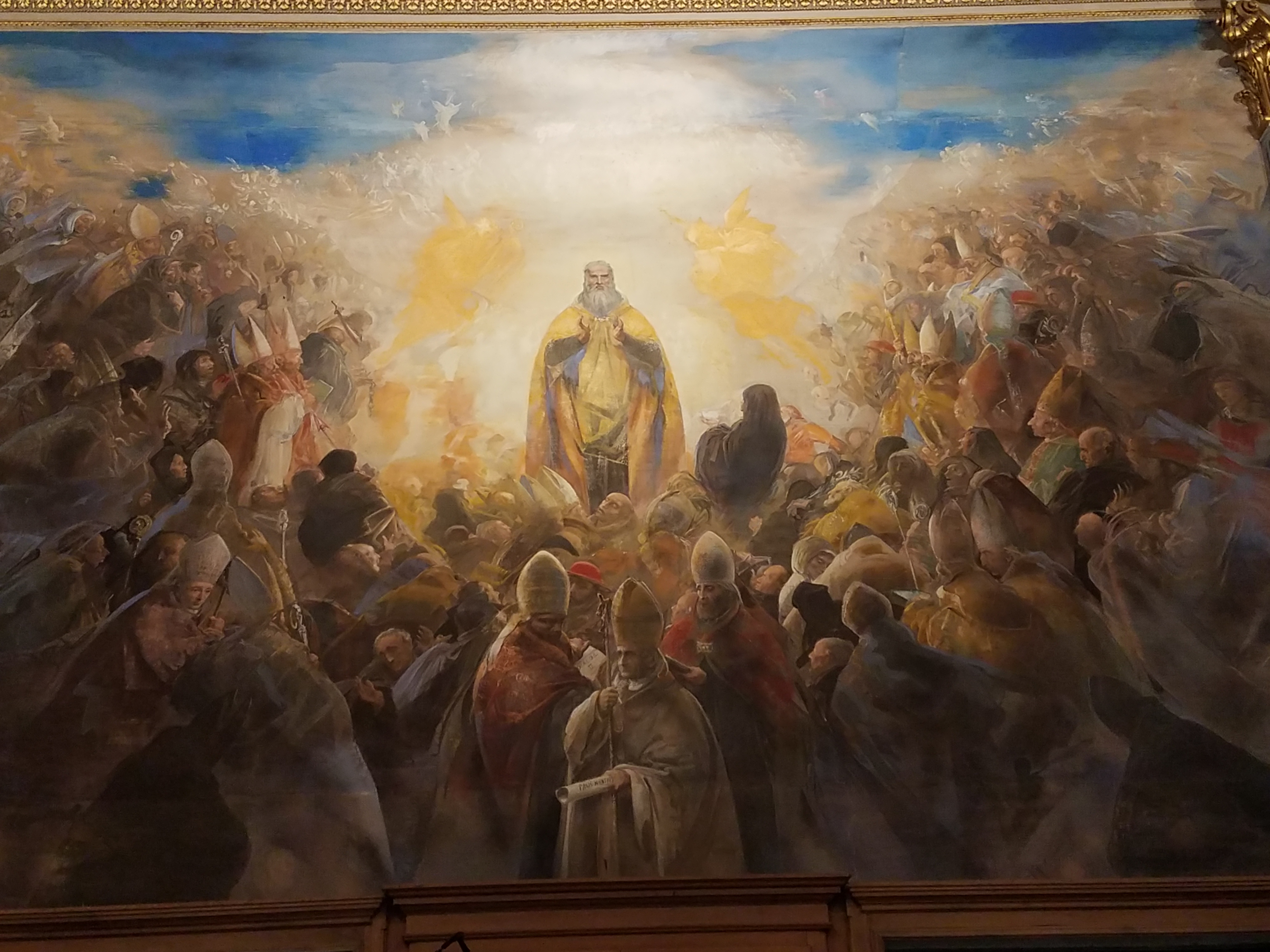
The Beatitudes is our highway to heaven as Children of God in our mission to be called saints.  John tells us “Everyone who has this hope based on him makes himself pure, as he is pure.”  It is the hope of being called “Children of God” by living the life of sanctity.   Today we celebrate All Saints those who made themselves pure to see God “as he is”, amazing, loving, joyful, even a little intimidating.  How would you feel to see God as he is this moment?

“Allhollowtitle, allhollowtide” is the holy triduum of the dead! All Saints’ Eve, All Saints Day, and All Souls Day is the time to remember the dead including martyrs, saints and all the faithfully departed Christians.

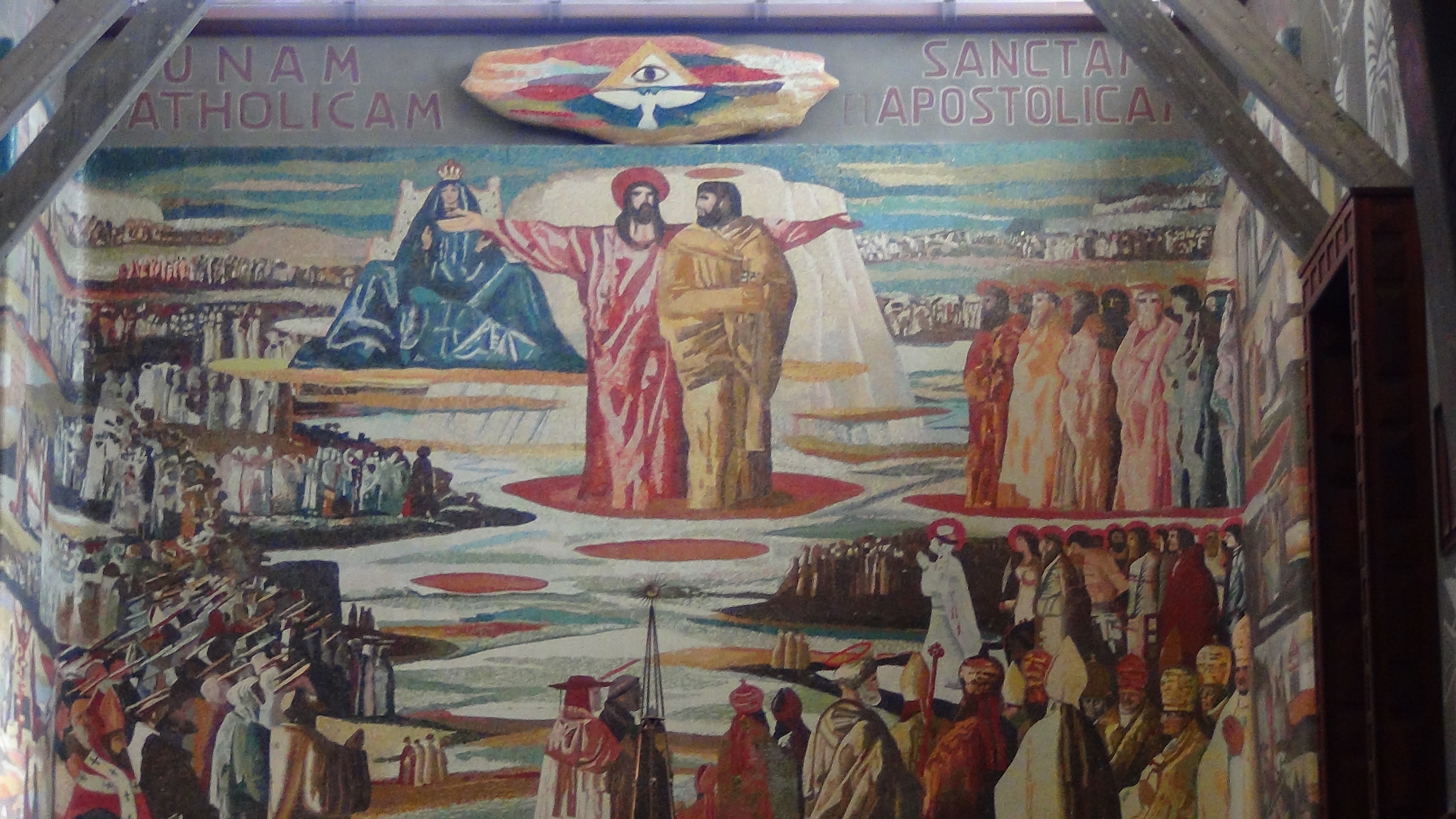
Revelations identifies the Children of God as those who are “the children of Israel” and “a great multitude, which no one could count from every nation, race, people, and tongue…who have survived the time of great distress; they have washed their robes and made them white in the Blood of the Lamb”.  These are the Children of God called to be saints who took the high road.  We are saints in the making and the Beatitudes is our Highway to Heaven.

St. Thomas Aquinas describes four qualities of the glorified state after death we can attribute to all saints.  The first is called “impassability” meaning we pass through this human condition of life only once where there is disease and death, never to go through it again.  St. Paul says it is “sown in corruption and it shall rise in incorruption” in 1st Corinthians 15:42.   We are pilgrims on a journey to sanctity and this is not our final destination. 

Second is called “Subtlety” meaning we will have a spirit-like body as we read how Jesus appears to the disciples after his death and resurrection by passing through the door.  We are not bound by physical matter yet we will possess a body.  “Beam me up, Scotty” for those who remember the old TV series from Star Trek.  This Highway to Heaven is a spiritual highway. 

Third is called “Agility” meaning the glorified body will obey the soul with the speed of thought called teleportation, transported across space and distance instantly.  “It shall rise in power” says 1st Corinthians 15:43.   Even before death some saints had the power to bilocate meaning they appeared in places of great distance from where they were.  Saint Padre Pio was known to bilocate and be at the bedside of someone who was dying.  We are no longer bound by space and time and free to be present where the will desires, especially close to the suffering and those we love. 

The fourth is called “Clarity” meaning the glorified state will be free from any deformity filled with beauty and radiance.  This the light of Christ will shine brightly in the Children of God.  “The just shall shine like the sun in the kingdom of their Father” (Mathew 13:43).  I don’t know if beauty includes getting rid of some wrinkles and extra weight and looking young again.  Think of the “deformity” of children with developmental conditions, mental illness, seizures, and all the health problems we suffer and being restored to be perfect as God is perfect. 

Baptism gives us our “white robe” of sanctity which we stain with sin yet it is our hope to remain as Children of God by washing our robes in confession, in receiving the blood of the lamb in communion, and in living the beatitudes laid out by Jesus in the gospel.  If we fall short in this life in making ourselves pure then there is purgatory which Dante describes as where we go to wash our baptismal robes of remaining sin. 

Remember the three children of Fatima, Lucia, Jacinta and Francisco?  Lucia asks Our Lady if she will go to heaven and Our Lady says yes, then if Jacinta will go to heaven and Our Lady says yes again, finally she asks if Francisco will go to heaven and Our Lady says he will need to say a lot of rosaries, make sacrifices and do penance.  I am not sure if it has something to do with being a boy that we get ourselves into more trouble.  We all could follow Our Lady’s desire to get to heaven by praying more, making sacrifices and doing penance.  We don’t have to wait for Lent to offer some sacrifice for our sins and the sins of the world. 

When someone is sick, we often ask others to keep them in their prayers as we pray for them also.  Prayers give us hope and bring healing to the sick.  There have been studies in science where there are two groups of patients, one is being prayed for and the other receives just follow-up care.  The group that receives the intervention of prayer recovers better with less complications that the control group.  Pray, offer a sacrifice, and even an act of penance, the trifecta for God hears the cry of the poor. 

Last week’s gospel, Jesus gives us the two parts of the great commandment, the love of God united to the love of neighbor.  Today he lays out the attributes of the Children of God in the beatitudes.  “Blessed are the peacemakers, for they will be called children of God” says Jesus.  Who keeps the peace at home?  Is our home where we go to retreat from the world our taste of heaven on earth or are, we wanting to run away from home tired from yelling, arguing, and even fighting to be heard and understood?  Do we hear ourselves or others saying “my way or the highway” that is the highway to hell?  Our nerves scream “listen to me” and our hearts are saying love is patient, love is kind.  Love is not the easy road and neither are the Beatitudes because they represent an act of love but it is the road to sainthood. 

This month a young schoolboy named Carlo Acutis became “Blessed Carlo Acutis” by the Church.  He is the first millennial to be one step away from canonization as a saint for all those millennials out there and there is a lot of you.  Born in 1991 he only lived to be 15.  He taught himself to be a computer programmer and developed a website for documenting Eucharistic Miracles and had a deep devotion to the Eucharist.  He claimed the Eucharist was his “highway to heaven”.  He was beatified October 10, 2020 in the Basilica of St. Francis Assisi in Italy.  He was considered a “computer geek” but he also was a normal kid who liked soccer and playing PlayStation.  He wanted to use the media to evangelize.  He will be the patron saint of computer programmers which is quickly becoming taught to kids, the next must have essential skill.  Think you can’t be a “normal kid” and a saint think again. 

Pope Francis’s exhortation Rejoice and Be Glad explores the meaning of the Beatitudes and we could call him the Pope of the Beatitudes for his focus on the blessed who are poor, meek, and merciful.  He reminds us that sanctity is a life for everyone to live right there where we are.   We are saints in the making.  How?  By living the commandments, the sacramental life of the church, and remaining in the presence of God through prayer.  Pray, pray, and pray more. 

Remember being a child or if you are a child or even as an adult yet a child at heart and wanting to go on those carnival rides that give us just the right amount of thrills and fear?  Our stomach turns and our heart races but the joy of living the ride makes us want to do it again. We are called to joy of living the ride of sanctity as children of God, don’t miss the opportunity to ride the “highway to heaven.” 

To end let us remember who remained on the highway to heaven from conception to her Assumption, our Blessed Mother Mary. She is a sign that with God all things are possible. Amen.

Tags
Shared this
Views

507 views


bg-image

30th Sunday Ordinary Time – I love you!

Ex. 22:20-26; Ps. 18: 2-4, 47,51; 1 Thes. 1:5c-10; Mt. 22:34-40

I love you!  These three magical words we all love to hear.  There is a hand sign to say it with one gesture.  It is in sign language the “I”, “L”, and “Y” all together to say “I love you”.  When our children are little, we say it to them all the time then they grow up and we say a lot of things but sometimes forget to say “I love you”.  Same thing for couples, we repeat it to each other often before marriage and then like tradition we say it for our anniversary once a year.  We sometimes ruin the message when we say “I love you, BUT”.  The one who hears “BUT” goes from being open to love to being guarded wondering “but now what?” 

I love you is unconditional until we say “but”, and now realize it comes with expectations and standards.  Did you ever think God’s love is conditional?  That is a radical thought.  I will come back to that idea later.  Today God says, “keep my word”.  The essence of the great commandment is love him by keeping his word.  Love of God and neighbor is evident by keeping not simply our word but his word.  Our word is subjective based on our thoughts and feelings.  It is as diverse as we are.  God’s word is a covenant, a commitment for all time to love us in truth, goodness, beauty, and unity.  If love is the goal and God is love then God is the fulfillment of love in all of its truth, goodness, beauty and unity. 

I was viewing EWTN when an animation came out with the headline “I am Catholic…BUT”.  It gave a litany of things people say such as “I am Catholic BUT I believe in abortion; I am Catholic but I don’t believe in the real presence of Jesus in the Eucharist; I am Catholic but I don’t believe in going to confession with a priest.  If you remove the flesh of a person you are left with a dead skeleton.  When we remove the teaching of the Church coming from the word of God, we strip the flesh off the body and kill the soul.  

The message of the animation was to explain the church position on all the “BUTs” and concludes with we cannot call ourselves “Catholic” as “cafeteria Catholics” who pick and choose the “word” we want to follow.  This is not love of God if we cannot keep his word.  Why don’t we keep his word when it has been proven to represent the essence of love?  The reason is here before us with Jesus on the cross.  To love God is to follow in sacrifice for him as he did for us. 

The words “I love you God” lose their meaning apart from his word.  The words “I try to go to Mass on Sundays BUT God is everywhere so it is ok if I miss, God knows.”  Yes, God knows and that is the hard reality that God knows when we are not faithful to his word.  Churches were forced to stop holding Mass with the pandemic and now are slowly allowing limited numbers to gather.  Who will join in the sacrifice to return to Mass and who will remain away thinking “God knows”? 

In Thessalonians, St. Paul says “You know what sort of people we were…, so that we have no need to say anything.”  What sort of people were they?  They not only preached the word they sacrificed themselves for the word.  They let their actions speak for the love they gave for Christ and for the community.  We say, “I love you God but” with how many buts added on?  What about God’s unconditional love?  Remember I asked earlier “Did you ever think God’s love is conditional?” God’s unconditional love comes with expectations and standards as a sign of love.

God’s love is unconditional even though we sin when we fail to keep his word “BUT” we are the ones who become conditional with our love until we become unrecognizable.  Consider couples who after many years of marriage end in divorce and one of the reasons is because we believe something changed in the relationship and we say “that is not the person I married”.   Let us hope and pray God does not look at us and say “that is not the person I created you to be”.

When a baby is an infant our love for them is unconditional and sacrificial.  We sleep with our ears alert for any sound and as they grow up, we don’t stop hovering over them as helicopter parents “but” we still have expectations of them as they grow.  Keep my rules we tell them.  We will always love. It is because we love them that we also have our expectations of them and enforce our consequences for their actions.  Love has expectations because it is relational and requires for there to be truth, “just don’t lie to me”; goodness “no temper tantrums”, beauty “comb your hair”; and unity “we all go to church on Sunday.”  “But why?”  It is hard being a parent, imagine how it is for God as his children with all our “BUTs”. 

Today Jesus in the gospel connects two passages from the Mosaic Law, love of God from Deuteronomy 6:5 with love of neighbor from Leviticus 19:18.  He makes it clear that all the 600 laws plus in the scripture can be summarized in these two commandments and you cannot have without the other.  If we claim to love God then we keep his word by demonstrating our love for neighbor that is every other human being is the evidence of our love of him.  Two sides of the same coin, love of neighbor fulfills our love of God. He is the head and we are the followers. 

Some say there is no hell because of God’s unconditional love.  God says, “keep my word”.  The first reading from Exodus reminds us the God of love is also the God of justice with consequences.  God’s love is unconditional without “BUTS” and with expectations and consequences.  Love is not separate from justice.  Love hurts just look at the crucifix and see the pain of love.  If you doubt that try raising a child and see how it hurts.  Jesus answers the group of Pharisees and Sadducees stating the commandments require “all” of our heart, soul, and mind.  No holding back no “BUTs”. 

Always remember, God loves you!

Tags
Shared this
Views

329 views


bg-image

29th Sunday Ordinary Time – Grace to you

Is. 45:1, 4-6; Ps. 96: 3-5, 7-10; 1 Thes. 1:1-5; Mt. 22:15-21

“Grace to you…to his anointed…I have called you by your name” to come into this world with a purpose a “title” as servant of the Lord to fulfill your “work of faith and labor of love and endurance in hope of our Lord Jesus Christ”.  “It is I who arm you…in power and in the Holy Spirit” to respond to your calling.  In summary these excerpts from today’s reading capture the message of this Sunday leaving us to ask ourselves “what is our title?”    

“Grace to you” and what is “grace”?  Grace represents God’s freely given gift to us of himself to be with us in each and every moment as we respond to our call with truth, goodness, beauty and unity to him as a “labor of love”.  Grace is God himself “opening doors before him and leaving gates unbarred”.  We can do all things through Christ who strengthen us.  Be not afraid to welcome grace and allow God to be the force to be great saints. 

Grace is the gift to speak truth to power as the Pharisees claim “not concerned with anyone’s opinion” “chosen” for this time and in these circumstances to stand for Godly truth.  These are our times to bear the cross of truth to the world as the early apostle went forth knowing there would be persecution.  We stand for truth when we allow God into the public square as the guiding principle of our actions.  We stand for truth as “one nation under God”. 

Grace to you with the gift of goodness “in holy attire” dressed with the goodness of giving of ourselves for others.  Wear the coat of righteousness seeking justice in our everyday relationships.  Others see the world as politics, a “dog eat dog” world of oppression, suppression, and hunger for power.  Grace is the greater good of hunger for righteousness in serving God through others.  Goodness is in the heart for right action.  Take the next right step and allow God to open doors trusting him in his goodness. 

Grace to you with the gift of beauty with a “new song”.  The song we sing gives honor and glory to the Lord with the sound of praise in joyful exultation of the wonders our God has done. “How awesome is he” as we sing “thanks be to God”.  In the popular show America’s Got Talent, the judges separate those with a good voice from those who sing from the heart showing their identity and connecting to the audience.  We can let our song be a routine melody of tradition or a “new song” of conversion praising who God is in our lives. 

Grace to you with the gift of unity as “families of nations” seek peace and equity among our resources.  In a world where hunger and poverty are an epidemic in some nations with limited resources our grace is a gift of giving to meet the needs of others in generosity.  Unity is the feast of sharing our gifts for a greater good, not hidden, not stored away, but exposed in service that the grace of God may multiply them in our lives. 

We give honor and glory to God in the practice of the graces received for a greater good and purpose.  As Spinoza the philosopher states “if love is the goal then generosity is the road to it”.  The human capacity to love is essential to life and to happiness thus if love is the goal and God is love then God is the fulfillment of our happiness. 

We thus return to the initial question “what is our title”?  We wear many titles through life, titles that bond us members of our family, titles that are given in our work environment, titles bestowed as honors for personal achievement, all good in which we may honor God with our lives.   Is that it or is there another title destined by God for us to achieve a greater purpose, a saintly purpose?  Let us consider our purpose in life as a calling to be apostle, apologist, healer, teacher, martyr, servant, religious, deacon, priest, and a witness to give testimony to our faith.  God is listening for a response from our heart to his grace.   We are his anointed by title.

Tags
Shared this
Views

347 views


bg-image

28th Sunday Ordinary Time – On this Mountain

Is. 25:6-10; Ps. 23:1-6; Phil.4:12-14, 19-20; Mt. 22:1-14

On this mountain!  A mountain of “juicy, rich food and pure, choice wines” makes for an irresistible banquet in Isaiah the prophet until we read in the gospel how the invitation by the king to the wedding banquet was rejected three times.  Who would reject such a banquet and why?  This seems unthinkable until we identify this “mountain” is Mount Calvary. 

On this mountain is where the wedding feast unites humanity to divinity in the body of Jesus Christ.  The rich food and choice wines come from his body and blood poured out for humanity.  This is the wedding feast rejected by the “chief priests and elders” after the Lord God sent his servants the prophets and apostles to summon them. 

Mount Calvary is not a huge “mountain”.  The “mountain” on Mount Calvary is Jesus on the cross.  He is the mountain of mercy, the wedding feast we attend on Sunday Mass and the food of salvation.  This is the mountain in which he “will destroy the veil…he will destroy death forever”.  Who can behold the man crucified on the cross and proclaim “Behold our God, to whom we looked to save us!” 

“The feast is ready” but wait there is “a man there not dressed in a wedding garment.”  Who is this person the king identifies as “My friend” and then orders to “Bind his hands and feet, and cast him into the darkness outside, where there will be wailing and grinding of teeth”?  All are invited but not all are prepared for the feast. 

We are all created in the image of God to be called “friend” but we are not all obedient to the call from God.  The wedding garment we wear is the baptismal robe to enter into the wedding feast of the kingdom of God.  The wedding garment reminds us that there are expectations in the kingdom to be met, expectations scripture gives as commandments and the church celebrates as sacraments.  There are also daily “circumstances” whether “living in abundance and of being in need” in which we turn to God in faith, hope and love.

In all circumstance we are reminded “My God will fully supply whatever you need, in accord with his glorious riches in Christ Jesus.”  We often say “God only gives us what we can handle” in difficult times.  We remind ourselves to turn to him in our time of need to carry us through the darkness, bear our cross and trust in his divine providence.  The God who is beyond all understanding loves to love with his glorious riches. 

This is the promise already present to “live in the house of the Lord all the days of my life”.  Receive “Only goodness and kindness” in all circumstances when we hunger for righteousness in Christ Jesus.  Remember, “Many are invited, but few are chosen.”  The chosen come dressed for the feast bringing the fruits of their love fest. 

Tags
Shared this
Views

311 views


bg-image

27th Sunday Ordinary Time: It’s vintage time!

It’s vintage time, the time to produce fruit in now.  God’s time is the perfect time but God’s time is always the present moment for us to respond before becoming “wild grapes” in the world of sin.  The Lord prepared the “fertile hillside” for us to grow in his word of wisdom and in the flesh of the word.  He gave us the word made flesh in his son Jesus to yield a fruitful harvest. 

The Lord asks the question “why…did it bring forth wild grapes?  Without giving the answer he gives the consequence that comes to the “house of Israel and the people of Judah” which is the ruin of its land.  Isaiah speaks of “bloodshed! For justice, but hark, the outcry!”  Jesus is the bloodshed for justice the sacrificial lamb and the outcry is the call to crucify him, all still to come in God’s time.  The vintage time for us to produce fruit is now, we must answer for ourselves, for our own wild grapes of sin we live.  With each sin is the outcry “crucify him”. 

It’s vintage time to produce “whatever is true” we must hold onto in a world of personal truth over universal Godly truth; whatever is honorable in a world that dishonors life in abortion and euthanasia; whatever is just in a world that justifies retribution for past sins with current violence; whatever is pure in chastity in a world of perversion; whatever is lovely in a world seeking to destroy a heritage and culture of faith “in God we trust”; and whatever is gracious in a “me to” world of victimization.  Wild grapes are sown daily in the outcry to silence those who seek to produce the best we were created to be in God’s vintage time.

What are we to do?  St. Paul reminds us to “keep on doing what you have learned and received and heard, and seen in me”.  What we have learned, received and heard is Christ himself.  Keep on doing the work of the Lord in all humility and perseverance bearing “fruit that will remain.”  The fruit we bear is the legacy that remains by having followed the teaching of the Church which is the teaching of Christ, bringing our children to the waters of baptism, to the table of the Lord to receive Communion, to the altar of worship to give thanksgiving, and to the confession of our faith by “prayer and petition with thanksgiving make your requests known to God…Then the God of peace will be with you.” 

The choice of our times is as divided as darkness is to light.  Be strong, be faithful, and remain in our Lord Jesus Christ.  It’s our time now…vintage time! 

Tags
Shared this
Views

515 views


bg-image

26th Sunday Ordinary Time: Actions speak louder

Ezek. 18:25-28; Ps. 4-9; Phil.2:1-11; Mt. 21:28-32

“Actions speak louder than words.”  This is a common expression we speak when we want to make it clear we want to see some conviction in the words we hear.  In the gospel today, Jesus proclaims the right action of sinners speaks louder than the words of the chief priests and elders.  The gospel speaks to obedience to the will of the Father.  The priests and elders claim righteousness by their proclamations while their hearts are resistant to the revelation of Jesus.  The actions of “tax collectors and prostitutes” to believe and accept the words of “John” (the Baptist) opened the kingdom of heaven to them. 

St. Paul in his letter to the Philippians also speaks of right action being united in heart, mind and love by looking out for the other will complete his joy in being united to Christ.  St. Paul speaks to a new commandment greater than obedience.  It reveals a deeper obligation to allow the love of Christ to dwell in us.  If Christ dwells in us then our words are confirmed by our actions.  It is no longer we who live our lives but Christ who lives in us doing the will of the Father in offering his love to the other.  What happened to our will, our identity, our freedom?  It is transformed into the perfect being without sin and our joy will be complete. 

In the secular world we speak of the “Golden Rule” by treating others as we would like to be treated.  It is a rule of equity and fairness but St. Paul speaks of a different standard by stating “humbly regard others as more important than yourselves”.  This is the standard of Christ on the cross, a sacrificial giving of ourselves so that Christ will be manifest in us and through us.  This is being of the same mind and same love “in the Spirit” of compassion and mercy. 

Ezekiel speaks to turning “from the wickedness he (sinner) has committed and does what is right and just…he shall surely live.”  Death comes from “iniquity he committed” thus sin carries death to our doorstep.  Sin carries the death of mind, body, and spirit.  When we sin against the body through indulgence, passions, and/or self abuse the body dies “a thousand deaths” slowly until it is no more capable of sustaining mortal life.  When we sin against the mind of God in our mind, we attach our thoughts to our psychological fears, obsessions, and pride to fall victim of our own thinking.  When we sin against the Spirit of God our spirit becomes invaded by other spirits of darkness and it is no longer “I” who lives but the darkness that lives in me and God no longer recognizes us.  How are we to overcome all these trials?  It begins with proclaiming “Jesus Christ is Lord”.  The word is made flesh in our being to be lived in right action.

Darkness turns to light when our tongues confess “Jesus Christ is Lord” with right action.  There is power in the Word of God.  It is the power to move us to right action.  One day as a counselor of children of abuse under the care of the State, I had a young child of eight who was in a state of depression.  She was separated from her home, her siblings, her school.  Not only had she been repeatedly molested as a child but also had a history of heart problems. 

After several meetings in which I did not see progress, I asked if she could say, “God loves me”?  She could not repeat the words.  I asked if she could say “I love myself”?  Again, she would not say those words as her whole body language appeared sunken, doing poorly in school, and having a difficult time adjusting to foster care.  Even with some coaching of positive affirmations she refused to say those statements.  I then asked her simply to repeat the words slowly after me.  It was a transformative moment.  The next session her foster mother said she was doing so much better at home and playing like a normal child. 

Words matter but actions speak louder and must reflect our words to be confirmed in the heart. In counseling people don’t care how much you know until they know how much you care. This is the beginning of unity. Actions do speak louder when united to “thinking one thing”, Jesus Christ is Lord!  Amen. 

Tags
Shared this
Views

320 views


bg-image

25th Sunday Ordinary Time – Not fair!

Isaiah 55:6-9; Ps. 145:2-3, 8-9, 17-18; Phil.1:20c-24, 27a; Mt. 20:1-16a

Not fair!  How often have we heard those words from our children or felt in our hearts “life is not fair!”  Our God says, “Let the scoundrel…turn to the Lord for mercy…who is generous in forgiving”.  Not fair claim the self-righteous unless we happen to be the scoundrel then righteousness turns to gratitude.  That is why the Lord says, “so high are my ways above your ways and my thoughts above your thoughts.” 

Mercy is for all who call upon the Lord.  The parable by Jesus in the gospel is more about the Lord’s generosity to confront our sense of entitlement.  Each laborer received “the usual daily wage” even though all did not work the same hours.  The laborers “grumbled” with a heart of injustice, “not fair”.  Yet we know “The Lord is just in all his ways and holy in all his works”.  What we fail to see is that this life of ours is the beginning of all things the Alpha of the Lord’s work in us, but the Omega is the eternal yet to come when all justice is revealed to us.

Not fair that we wait for justice!  Give thanks that the Lord is generous with these days of ours to correct our sin and seek holiness while there is still time before we face the test of justice, the purgatory of life, the call to give an account of our own to the Master.  Let us pray to be worthy works of his love as his servants. 

Perhaps St. Paul gives us some understanding in his letter to the Philippians when he says, “For to me life is Christ and death is gain.”  This complete surrender to God is a pearl in the ocean of fish.  There are many fish in the ocean of humanity but few pearls willing to surrender completely to the Lord.  There are many religious but few saints.  There are many scoundrels but few repentant souls.  That is why the Lord is near to all who call upon him in truth.  In his goodness comes mercy as a Father of love.

St. Paul reminds us we are the “works” of the Lord, the works he is free to accomplish in us and through us as we surrender to him.  St. Teresa of Calcutta prayed to be a “pencil” in the hand of the Lord.  Her life was a storybook of surrender accomplishing the works of the Lord.  We each have our state in life as single, married, widow, parent, religious, layperson, clergy with works waiting to be accomplished for the Lord.  The beauty of serving the Lord’s works is the transformation of our being as a work of holiness in the hands of the Lord.  Call upon the Lord in truth and be transformed as we put our trust in him. 

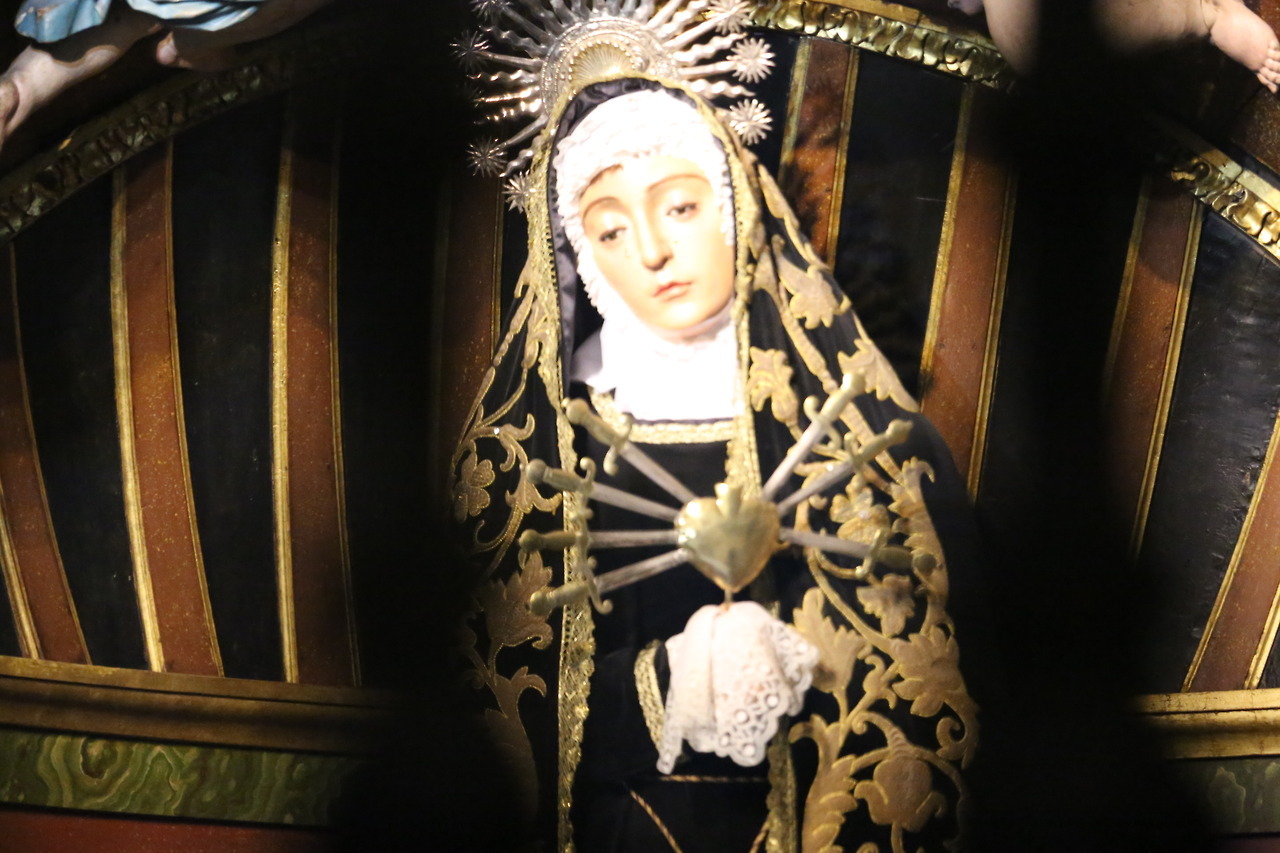
Consider the heart of our Blessed Mother Mary alongside her son in his passion. He came into the world with all his works of love offering forgiveness, mercy, healing, compassion for the sick and poor, and teaching for the just and his reward by humanity was to crucify him. She held all things in her heart knowing she carried the divine child in her arms with the gift of seeing him again in the resurrection only to see him depart in the clouds. Her total surrender from the beginning claiming “I am the handmaid of the Lord” sustained her faith, hope and love beyond what this world could see. She did not seek fairness only offered up her love. This was her fiat for us to follow.

The heavens rejoice when we offer our self up in union with the sacrifice Jesus makes for us.  Let us make an act of surrender this day in prayer:  Lord of love and generosity, I consecrate myself to your sacred heart in surrender of my mind, will, and spirit to be transformed as a work of your presence in this world to accomplish the “works” your will for me in this day by the graces of your generosity in truth and obedience to your command.  In my weakness come to my awareness your constant presence, your ways above my ways, and your thoughts above my thoughts that I may see your hand at work in me.  Amen. 

Tags
Shared this
Views

294 views


bg-image

24th Sunday Ordinary Time God is mercy

Sir. 27:30- 28:7; Ps. 103:1-4, 9-12; Rom.14:7-9; Mt. 18:21-35

God is mercy and mercy is forgiveness!  “Remember your last days” before you proclaim “no justice no peace”.  We are called to “forgive your neighbor’s injustice”.  Why do we “hug them tight” our wrath and anger when they are the poison of death while others remain alive?  In part, it is because we fail to see ourselves in the sinner.  In the heart we give thanks we are not like them and justify our “’righteousness” for anger and vengeance. 

False righteousness is like rejecting the leper for his visible disease while walking in ignorance of the invisible cancer growing inside.  “Remember death and decay and cease to sin!”  Jesus likened “the kingdom of heaven” to a king who “settles accounts with his servants” and whether “we live or die we are the Lord’s” with an account in need of justice. 

Justice is the offering of Jesus for our sins to the merciful.  It is conditional on our forgiveness of our brothers and sisters, neighbors and strangers “from the heart” for the injustice.  Jesus speaks to the disciples that “heaven is likened…(to) his master (who) handed him over to the torturers until he should pay back the whole debt”.  As servants of the Lord there is a place for those who fail to forgive for their debt which as a Catholic church we identify as purgatory.  Purgatory is for the chosen who remain with the stain of sin of unforgiveness among others. 

We live in times when the streets proclaim “no justice no peace” seeking reparation for a history of people who have long passed from the earth.  Some believe you can be the victim of other’s history standing in for another’s suffering with expectation of compensation as an entitlement.  They “hold them tight” wrath and anger for a historical identity as victims without personal sacrifice of suffering in the name of social justice.  This is likened to blaming God for the sin of Adam and Eve for falling into a world of sin and suffering.  It is a ludicrous philosophy of victimization for all creation. 

Who do we need to forgive?  It begins in the domestic church, husbands and wives must forgive each other from the heart; children forgive parents for imperfect parenting at best and abandonment or abuse at worse; forgive our friends and neighbors who we have stopped talking with.  The root of forgiveness lies at the seed of love from the home.  It begins with a decision to forgive and a prayer of petition to receive the grace of forgiveness in the heart.  We don’t wait for a feeling to forgive to arrive before forgiving.  We act on the command of God to forgive and trust God with our heart to bring us peace.

It is said by the grace of God many have not seen the inside of a prison.  Among those who have been imprisoned some leave more vengeful than before to commit more crime while others are humbled to never return.  One man appeared on AGT (America’s Got Talent) telling his story of being convicted of a crime against a woman who identified him as the perpetrator.  He had three witnesses who testified he was home at the time of the crime but was convicted and served 37 years in prison before DNA proved his innocence.  Singing kept him hopeful with courage to persevere.  Released his dream to appear on AGT came true as a man of peace.  He survived because his heart was not imprisoned by the walls of wrath and anger.  Many more live outside the walls of prison but their hearts are imprisoned by wrath and anger while they hold tight the key of freedom, the choice of forgiveness.  Choose forgiveness and receive mercy. 

Tags
Shared this
Views

281 views


bg-image

23rd Sunday Ordinary Time: “There I am”

Ezk. 33:7-9; Ps. 95:1-2, 6-9; Rom.13:8-10; Mt. 18:15-20

“There I am in the midst of them”, the Great “I Am”.  Those who gather in prayer to fulfill the law of love, I am there.  I am there in your joys and sorrows; I am there in your conflict between each other; and I am there to heal the broken hearted.  Let us pray then together as one body of Christ for the sick, sorrowing, the sinful and speak as commanded by the Spirit to their hearts that they may not be hardened.  If God is love and love fulfills the law then the law of God makes him present in our love to speak with faith and courage and not be silent. 

I have often in counseling others expressed to others “don’t love me the way you love yourself”.  Our love of self is imperfect at best and dysfunctional at the worst.  Imperfect love of self is conditional for pleasure, profit, power and prestige.  When we satisfy these passions, we recognize a false pride that is only temporal.  Dysfunctional love takes these same conditional passions to a greater degree of harm of self and others.  It creates a dependency and/or an obsession spiraling into sickness and death of true self.   Can anyone desire this type of love from “neighbor” or offer the love of Christ which is truth, beauty, goodness and unity?  How can we then bring our brokenness into our relationships of conflict and find a peaceful resolution.  Only with the one true mediator, Jesus Christ do we come into the presence of the Father who promises, “there I am”. 

Jesus speaks to our hearts in the Holy Spirit that we may speak as “watchman” for the house that is “church” of God’s people.  The devil has no trouble speaking out through others calling out “hypocrites” those sinners who dare to speak seeking to silence them Souls who are given a voice to speak truth, goodness, beauty, and unity become “cancelled” in the current culture of oppression.  The devil lies ready to counter truth by calling out our hypocrisy, to counter goodness by calling out our sinfulness, to counter beauty by calling out our jealousy, and to counter unity by calling out our self-righteousness.  Just as the devil used Peter to chastise Jesus and Jesus responded with “Get behind me Satan” the devil uses those we love to bring division to our relationships and prevent reconciliation. 

In the same manner when Jesus asks “But who do you say that I am?”  Peter responds with the inspired truth “You are the Messiah, the Son of the living God.”  The revelation to speak was revealed by the “heavenly Father” to Peter, a sinful man, a follower, a hypocrite who later denies Jesus three times, prideful and self-righteous but at that moment there was the heavenly Father revealing truth to the disciple.  We cannot say “who am I to speak?” when our first grace to speak came at baptism with the gift of the Holy Spirit.  To speak as “church” when two or three are gathered in his name is a command from God who warns “I will hold you responsible for his death” if we dare be silent.  Our salvation depends on it!  

Am I here for me or thee, that is the question?  Until our faith is cemented in how we answer this question we risk our salvation and play with fire from hell.  Often it is heard “where is God?”  This is heard in the midst of suffering or tragedy and it begs the question where is the fulfillment of the law of God?  Obedience is not the greatest of virtues aspired by humanity.  We place conditional limits to our obedience just as we place conditional limits to our love returning to the question, “am I here for me or thee?”  We don’t bring peace to conflict through conflict avoidance.  We bring peace to conflict following the formula of subsidiarity given to us in scripture today, starting with the individuals who hold the power at the principle level of where the conflict lies, brother to brother and sister to sister before turning to authority to bring reconciliation. 

Godly reconciliation is not a “compromise”, a fifty-fifty agreement, or a settlement of jurisprudence but reaching for a greater truth that brings salvation.  This greater truth comes from the “Great I AM” who promised “there I am”.  Speak now before this moment is forever gone.  Speak now in the Holy Spirit of truth to bring the goodness of God the Father, through the beauty of Jesus love on the cross, to bring the unity of reconciliation in heaven. Speak now through prayer at the urging of the Spirit.

A voice of truth in our times is not to be silenced through the culture of “safe spaces”, political correctness, or threats of being “cancelled” through an overall attack on our very humanity. There is a cross to bear when God speaks through us. All the great saints were threatened to be “cancelled” for disrupting the norms of their times. Holiness is not for the weak. We are all called to be great saints for our times.

Tags
Shared this
Views

293 views


bg-image

22nd Sunday Ordinary Time “to deny himself”

Jer. 20:7-9; Ps. 63:2-6, 8-9; Rom.1-2; Mt. 16:21-27

To deny himself the “call” or his humanity, that is the question.  “You duped me, O LORD, and I let myself be duped” in order to “know what is the hope that belongs to our call.”  Jerimiah’s interior crisis is a sign of Jesus’ coming as he becomes the object of laughter, mocking, violence and outrage but Jerimiah tries to deny himself and cannot just as Jesus cannot deny the Lord for he would be denying himself his divinity, the “call” for which he came to fulfill and so Jesus lets himself be “duped” as a lamb for slaughter to fulfill his divinity, his “call”. 

In the gospel, Jesus rebukes Peter for appealing to his own humanity and the humanity of Jesus.  “God forbid, Lord!  No such thing shall ever happen to you.”  Jesus immediately recognizes this seduction from Peter calling out “Get behind me Satan!  Whoever wishes to come after me must deny himself, take up his cross, and follow me”  If we wish to come after Jesus in search of him then the first obstacle is our humanity, the interior crisis of our comfort opposed to the cross of self-denial, sacrifice, and following Jesus in responding to the divine call.  Jesus comes to renew our fallen nature not to succumb to it.

Our thoughts carry a fallen nature for pleasure, profit, power, and prestige.  We seek pleasure and avoid pain yet sacrifice for the good is worthy of pain as an offering to the “call”.  We seek the security of profit beyond our needs yet in gaining “the whole world” we forfeit life itself in a premature death to our call.  We seek power for a false sense of control what we claim as our entitlement only to see death quickly steal away our entitlement in exchange for life.  We seek prestige as a place of honor at the table of our accomplishments yet if “getting to the top” only leaves us looking back at the brokenness of our past have we lost our place at the table of the Lord?  This is the internal crisis we face to deny our very self is to gain ourselves the glory of God. 

“Then the Son of Man will come…and then he will repay all according to his conduct.”  He does not promise a reward according to our faith alone but to our conduct which is the true sign of responding in faith to our calling.  What have we gained?  We satisfy the thirst of our soul seeking to break the chains of our humanity and set us free to be in the presence of the Lord in his divinity.   The “coming” is both now and forever.  Now he comes to the aid of our transformation beginning with “the renewal of your mind, that you may discern what is the will of God, what is good and pleasing and perfect.”  This is “the hope that belongs to our call” both now and forever to be in the presence of the Lord. 

The “call” is responding in the moment to the will of God in order to remain in communion that is in relationship with him discerning truth, beauty, goodness, and unity in perfect love.  To be in perfect love or not to be, that is the choice and the call of the cross.  In this moment what does thy will declare of us? 

Tags
Shared this
Views

334 views